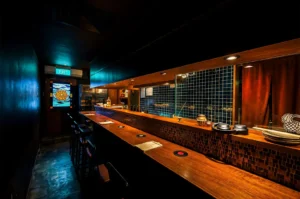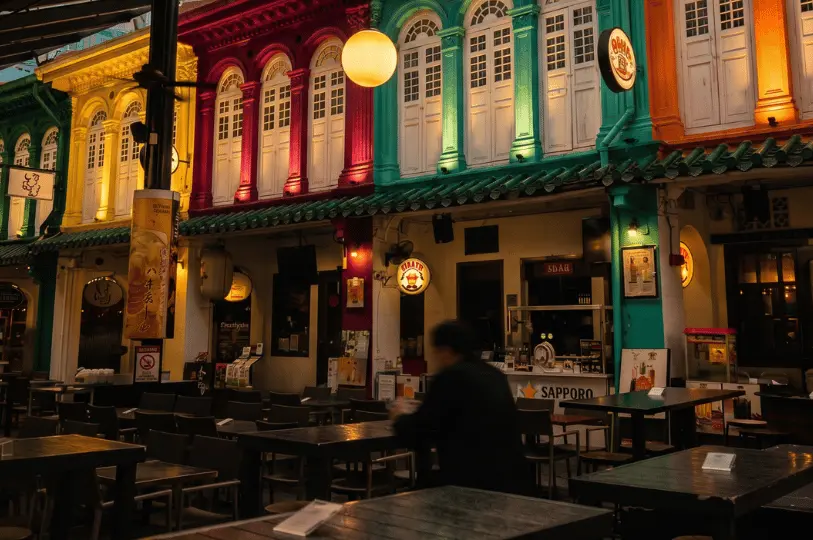
I was sitting at a cramped counter in Cuppage Plaza, surrounded by the incredible smell of binchotan charcoal and roasting chicken fat. The mood was perfect. The dim tungsten lamps cast a beautiful, moody glow over the dark wooden planks of the counter, setting the quintessential izakaya in Singapore ambiance.
But when I looked at my camera screen, my heart sank.
My food photos were a disaster. The rice looked neon yellow, and the yakitori chicken skin was a blurry, orange mess. The shadows were entirely crushed. Over the years, I’ve learned a hard lesson. It is about learning which parts of the darkness to keep to create great photos with interesting textures and distinct style.
If you have ever struggled to capture the quiet, cinematic atmosphere of a late-night yakitori spot without your photos looking like a blurry, orange mistake caused by camera shake, this guide is for you.
The Reality of Shooting in Izakayas Singapore Prides On
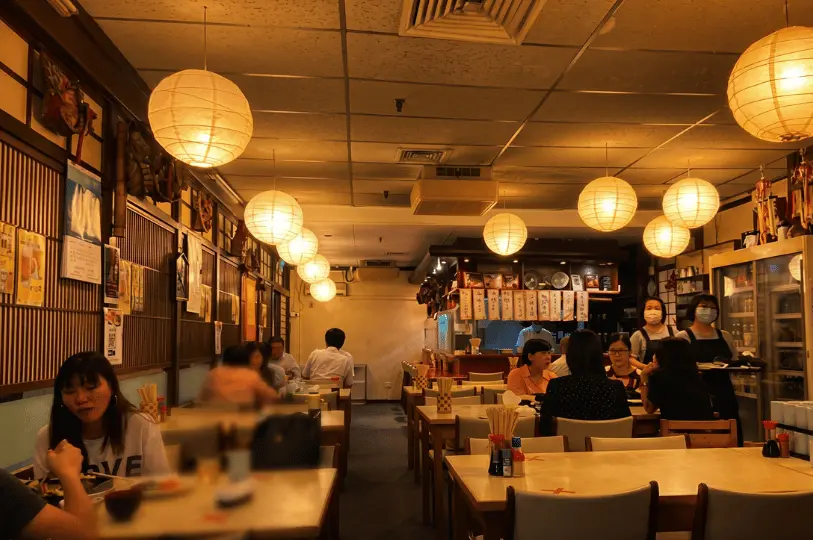
Before we get into camera settings, let’s talk about the environment. Izakayas in Singapore has a brilliant late-night culture, but these spaces are almost never designed for food photography by professional photographers.
You can expect narrow seating, warm overhead lamps, reflective tables, and a chaotic mix of lighting from neon signs and kitchen grills. On a Friday night, places like Zenryoku Izakaya and Public Izakaya are packed. You simply cannot act like you are in a spacious photography studio.
From An Amatuer Photographers’ Perspective
If you are just practicing your personal photography, expect to spend around S$30 to S$80 per person on a casual night. (For context, if you ever start doing this commercially, professional food photography rates in Singapore often start around S$200 per hour).
Your goal here is to be low cost and low impact. You want to capture the atmosphere, the izakaya favourites on the menu, and the after work drinks vibe without ruining the dinner. If you are looking to explore and find the best izakaya photo spots in Singapore, sites like Best Izakaya offer great info and resources to help you discover top spots.
Step-by-Step Food Photography Process Using Natural Light and Camera Angle
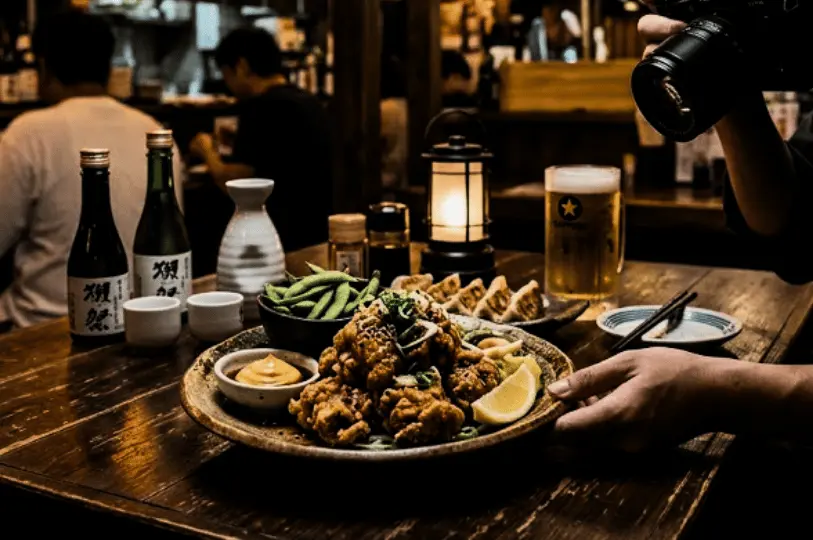
I break my shooting process down into simple, manageable steps so I don’t panic when the food hits the table.
Step 1: Choose the Right Seat at a Public Izakaya
The best lighting in an izakaya is almost never the brightest table. I always ask for a counter seat if possible. Look for a spot where a lantern or wall lamp provides natural light or warm side light. You want side light, not top light, to create more depth and highlight the main subject.
Avoid sitting directly under harsh ceiling downlights. They create ugly, shiny reflections on glossy sauces, ramen broth, and the rim of your beer glass. If you sit at the counter, you also get the added bonus of the grill’s glow behind your food, which is an awesome element for eye catching photos.
Step 2: Dial in Your Camera Settings Before Ordering
Do not wait until the dish arrives to mess with your settings. The food will die on the plate while you fumble with buttons.
If you are using a camera:
- Aperture: Open it up for a shallow depth of field. I usually shoot at f/1.8 to f/2.8 for single skewers or drinks to isolate the subject. For a larger table spread, I might push to f/4 to capture more of the composition.
- Shutter Speed: Keep it at 1/60s minimum if the food is sitting still. If you are photographing the chef’s hands, pouring sake, or grill action, bump it to 1/125s or faster to avoid camera shake.
- ISO: Do not be afraid of ISO. I regularly push my camera to ISO 1600 or 6400. Yes, there will be grain, but a sharp, grainy photo is always better than a clean, blurry one.
- White Balance: Set it manually to around 2800K–3800K, then adjust by eye. This is the most important thing to get the warmth right without making the rice look neon yellow.
- Format: Always shoot in RAW. You will absolutely need to tweak the colors later.
If you are using a phone:
- Wipe your lens. (Seriously, do this first).
- Turn off the flash.
- Use the 1x or 2x lens. Avoid the ultra-wide lens; it distorts food terribly.
- Tap the screen to lock focus on the food, and drag the exposure slider down slightly to protect the bright highlights on the glaze.
Insider Knowledge: Ordering Strategy
Do not order your entire meal at once. Izakaya food is meant to be eaten in small plates. I prefer to stagger my orders. This gives you distinct, separate moments to shoot instead of panicking over a crowded table where everything gets cold at the same time.
Step 3: Read the Dish and Compose Quickly with Negative Space and Camera Angle
Different izakaya dishes demand different camera angles and composition styles.
- Yakitori and Kushiyaki: Shoot these at a 45-degree angle or a low side angle. Focus on the front skewer. Look for blistered skin, the shine of the tare glaze, salt crystals, and char. Use negative space around the subject to make the main dish pop.
- Sashimi: Use softer light and shoot from 30 to 45 degrees. You want to catch the translucency of the fish and highlight fresh, quality textures.
- Karaage (Fried Food): Side light is your best friend here to emphasize the rough, crispy texture.
- Drinks: Sake cups and highballs need edge highlights. Place the glass where a lamp creates a rim of light along the edge.
Shutter Speed and Other Issues: Tips for Food Photographers
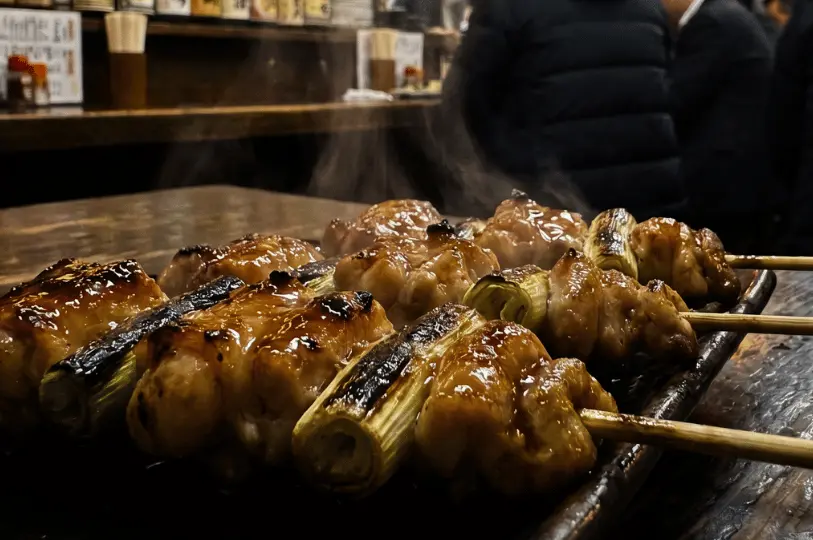
I have made every mistake in the book. Here are the red flags I see most often, and how you can avoid them.
Using Direct Flash
Just don’t do it. Direct flash flattens the beautiful textures of the food, reflects harshly off lacquer plates, and completely ruins the quiet vibe for the diners next to you.
Shooting Flat Overheads
We are conditioned by social media to shoot everything from straight above. But izakaya food is highly textural. Skewers, ramen bowls, and highballs have height and gloss. Overheads flatten out the steam and the grill marks. Stick to 45-degree angles or the same angle you find most flattering for your subject.
Editing the Atmosphere Away
The biggest mistake I used to make was trying to achieve perfect, clinical white balance in post-production. If you remove all the warmth, the izakaya feels like a hospital cafeteria. Cool the balance just enough so the rice doesn’t look neon yellow, but keep that beautiful amber warmth in the background.
Pro Tip: What to Wear
Wear dark clothing. If you wear a bright white shirt to an izakaya, you will see the reflection of your own shirt bouncing off the glossy tare sauce, the beer glasses, and the dark ramen broth.
Exploring New Things: Inspiration from Zenryoku Izakaya and Beyond
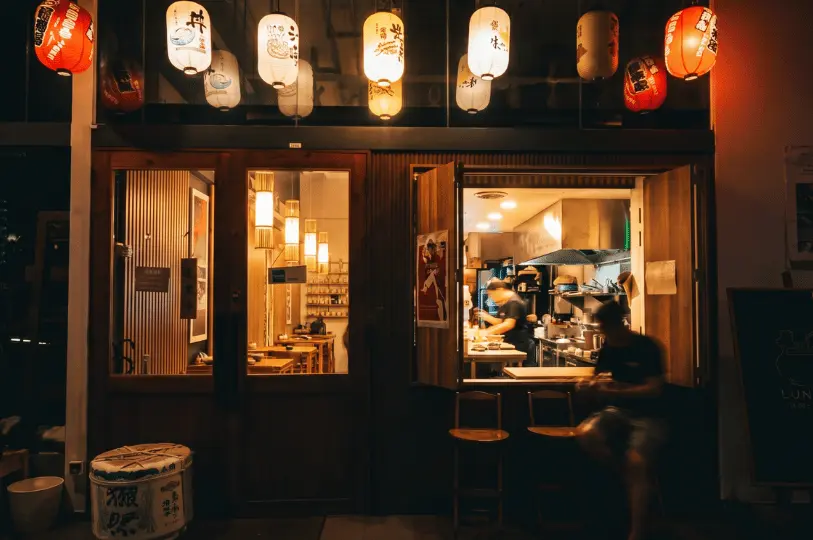
Zenryoku Izakaya is a great example of an izakaya in Singapore that offers a lively atmosphere with a menu built for sharing, featuring izakaya favourites like kushiyaki and yakitori skewers, fresh sashimi platters, and hearty donburi bowls. Their use of warm lighting and wooden boards creates a natural and inviting backdrop for food photography.
Inspired by places like Zenryoku Izakaya, try incorporating elements of nature and fresh ingredients into your photos. Use cold water to freshen herbs and microgreens before styling. Experiment with camera angles and composition to find your unique style. Remember, the most important thing is to have fun and enjoy the creative process.
Final Thoughts: Bringing Life and Quality to Your Izakaya Frames
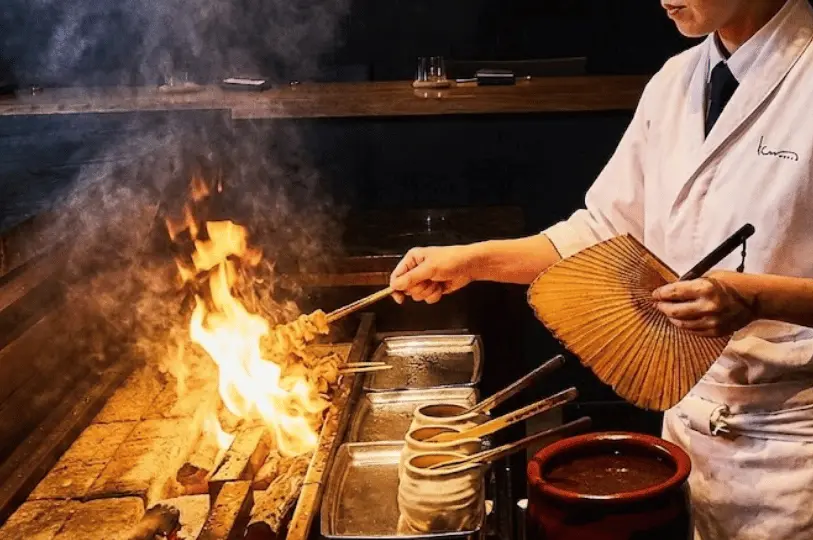
At the end of the day, midnight food photography is rarely just about the dish itself. It is about the gesture, the heat, the waiting, and the appetite. It is about the exhausted office worker decompressing over a cold beer, or the quiet focus of a chef fanning binchotan coals at 1 AM.
The next time you book a table for late-night yakitori, remember that you don’t need to control every single shadow. Let the background fall off into darkness. Let the edges of the frame get a little messy. Focus on the gleam of the glaze, the rising steam, and the warmth of the space.
Take your one frame, your three frames, and then put the camera down and enjoy the meal while it’s hot. This is the most important thing to capture the true spirit of izakayas in Singapore style.

Newton Food Centre After Dark: The Stalls Worth Visiting at Night
Sarah Teh | September 23, 2026
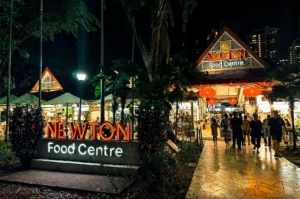
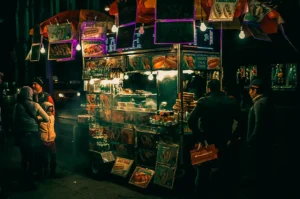
The day heat lifts slowly here. By the time I reach Newton Food Centre, the sun has gone and the light has changed hands. No longer the flat white of afternoon. Now it comes from the stalls themselves, bulb by bulb, a row of small fires holding back the dark along Clemenceau Avenue North. Newton…
-
The Red Glow of Chan BBQ: A Stingray Shoot After Supper Begins
Sarah Teh | September 17, 2026
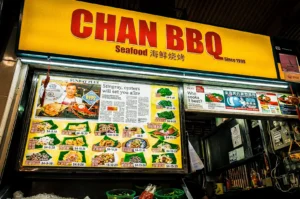
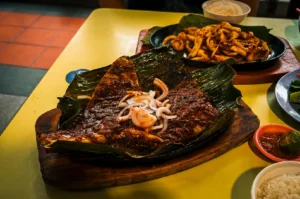
The grill was the brightest thing in the room, and that was the problem. It was past eleven at Fengshan Market & Food Centre, and I had been standing near Chan BBQ for a while, camera down, watching the uncle work the coals. He moved without hurry. A pair of tongs in one hand, a…
-
The Last Table at Keria Japanese Restaurant: A Late-Night Photoshoot in Cuppage Plaza
Sarah Teh | September 16, 2026
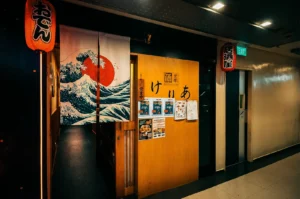
Orchard Road lets go of its crowds slowly. By the time I reached Cuppage Plaza B1 28, the shopping stretch behind me had thinned to a few late walkers and the low hum of traffic sliding past shuttered windows. The bright malls were already dimming. The night was settling in the way it does here,…
-
Sambal in the Shadows: Shooting Chomp Chomp BBQ at Bedok 85
Sarah Teh | September 10, 2026
The smoke found me before the food did. It was close to midnight at Bedok 85, and I had been standing at Chomp Chomp BBQ for a while, camera down, letting my eyes settle. The uncle worked the grill with his back half turned to the crowd, a pair of tongs in one hand, the…
-
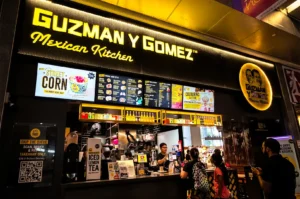
Guzman y Gomez Singapore: When The Lights Stay On at Orchard Gateway
Sarah Teh | September 9, 2026
Orchard Road empties from the top down. By a quarter to midnight, storefronts have started pulling their shutters, glass gone dark over displays that glowed all day. Escalators still run. A few people drift toward the Somerset MRT with shopping bags softened at the handles, while red tail lights smear across the wet glass outside….
-
Apollon AM-Bar Review: Photographing an Intimate Izakaya in Orchard Plaza
Sarah Teh | September 4, 2026
Finding Apollon AM-Bar on the First Floor The first floor of Orchard Plaza’s dining oasis is quiet in that way old shopping centres go quiet at night. The bright shops of Orchard Road felt far away by the time I found unit #01-29. Inside, there isn’t much room. A counter, a handful of seats, staff…
-
Waiting Beside the Soup Pot: Photographing Seng Hiang Bak Chor Mee at Midnight
Sarah Teh | September 3, 2026
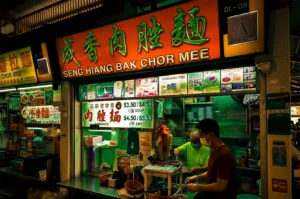
The pot never stopped moving. It was near midnight at Bedok 85, and I had been standing at Seng Hiang for a while, doing more watching than shooting. The auntie worked the noodles in a wire basket, dipping them into the boiling water, lifting, shaking off the drops in three quick beats. She did not…
-
Night Market in Singapore Photography Guide: Capturing Street Food After Dark
Sarah Teh | September 2, 2026
It’s past eight, and the lingering heat warms the pavement. A grill flares beneath bare bulbs, smoke rising as a vendor fans the coals. Satay skewers sizzle, coins exchange hands, and the queue shifts, a fleeting moment in the vibrant night market in Singapore. Most visitors miss this dynamic scene. They arrive ready to photograph…
-
Steam Above the Orange Chopsticks: A Night at Xing Ji Rou Cuo Mian
Sarah Teh | August 27, 2026
The steam came up in one thin ribbon, and I almost missed it. It was near eleven at Bedok 85, and I had been standing at Xing Ji Rou Cuo Mian for a while, watching more than shooting. The uncle worked the noodles in a wire basket, dunking them into the boiling water, lifting, shaking…
-
Somerset Food by Night: Food Spots Open Until Midnight and Beyond
Sarah Teh | August 26, 2026
The malls close first. Restaurants dim their lights behind glass, chairs are stacked, and the daytime shopping crowds begin to leave Orchard Road. Somerset, which spends most of the day moving between lunch queues and retail floors, quietly becomes something else. I walk the streets around Somerset MRT Station with a camera after dark: down…