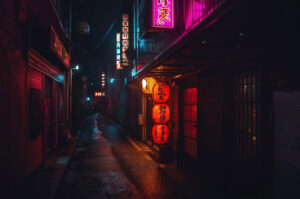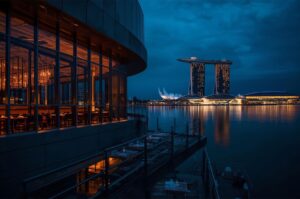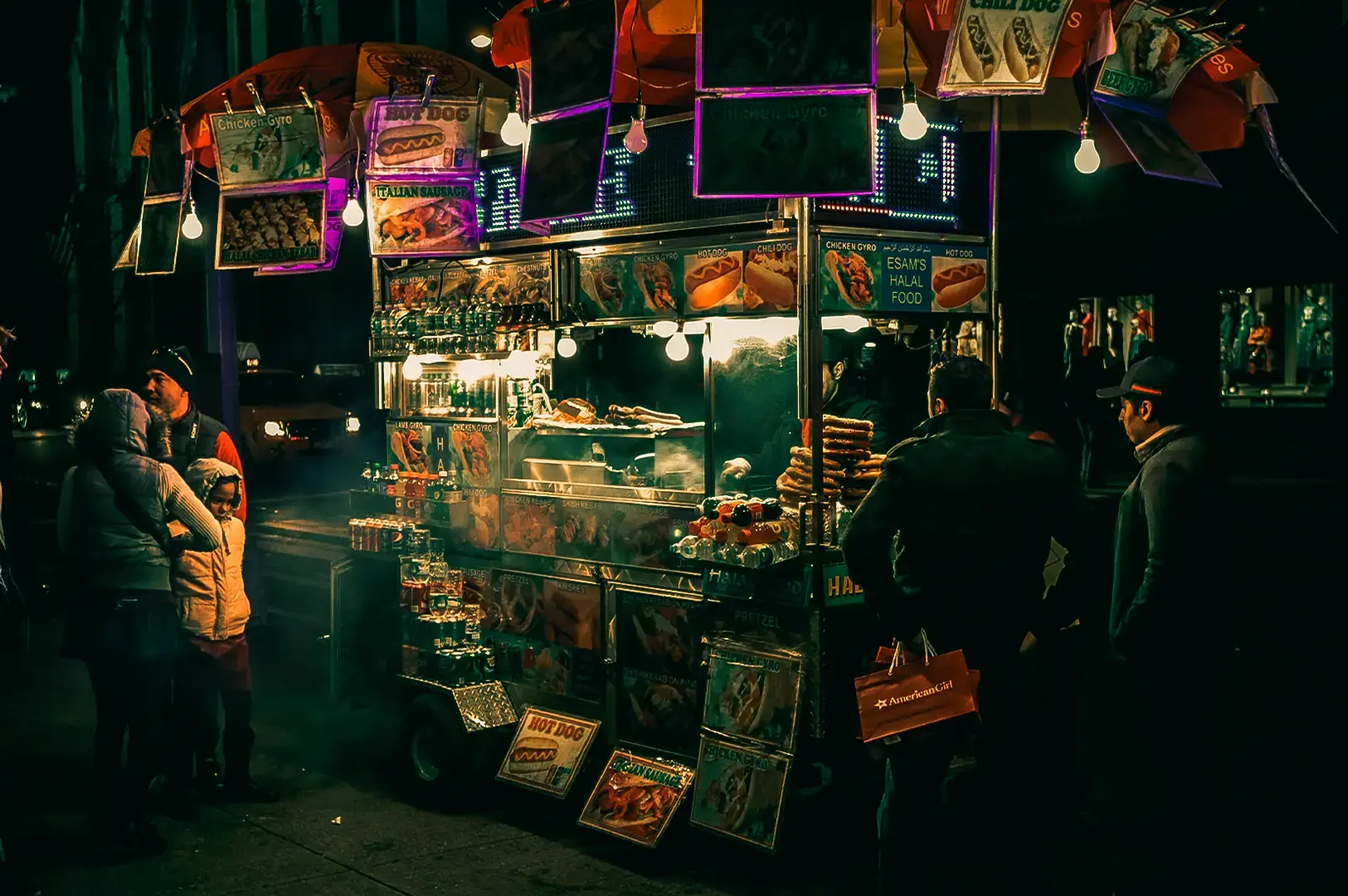
It’s past eight, and the lingering heat warms the pavement. A grill flares beneath bare bulbs, smoke rising as a vendor fans the coals. Satay skewers sizzle, coins exchange hands, and the queue shifts, a fleeting moment in the vibrant night market in Singapore.
Most visitors miss this dynamic scene. They arrive ready to photograph street food but overlook the market as a living space of movement, conversations, and routines after sunset. The vendor’s hands, the smoke, the light, these tell the real story.
When the night quiets down, some cravings call for something warmer, discover the Japanese curry spots in Singapore where every spoonful carries its own story, right here on Midnight Photographer.
Night Market in Singapore: Seeing Street Food Through a Photographer’s Lens
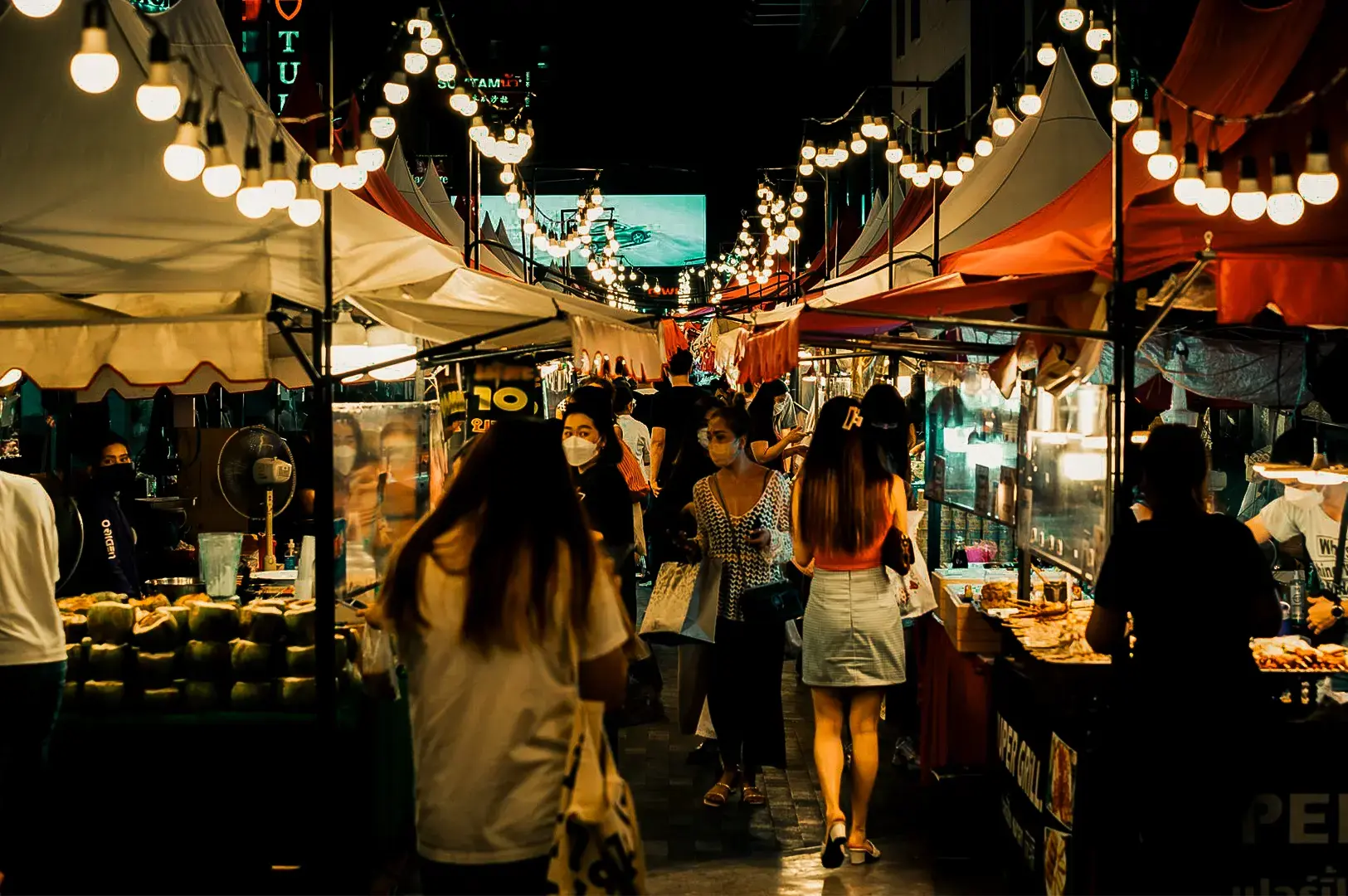
Read the Light Before Reaching for the Camera
Before I photograph anything, I look for the light.
Not through a camera screen. With my eyes.
Night markets rarely offer perfect lighting. Instead, they give you fragments:
- the warm glow from food stalls
- fluorescent tubes hanging above counters
- reflections from metal surfaces
- neon signs spilling colour onto the street
Each source changes the story.
Photograph the Hands Behind the Food
Street food is more than the final dish. The stronger image captures vendors lifting noodles, customers receiving meals, or satay vendors tending flames. Hands reveal the human connection behind food, the reason it matters.
Night Market Photography: Learning Singapore’s Rhythm After Dark
Work With Darkness, Not Against It
Low light exposes flaws. Food stalls are dim, customers move, and dishes change fast. Patience is essential. Frame your shot before the action arrives and let the scene unfold naturally.
Photograph Motion Instead of Perfection
Avoid flash that erases atmosphere. Use available light, wider apertures, and faster shutter speeds. A little grain or blur conveys life, a hand reaching, oil bubbling, steam drifting captures more than stillness ever could.
Flash removes the very thing that makes a night market beautiful.
It can flatten textures, erase shadows, and make a warm hawker centre feel disconnected from reality.
Instead, work with available light.
Use:
- wider apertures
- higher ISO when necessary
- faster shutter speeds for movement
Chinatown Street Market: Photographing History, Food, and Stories
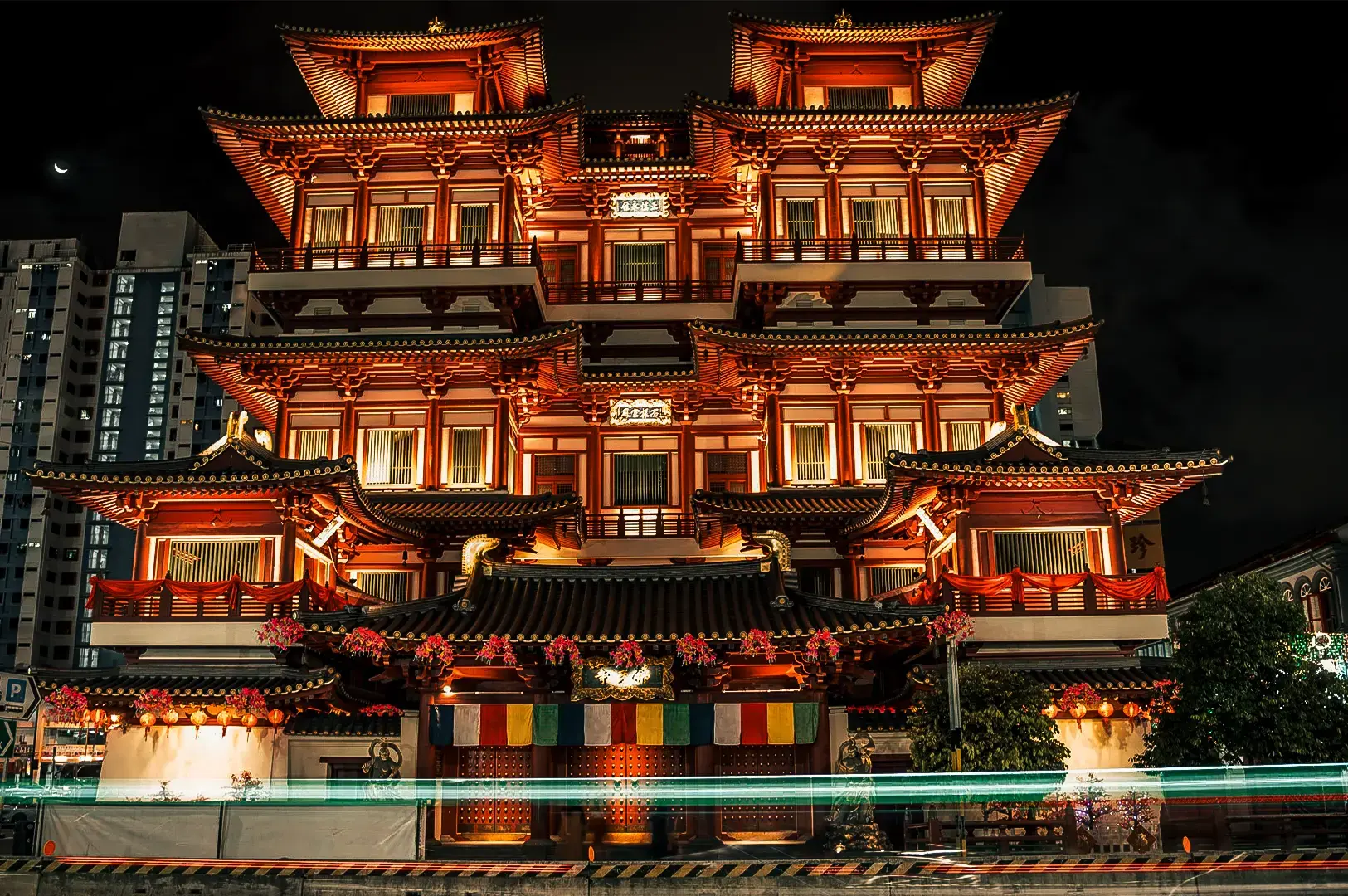
Finding Layers of Light Along Smith Street
Chinatown after dusk glows with vibrant lanterns and neon signs along the pedestrian walkway. Visitors browse souvenirs, accessories, and traditional goods amid historic shophouses. Smith Street blends food, culture, and history, the aroma of cooked dishes, lively chatter, and soft background lights create a rich, immersive scene unique to Singapore’s night market culture.
Photograph the Market, Not Just the Food
Chinatown’s essence lies in its people: shoppers searching for bargains, hawker centre vendors arranging goods, diners enjoying famous street snacks like crispy duck and dim sum. The best photos capture the market’s natural rhythm, showing the vibrant life and community spirit rather than staged moments.
Here, I look for contrasts:
- old architecture against bright signs
- traditional food against modern crowds
- quiet routines inside busy streets
Bugis Street: Layers of Light Among Crowds
Turning Crowds Into Composition
Located near Bugis MRT station, Bugis Street is one of the largest night markets in Southeast Asia, featuring over 800 shops selling clothes, bags, shoes, watches, and accessories. What seems chaotic at first becomes a layered composition: a rack of t-shirts in the foreground, shoppers browsing, and bright storefronts illuminating the scene. This market is famous for its bustling atmosphere and diverse shopping options.
Photographing Bugis Night Market’s Blend of Food and Commerce
Bugis Night Market uniquely combines hawker centres, food stalls, and shops selling stationery, electronics, and home decor items. Creative and experiential brands share space with traditional eateries. Capture small human moments, hands counting money, picking food, or carrying bags, to connect the vibrant shopping and food culture that defines this popular night market in Singapore.
Faces can be difficult in crowded places.
Hands are often more revealing.
A hand:
- counting money
- picking up food
- touching handmade goods
- carrying shopping bags
Weekend Market: Social Gatherings After Sunset
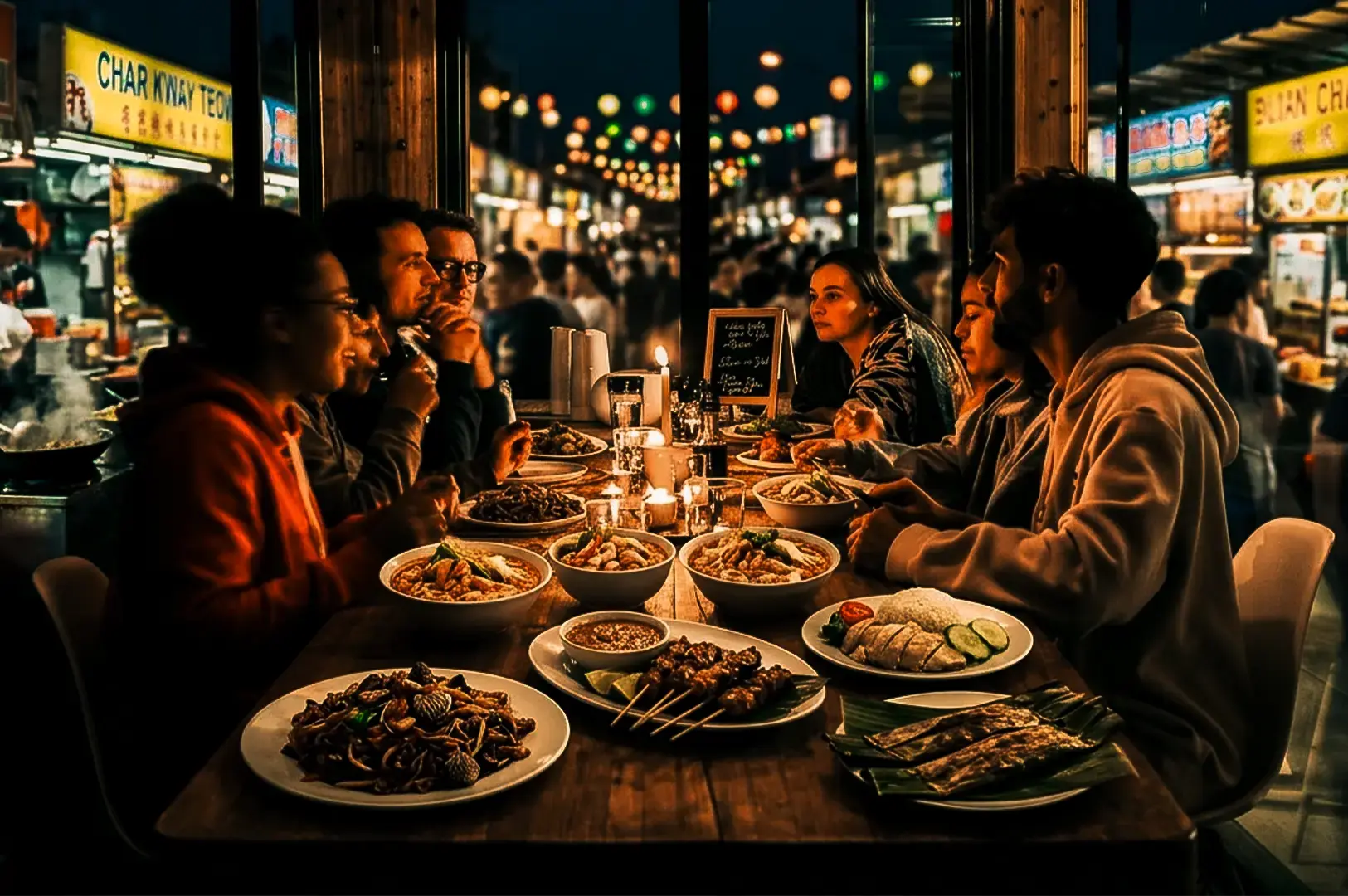
Why Timing Changes the Story
Weekend markets in Singapore often transform from routine wet markets into lively social spaces after dark. Families stroll, friends chat, and shoppers discover local products spontaneously. The focus shifts from merely buying stuff to enjoying community presence and shared experiences.
Step back to capture wider frames of shared tables, groups eating, or queues outside food stalls. These scenes tell stories of belonging and the social fabric of Singapore’s night market culture.
During busy evenings, step back.
Capture:
- the whole table
- the movement around stalls
- the relationship between people and food
Sometimes the crowd is the photograph.
Lau Pa Sat: Lessons in Smoke, Fire, and Satay Street
Backlighting Smoke and Steam
Lau Pa Sat, located in the heart of the city, is famous for its satay street, where vendors grill meat skewers beside glowing coals. Photographing subjects between yourself and the light source reveals the texture of smoke and the warm glow of fire, adding depth and atmosphere to your images.
Photograph the Cooking Process Before the Plate
The final satay dish is appealing, but the real story is in the cooking, flipping skewers, hands moving swiftly, flames licking the meat. Capture the process with smoke, motion blur, or flames stretching beyond focus to add life and authenticity. Perfect photos show food; living photos show the experience enhanced by the famous peanut sauce that accompanies satay here.
Place the light behind:
- smoke
- steam
- flames
Little India Arcade: Colour, Food, and Culture
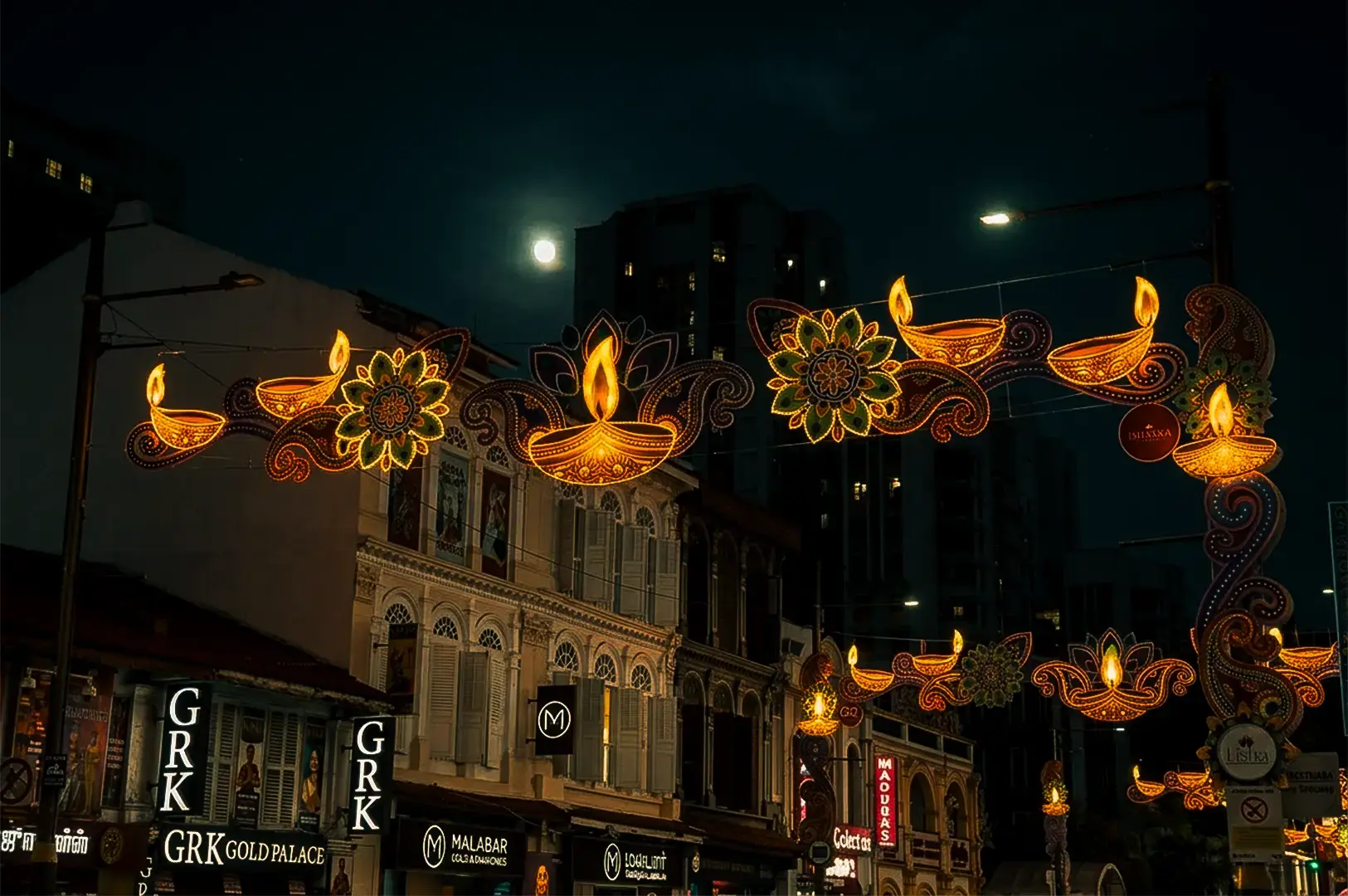
Looking Beyond Colour to Daily Rituals
Little India Arcade, located in the heart of the Indian town, dazzles with spices, sweets, garlands, and vibrant storefronts. But the story lies in daily rituals, hands measuring spices, dough shaped, food prepared as it has for generations. This market offers a glimpse into Indian culture and tradition within Singapore’s diverse food scene.
Patience reveals authentic moments, a cook reaching for the same ingredient, a shopkeeper arranging displays, a customer pausing before choosing.
Photograph Culture With Respect
Little India is a living community, not just a backdrop. Approach vendors and scenes respectfully to capture genuine stories that reflect the rich heritage and the famous Indian cuisine found in this part of town.
Markets in Singapore: Respecting Food and Community Spaces
Remember You Are Entering Someone Else’s Workplace
Markets are community hubs where vendors work long hours. As a photographer, be a respectful guest: ask before close portraits, avoid blocking queues, and don’t interrupt routines. Many hawker centres and pasar malams accept both cash and digital payments, reflecting the modern yet traditional blend of Singapore’s night markets.
Respect matters.
Ask before close portraits.
Avoid:
- blocking queues
- interrupting vendors
- asking people to repeat actions
The best images come from patience and observation, not staged scenes. Let moments unfold naturally.
Haji Lane: Midnight Stories Beyond Food Markets
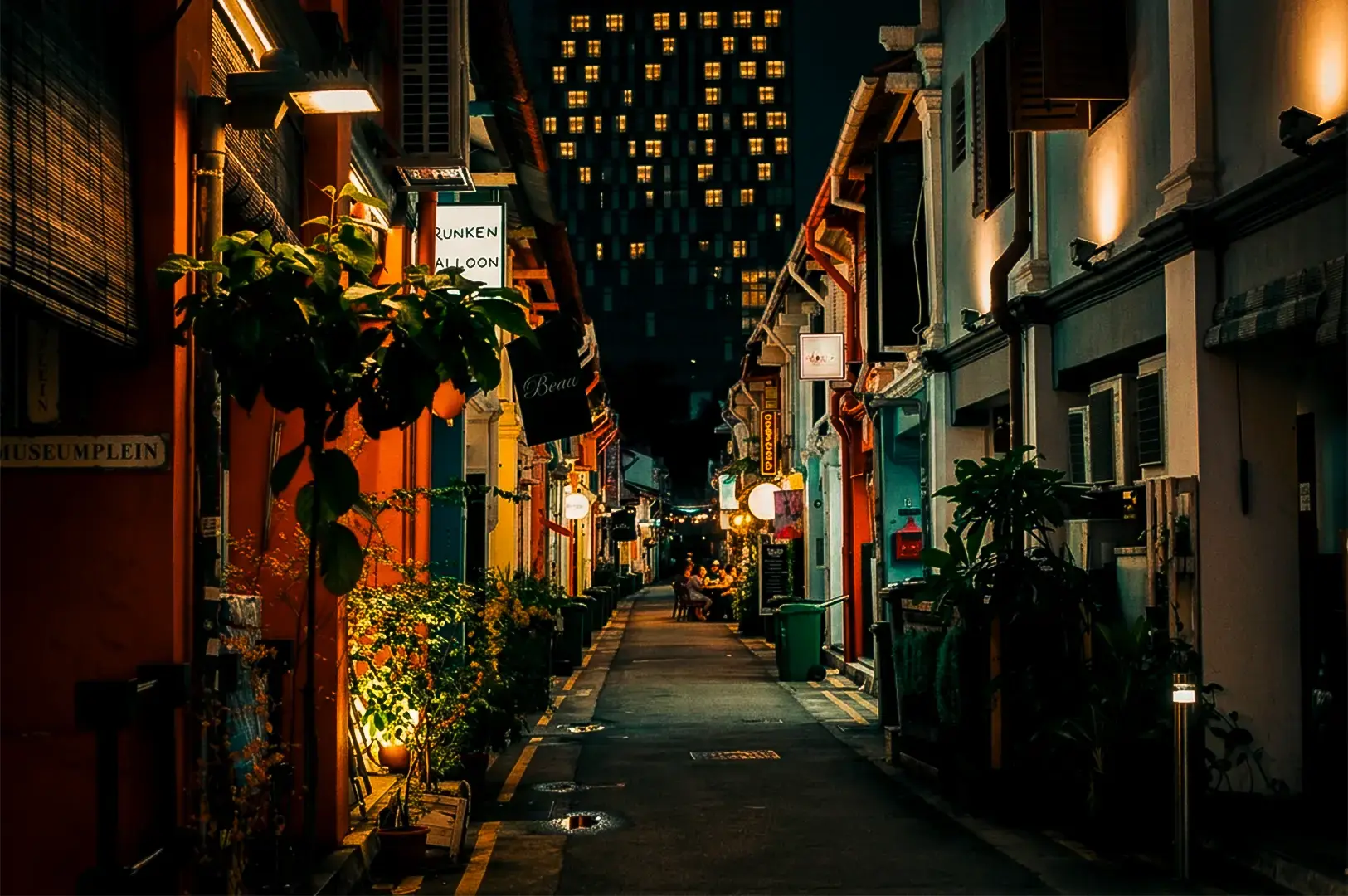
Photographing Singapore After Food Stalls Close
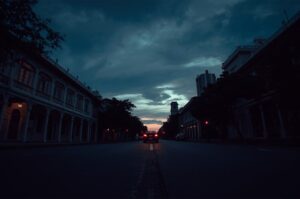
After midnight, Haji Lane’s narrow streets quiet down. Boutiques, handmade goods, and home decor items rest behind lit windows. Reflections, shadows, and quiet scenes tell a different story of Singapore’s nightlife beyond the food markets.
Finding Stories Outside the Plate
Food is just one part of the night market experience. Creative spaces and local businesses continue after dinner, revealing Singapore’s evolving nightlife and the unique vibe that makes this town a must-visit destination.
Without food to photograph, I look for different things:
- reflections
- shadows
- empty streets
- signs of people who have just left
The city continues even after dinner ends.
Orchard Night Market: Singapore’s Shopping Haven After Dark
Photographing a Different Side of Singapore’s Nightlife
Located near Ngee Ann City, Orchard offers a mix of retail, dining, and events. Unlike food-focused night markets, this area features fine dining restaurants, boutiques, and temporary pasar malam fairs selling souvenirs, stationery, clothing, and accessories.
Capture small moments: shoppers carrying bags, couples strolling beneath city lights, strangers pausing before storefronts. These scenes create lasting memories of Singapore’s vibrant night market culture. Discover more of Orchard’s nightly eats by exploring Somerset over here.
Research Before You Visit
Night markets in Singapore change often. Vendors rotate, locations shift, and events appear briefly, especially on the last weekend of each month or during festive periods. Checking Google for updated dates and locations helps avoid missing the only night market or special fairs in town.
Each of Singapore’s Night Markets Are Unique Yet Connected
The Photos That Stay Are Usually Unplanned
The best shots are moments between: hands disappearing into smoke, bowls waiting to be eaten, strangers sharing tables, quiet streets after midnight.
Returning With More Than Just Images
Photographs remind us to pay attention. Singapore’s night markets thrive because people keep returning to cook, eat, shop, and connect. The role of a nocturnal food photographer is simple: stand quietly, observe carefully, and be ready when the moment arrives.

Amoy Street Food Centre Singapore: A Living Archive of Vanishing Culinary Techniques
Sarah Teh | January 28, 2026
As the dinner rush subsides at Amoy Street Food Centre Singapore, the true choreography begins. Seasoned hawker stall owners move with precision honed over decades, their wok fire dancing in rhythms that predate Singapore’s modern skyline. Six Michelin Bib Gourmand stalls operate within this 1983-established food centre, transforming what began as a government cleanliness initiative…
-
A Photographer’s Reference to Suntec City Photography Studios
Sarah Teh | January 21, 2026
The afternoon sun cuts through the glass canopy of Suntec City, illuminating the constant flow of shoppers and executives. In this polished world of commerce, a different kind of space exists—the photo studio. It is a controlled environment, a blank canvas waiting for a story. For a photographer or photography enthusiasts in Singapore, choosing the…
-
Photo Studio in Suntec City: Studios, City Lights, and Crafted Moments
Sarah Teh | January 14, 2026
The rain lets up, and Suntec City’s polished corridors gleam. Reflections of digital billboards shimmer on the tile floors, painting the landscape in electric blue and architectural gold. For the photographer, this part of Singapore is a world of contrasts—a space where crafted light meets the city’s pulse and every click of the shutter both…
-
Food in Joo Chiat After Midnight: Frames, Steam, and Streetlight
Sarah Teh | December 31, 2025
Joo Chiat at midnight is a vibrant stretch of color and movement. I come here not to list “food in Joo Chiat” or catalog signatures, but to watch the neighborhood build its portrait as blue hour fades beneath streetlight and neon. Every face, bowl, reflection, and plume of steam becomes part of how “Joo Chiat…
-
Joo Chiat Road Food: Traces After Dark
Sarah Teh | December 30, 2025
Opening: The Question, Reframed The search for joo chiat road food usually arrives with expectation. A food guide, a list, something mapped on Google Maps. This is not that. Joo Chiat Road runs 1.4 kilometres between Geylang Road and East Coast Road, a corridor of pre-war shophouses whose shutters lift and lower according to rhythms…
-
Plating Composition in Fine Dining: How Newly Starred Michelin Kitchens Compose a Plate
Sarah Teh | December 24, 2025
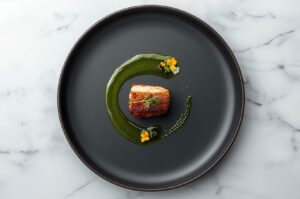
In Singapore, the journey of a newly starred Michelin restaurant begins long before the first bite. Plating in fine dining is more than decoration; it is a carefully composed arrangement that reflects the chef’s vision, the dish’s flavours, and the dining experience as a whole. Chefs in these kitchens treat each plate as a story,…
-
Low Light Dining Photography Singapore: A Practical Manual at Best 5-Star Restaurants
Sarah Teh | December 17, 2025
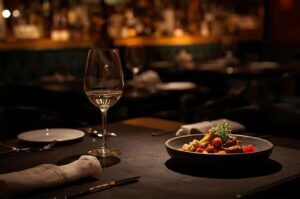
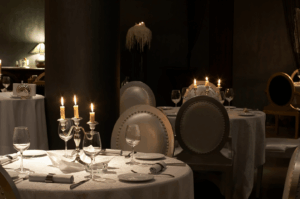
In fine dining, light, pacing, and plating are as important as flavor. Singapore’s 5-star restaurants and dining establishments offer a sensory theatre where textures catch low light and service flows quietly. This guide helps you choose and book these experiences with a photographer’s eye, focusing on capturing the meal’s story discreetly and respectfully. It also…
-
Michelin Guide SG: The Complete Guide to Documenting Culinary Excellence and Cultural Memory
Sarah Teh | December 10, 2025
In Singapore’s michelin starred restaurants, moments of cultural memory unfold alongside fine dining. The michelin guide singapore is more than a ranking; it maps spaces where tradition, mastery, and aesthetics converge into experiences that exist briefly before becoming memory. Singapore stands out as a notable gastronomic destination in the Asia-Pacific region and the country’s culinary…
-
Tokyo Photography: A Guide to Izakayas in Singapore and City Lights After Dark
Sarah Teh | December 10, 2025
The rain stops, but the streets of Shinjuku still gleam. Reflections of a thousand neon signs shimmer on the wet asphalt, painting the world in electric blue and vibrant pink. For a photographer, Tokyo at night is an endless playground. Nestled within this cinematic landscape, down a narrow alley and behind humble doorways, are the…
-
Night Photography Portfolio: Singapore’s Most Photogenic Fusion Restaurants
Sarah Teh | December 8, 2025
As the tropical sun dips below the horizon and the Lion City transforms into a glittering metropolis of neon and steel, savvy photographers know they’re about to witness the city at its most visually rich. Nowhere does this beauty come alive more than in Singapore’s growing scene of fusion restaurants, where each establishment is a…