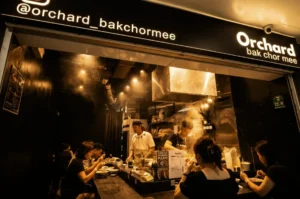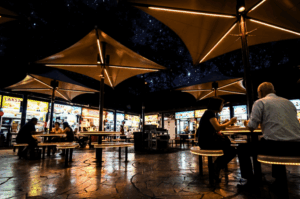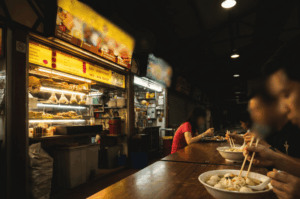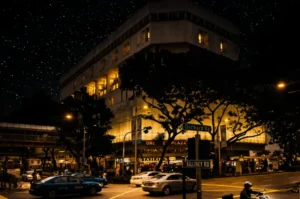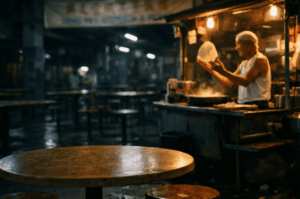
My first time taking a camera to Geylang at night was a lesson in humility. I had this grand idea of capturing the “gritty authenticity” of a late-night supper. I stood over a bubbling pot of eminent frog porridge at a spot on Lorong 9, camera raised high, trying to frame the perfect shot. I spent so long adjusting my angle that by the time I took the picture, the glorious, billowing steam had vanished. The pot was still hot, but the magic was gone.
That night, I learned a crucial lesson: Geylang food culture operates on its own rhythm, and food photography here isn’t about creating the perfect shot. It’s about capturing a moment that’s already happening. You’re a guest in someone else’s working night, and your job is to observe, not direct.
This guide is for anyone who has felt that mix of excitement and anxiety about photographing food in one of Singapore’s most vibrant, and often misunderstood, neighborhoods. I’ll share what I’ve learned, from mistakes and successes, so you can walk in with confidence, shoot with respect, and leave with images that tell a true story about the melting pot of good food along Geylang Road, Singapore.
Reading the Room: Your First 15 Minutes in Geylang Food
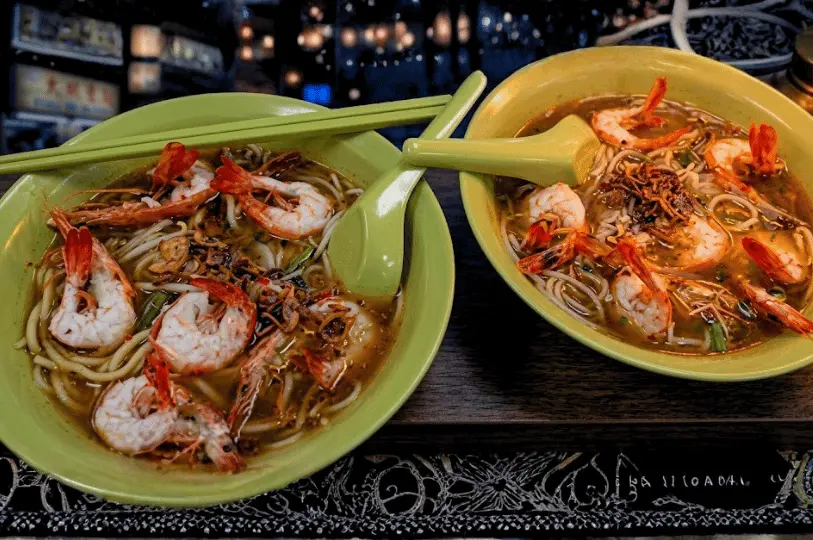
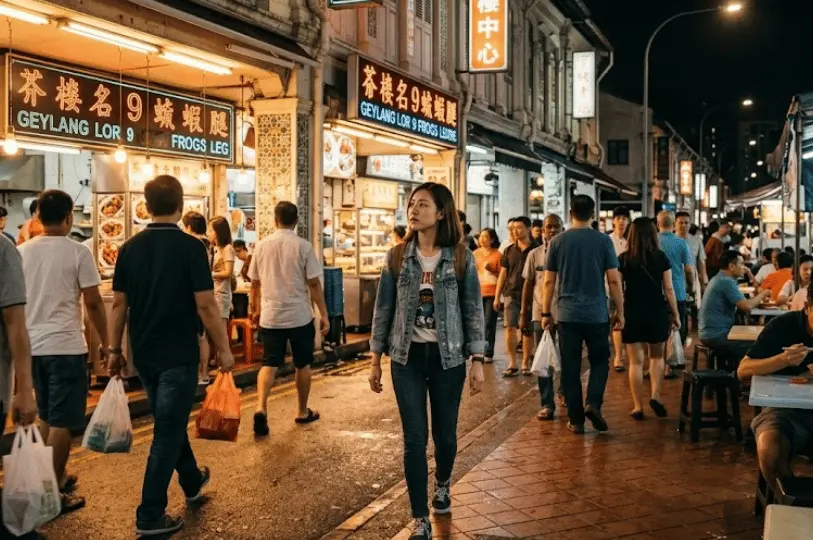
Before you even think about your camera, you need to read the room. In Geylang, the “room” is an entire street, bustling with activity from various famous stalls like Jalan Sultan Prawn Mee and popular eating houses such as Sing Lian Eating House. The single most important thing I do on any food photography outing here is to just walk and observe the vibrant culinary scene that includes iconic dishes like frog leg porridge served in earthen pots with flavours of spring onion and chicken essence.
A Run-Through of How to Savor Geylang Food at Night
By immersing yourself in this melting pot of Geylang food, you’ll find the perfect balance of traditional flavours and late-night dining culture, making your photography and dining experience both respectful and rewarding.
Here’s my step-by-step approach for the first 15 minutes:
- Walk the Lorong, End to End: I start at one end of the street and walk all the way down, then back up the other side. I’m not looking for food yet; I’m observing the energy.
- Walking through the lorongs, you’ll notice the rich aromas from dry bak kut teh at Leong Kee Klang Bak Kut Teh, the smoky wok hei of Swee Guan Hokkien Mee, and the sweet, thick dark sauce coating the tender pork ribs at various zi char dishes stalls. This initial walk helps me understand where the energy flows, from bustling 24-hour spots like Mongkok Dim Sum to quieter corners where you can savor dishes such as Sia Kee Duck Rice with succulent duck meat and fragrant steamed rice.
- Watch the Flow of Food and People: I pay attention to which stalls are frantic and which are calm. How fast are dishes coming out? Where do people stand to wait for their orders? Is there a clear path for servers?
- Identify Natural Pauses: I look for stalls where there’s a built-in pause in the action. Supper spots with dedicated seating, like some eating houses or spots near the famous Penang Seafood Restaurant, are great. Coffee shops between the dinner and late-night waves are also ideal. I avoid any stall where there’s a long, fast-moving queue since that’s a high-pressure environment not suited for photography.
In my experience, this initial walk tells me everything I need to know about where I’ll be welcome and where I’ll be in the way. It’s about finding the pockets of calm within the chaos.
Insider Knowledge: Some of the best food photography in Geylang happens not at 1 a.m., but in the late afternoon, between 4:30 p.m. and 6:30 p.m. The light is softer, stallholders are prepping and more relaxed, and you get a sense of the neighborhood waking up for the night. This is also a great time to capture the vibrant atmosphere around Geylang Serai Market and its famous nasi lemak stalls.
For those craving more nocturnal culinary adventures beyond Geylang, dive into the vibrant flavors of Joo Chiat Road after dark with this captivating food photography guide.
What to Bring, What to Wear, and What to Expect at Swee Guan Hokkien Mee and Other Food Spots
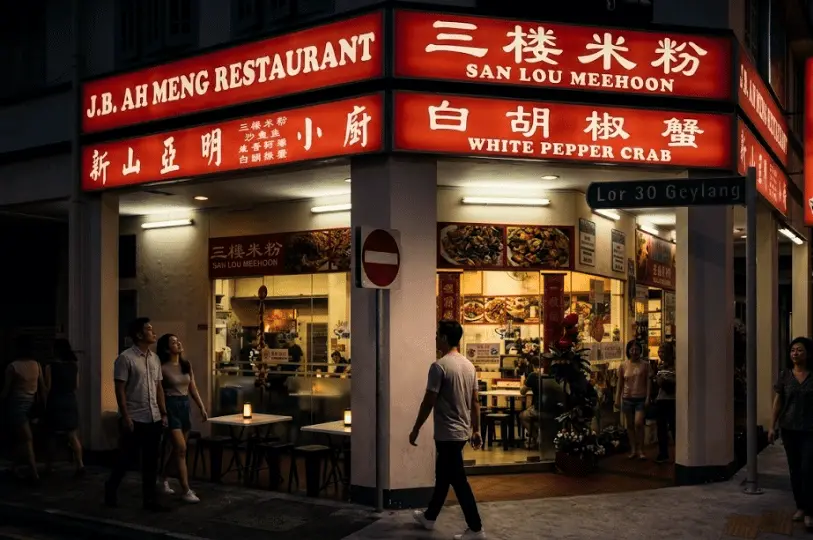
Geylang calls for discreet gear, compact cameras or smartphones, to blend into its vibrant food scene. Capture the steam of frog porridge, the sizzle of zi char, and the charm of plastic tables and scattered bean sprouts, with the right equipment.
Your Kit:
- Camera: A small, discreet camera (mirrorless or even just your phone) is best. I’ve found that a big DSLR with a long lens can feel intrusive and draw unwanted attention.
- Bag: A crossbody bag worn in front of your body. This keeps your valuables secure and your hands free. Dress dark, wear comfy shoes, and keep a crossbody bag for security.
- Clothing: Comfortable shoes are non-negotiable. You’ll be doing a lot of walking. Wear simple, dark clothing that doesn’t scream “tourist.”
The Cost:
Photography outings here can add up if you’re trying multiple dishes. Expect to spend around $20–$40 for a decent sampling. A typical zi char dish at a place like JB Ah Meng Restaurant might be $10–$18, frog porridge can range from $18–$30, and a simple plate of noodles like Swee Guan Hokkien Mee is usually $5–$8. Drinks are cheap, around $1.50–$3.
My Biggest Mistakes (and How You Can Avoid Them) When Shooting Beef Kway Teow and Beef Hor Fun
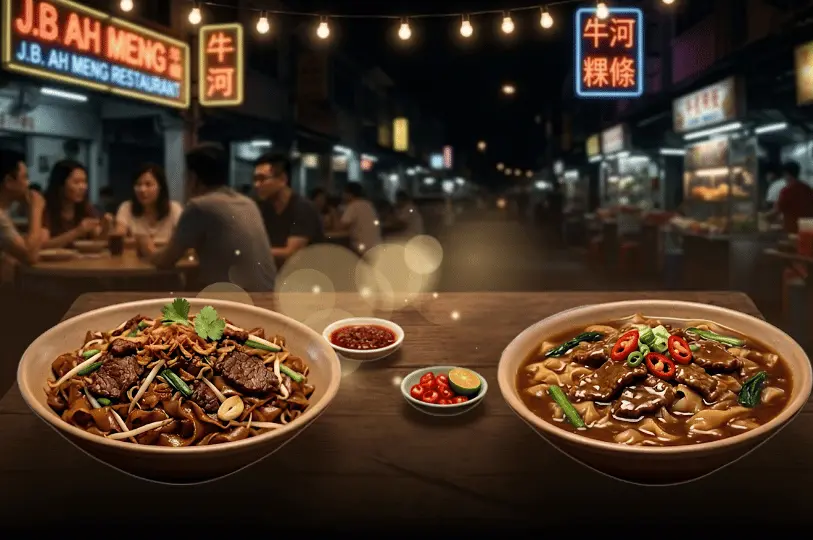
I’ve made plenty of errors in Geylang. Here are the most common ones I see photographers make, myself included.
Hovering Over Stalls
When I was new to this, I would stand near a stall, camera in hand, trying to decide what to order. This made the woman frying the Sia Kee Duck Rice visibly uncomfortable. They are running a business, and a person just standing there can feel like a judgment or a disruption.
- The Fix: Decide what you want from a distance. Walk up confidently, order, and pay promptly. This respectful approach allows you to enjoy iconic Geylang food like the famous Lor 9 beef kway teow, dry or soup version ban mian without disrupting the busy flow of the bustling food centre. Efficient ordering ensures you can savor specialties such as gong bao frog porridge or fresh prawns at Penang Seafood Restaurant, all staples of the vibrant Geylang food scene.
Rearranging the Entire Table
We all want that perfect flat lay, but a Geylang coffee shop table is not your personal studio. I once tried to move the chili sauce, the tissue packet, and the cutlery holder to get a “cleaner” shot. The uncle at the next table gave me a look I’ll never forget.
- The Fix: Embrace the context. The plastic tables, numbered stickers, and cluttered condiments are part of the story. Shoot the scene as it is. The best photos from Geylang include these imperfect details.
Shooting People Without Permission
It’s tempting to capture the “character” of the place by photographing the staff or other diners. Don’t do it. Geylang’s eating houses has a complex social fabric, and many people value their privacy.
- The Fix: Focus on the food, on hands, or on the wider environment. If you absolutely feel a person’s portrait is essential, you must ask. A simple, polite “Excuse me, may I take your photo?” is all it takes. Be prepared for a “no,” and accept it gracefully.
Pro Tip: Your body language is your most important tool. Keep your camera below chest level when not shooting. Move calmly and deliberately. When you sit down to eat, put the camera away for a bit.
Before You House Down Mongkok Dim Sum and Duck Porridge: A Photographer’s FAQ
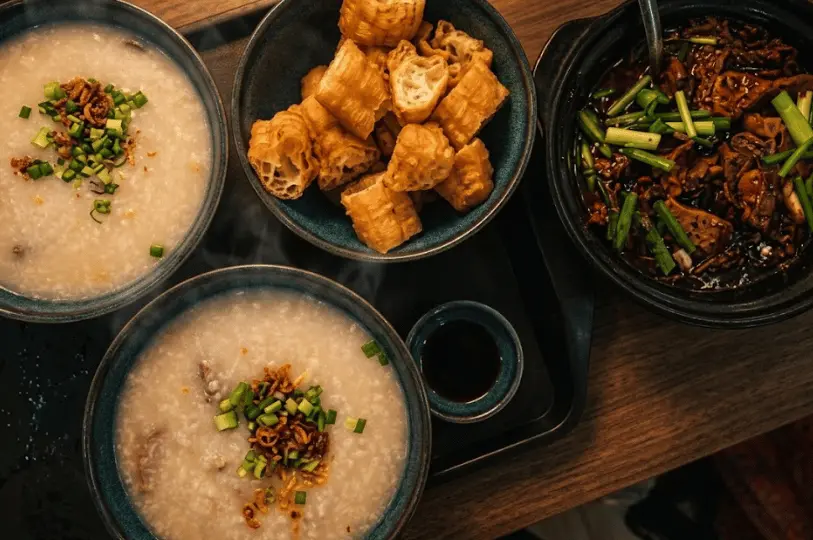
Let’s address the questions I get asked most often.
Is it safe to bring a camera to Geylang at night?
Yes, but you need to be smart. Geylang is busy and crowded, which is different from being dangerous. Keep your camera bag zipped and in front of you. The main risk isn’t crime; it’s accidentally getting in someone’s way.
Will stallholders mind if I take photos?
Most won’t mind if you are quick, discreet, and a paying customer. The key is to be respectful. They are not running their stall for your Instagram feed; they are running it to serve food. Order, shoot briefly (one or two quick snaps), and then eat.
Is phone photography enough in low light?
Absolutely! Modern smartphones excel in low-light conditions and are perfect for capturing Geylang food scenes discreetly. Their advanced sensors handle mixed lighting, fluorescent, neon, and sodium lamps, with ease. Embrace a bit of grain; it adds to the authentic nighttime atmosphere.
Do I need to ask permission to photograph my food?
No, you don’t need to ask permission to photograph the food you’ve purchased. However, etiquette becomes important when your photography starts to impact others. Don’t use a flash. Don’t block walkways. Don’t spend ten minutes shooting while your hot food gets cold and other customers are waiting for a table.
Enjoying Good Food In The Twilight: Geylang Serai Market, Klang Bak Kut Teh, Leong Kee, Ban Mian, and Wonderful Durian
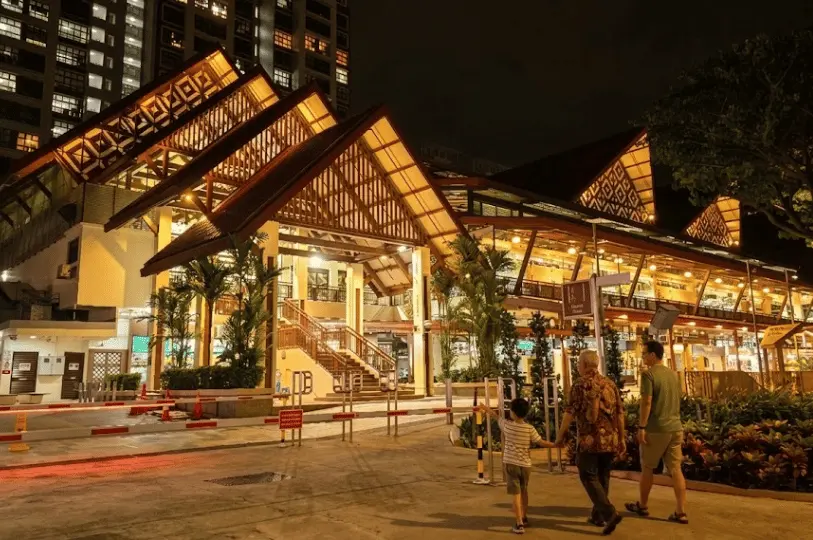
Food photography in Geylang is a dance. It’s about knowing when to step forward and when to step back. The best images I’ve ever taken were the ones where I captured a genuine moment: steam rising from a claypot just before the server sets it down, the glisten of oil on a freshly fried hokkien mee, the beautiful chaos of a table shared among friends enjoying dishes.
My final piece of advice is this: go with the intention of eating a satisfying meal. Consider any good photo you get a bonus. When you understand that you are a temporary guest in a world that runs on efficiency and respect, you’ll not only get better photos, but you’ll also earn your place at the table sampling delights like banh mi thit, salted egg prawns, or the sweet rock sugar desserts.
Enjoy the springy noodles of L32 handmade noodles and the thick sauce dishes at BBQ Box or Liu Da Ma BBQ. Geylang is a red light district with a heart full of culinary treasures waiting to be discovered.
Alright, that’s enough food placement to last you a whole of week midnight cravings. Happy shooting and even happier eating!

The Tension of the Moment
Sarah Teh | July 16, 2026
There is a half second at a wok stall that I have learned to live for. The flame leaps, the hand tilts, and the whole dish hangs in the air before it falls back into the pan. Miss it, and you get a flat plate of noodles. Catch it, and you get the night itself,…
-
Tha Siam Thai Kitchen: A Thai Supper Glow Inside Orchard Plaza
Sarah Teh | July 15, 2026
Orchard Plaza after dark is a strange kind of quiet. The shiny malls down Orchard Road buzz with crowds, but up here the corridors hum under old fluorescent light, half the shutters down, the air still and slightly worn. I almost walked past Tha Siam Thai Kitchen. If not for the faint thread of Thai…
-
Nasi Lemak Picture Composition: How to Frame Rice, Sambal, and Fried Chicken
Sarah Teh | July 10, 2026
The first nasi lemak picture I ever loved was a failure. It was past midnight, under the harsh fluorescent stall light buzzing overhead, and I had shot the plate straight down the way everyone tells you to. When I looked at it later, everything had melted into one flat surface. The rice, the sambal, the…
-
A Bowl of Hokkaido After Dark
Sarah Teh | July 9, 2026
Photographing Japanese Soup Curry in the City It was past nine, and the rain had just stopped. I had been walking with a fogged lens and an empty stomach, looking for nothing in particular, when the warm light of a small soup curry counter pulled me in. I sat down before I even thought to…
-
Orchard Bak Chor Mee: Vinegar, Steam, and a Late-Night Queue
Sarah Teh | July 8, 2026
I’ll be honest, the first bowl that landed in front of me looked a bit sad. Pale noodles, not much going on, and I nearly worried I’d made a wrong call. Then I tossed it, and the whole thing transformed. That’s the trick with Orchard Bak Chor Mee. The sauce hides at the bottom, so…
-
Through Fogged Glass and Neon Lights
Sarah Teh | July 2, 2026
My lens fogged the moment I stepped out of the cab near Lau Pa Sat. The night air pressed in, thick and warm, and for a few seconds I could see nothing through the viewfinder but a soft white blur. I almost wiped it away in a hurry. Then I noticed how the neon from…
-
Mall Glare Tips: How to Shoot Food Under Harsh Lights at Cuppage Plaza
Sarah Teh | July 1, 2026
The first time I tried to photograph a bowl of ramen at Cuppage Plaza, I nearly gave up. My broth had a shiny white blob on it, the egg looked grey, and the whole shot felt like a hospital cafeteria food photo. I sat there frustrated, soup going cold, wondering why my food photography never…
-
A Lens on the Night
Sarah Teh | June 25, 2026
I remember the exact moment I stopped chasing the perfect plate. It was close to midnight along Geylang Road, and the air still held the day’s heat like a slow exhale. A woman ladled laksa at a corner stall, her face half-lit by a single bulb, and I realized the steam rising from her pot…
-
Three Late-Night Orchard Plaza Food Spots Open Past Midnight (and One Just Before)
Sarah Teh | June 24, 2026
I’ve spent many nights exploring Orchard Plaza’s vibrant late-night food scene, capturing the warm, honest atmosphere that emerges after most of the city sleeps. Over the years, I’ve sampled nearly every supper spot in this slightly worn but charming building. Some places came and went, but three have remained my go-to late-night haunts, plus one early-evening…
-
The Night’s Palette
Sarah Teh | June 18, 2026
The city at night has always drawn me in. The hum of neon signs, the glint of streetlights on slick pavements, and the comforting glow of hawker stalls create a canvas that feels alive with stories. As someone who has spent countless evenings wandering Singapore’s streets with a camera in hand, nighttime food photography has…