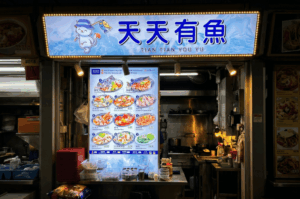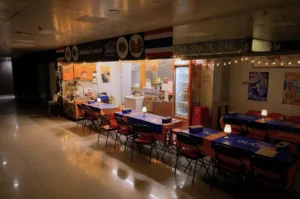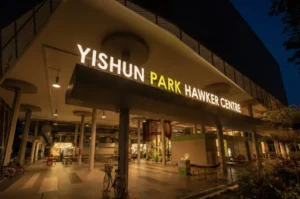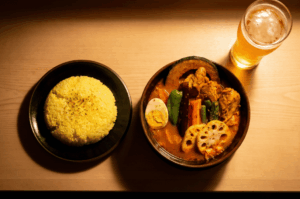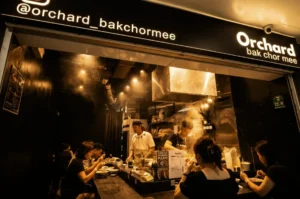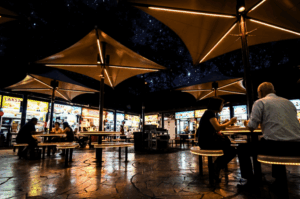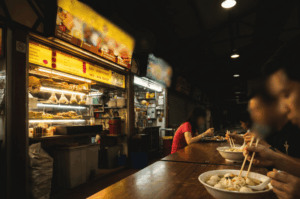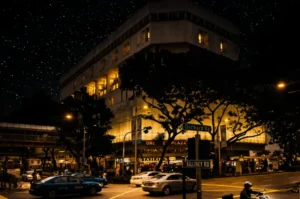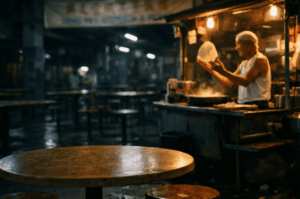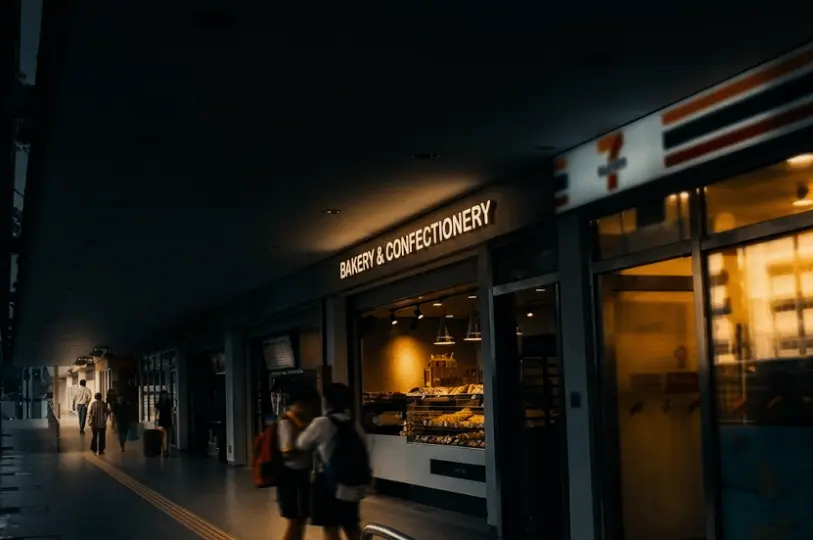
The humidity hits you the moment you step out onto the street at the end of the day, quickly followed by the sharp, intoxicating scent of charred garlic and sambal. Steam billows from a roaring wok, catching the green and pink glow of a nearby neon sign. A vendor expertly tosses noodles into the air, the metal spatula clanging against iron. This is the magic of Geylang food after dark.
The first time I went to shoot street food photography here, which was 3 years ago, I was completely overwhelmed. I walked from Aljunied MRT, heading down Aljunied Road and turning onto Sims Avenue to navigate the even-numbered Lorongs (lanes). I pointed my camera at a beautiful plate of satay, fired my bare on-camera flash, and completely ruined the moody atmosphere. The food looked like plastic, and the vendor squinted aggressively at me.
On my third visit, just a few weeks ago, I discovered the secret: you have to shape your light to match the environment. Finding the right portable lighting techniques can transform your Singapore night photography from amateur snapshots into cinematic, mouth-watering art. Here is how to master your lighting setup while respecting the vibrant, chaotic energy of the local supper crowd.
Video Tips for Food Photography: Lighting and Composition
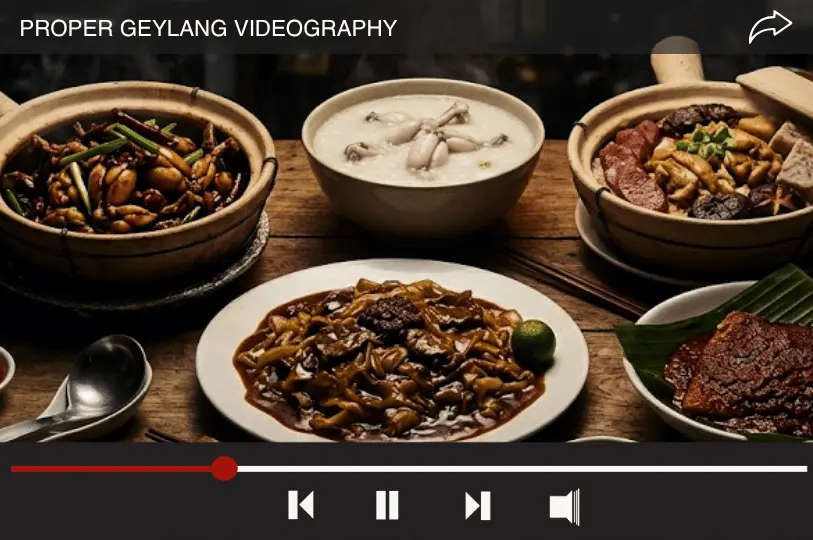
If you want to watch full tutorials on capturing Geylang at night, many guys or girls provide episodes that you can follow along using the transcript. These walkthroughs, some with 15k views or more, offer practical advice on lighting setups, composition, and camera settings perfect for the unique challenges of this bustling area.
Before you start, check if playback doesn’t begin shortly or if an error occurred while retrieving the tutorial, begin shortly try restarting your device or sign in to YouTube on your computer to avoid issues. Remember, everything you watch may be added to the TV’s history and influence TV recommendations, so subscribe and stay updated with the latest episodes for the best insights.
If you are itching to get out there and don’t want to watch full video, episodes you watch may be skimmed through by using the “show transcript” option to study the tutorial faster.
Portable Lighting Setups: A Discovery That Changed My Approach
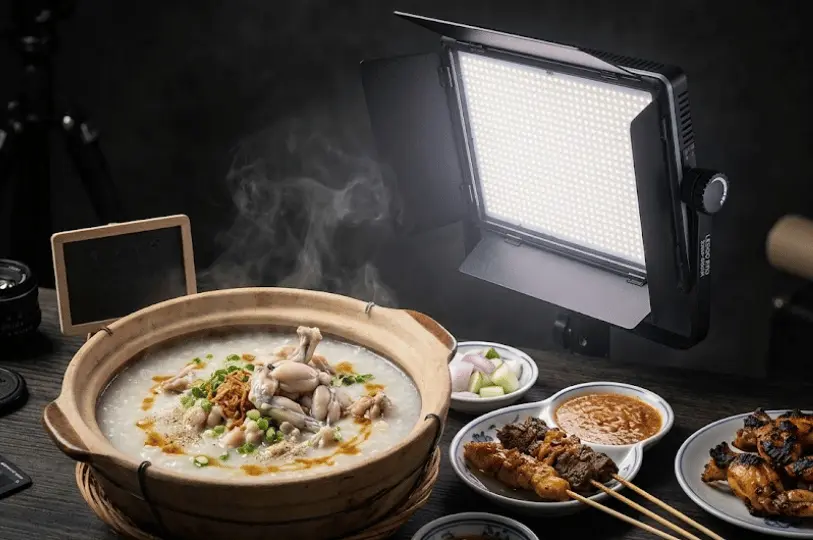
Months ago, I realized that on-camera flash was a no-go for Geylang photography. The harsh, direct light flattened the textures of the food and killed the ambient mood that makes Geylang so special at night. Instead, I switched to off-camera lighting with a small LED panel. This continuous light source allows me to see exactly how shadows fall on dishes like frog leg porridge or satay, highlighting their textures and colors without startling the vendors or diners.
Using a portable LED panel gives me much more control over the light’s direction and intensity. When you tap to unmute your LED light or use a mini softbox attachment, you can soften harsh specular highlights that would otherwise create distracting glare on glossy surfaces like soy sauce or oily satay skewers. If you don’t have a diffuser handy, a clean white tissue napkin works surprisingly well to diffuse the light, just be careful to avoid this cancel by ensuring the light doesn’t get too hot and damage the tissue or your gear.
The Human Reflector Method
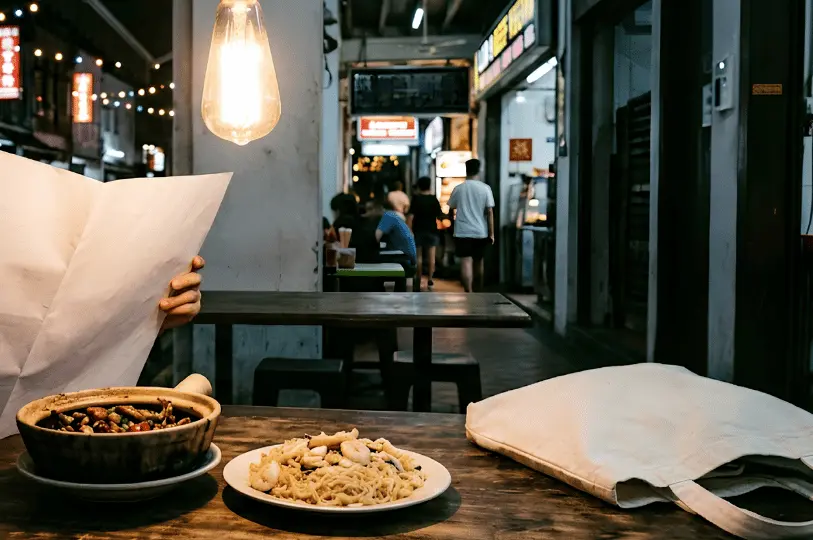
Another technique I’ve found helpful is the “human reflector” method. By using a white menu, tote bag, or even a piece of white cardboard, you can bounce light back onto your subject, filling in shadows and creating a more balanced exposure. This approach helps keep the lighting natural and flattering while maintaining the vibrant atmosphere of the bustling street food scene. The key is to experiment with angles and distances until you find the perfect balance that makes the food pop without losing the authentic Geylang vibe.
These lighting discoveries have transformed my night photography sessions from frustrating attempts into rewarding creative adventures. Each shoot feels like a dialogue between the camera, the food, and the environment, where light becomes a tool to tell the story of Geylang’s rich culinary culture.
Quick Fixes for Common Problems: Watch History and Influence in Photography
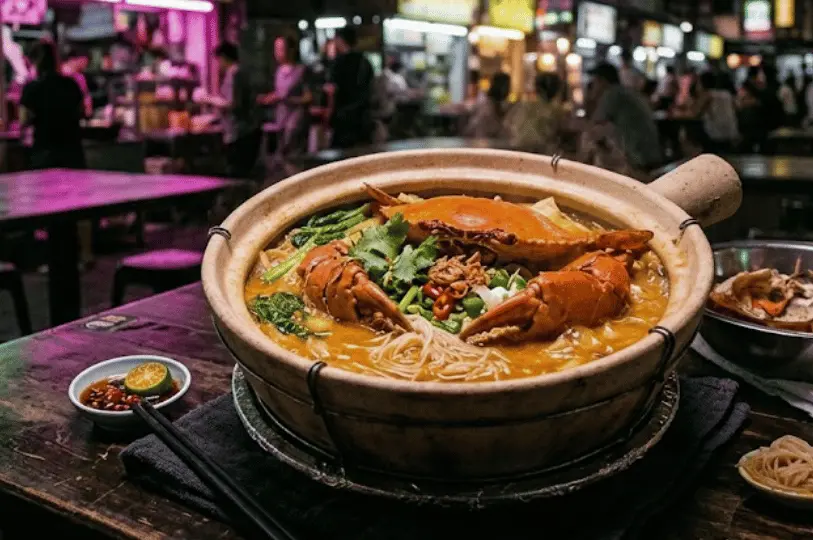
Sometimes, when shooting in Geylang’s vibrant night market, you might encounter challenges like green or magenta color casts caused by the complex mix of neon, tungsten, and fluorescent lighting. To tackle this, adjust your camera’s white balance setting to fluorescent or manually dial in the Kelvin temperature to warm up or cool down your shots as needed. This simple tweak can dramatically improve the authenticity and appeal of your food photos, making the rich colors pop just right.
Hot spots or glare on glossy food surfaces, such as the oily satay skewers or shiny soy sauce pools, can be tricky. To minimize these distracting reflections, try moving your light source further to the side or experiment with backlighting to emphasize texture rather than glare. This technique brings out the mouth-watering details of dishes like frog leg porridge or crab bee hoon, enhancing the visual storytelling of your shots.
Motion blur is another common hurdle, especially when chefs’ hands move quickly as they prepare dishes. To freeze this action, bump your ISO up to around 3200 and increase your shutter speed to 1/250s or faster. While this might introduce some noise, it’s a worthy trade-off for capturing the dynamic energy of Geylang’s bustling hawker scene. Finding the right balance between sensitivity and sharpness takes practice, and I can’t even explain how many times I’ve adjusted settings after shooting multiple stalls hours ago.
TV’s Watch History and Retrieving Sharing Information
Additionally, consider the importance of your watch history when engaging with online tutorials or guides. The reels you watch may shape your approach and inspire new techniques for the day, so subscribe to channels that consistently provide quality content. Watching later and including playlists of your favorite tutorials can help you revisit key lessons when preparing for your next shoot.
Remember, every shoot is a learning opportunity. The more you experiment with lighting, camera settings, and composition, the better you’ll capture the authentic vibe and delicious details of Geylang’s culinary treasures. So don’t be discouraged by initial setbacks, embrace them as part of your creative adventure in this unforgettable food paradise.
Don’t miss our detailed guide on what to eat in Tanjong Pagar for more culinary adventures beyond Geylang’s vibrant food scene.
Conclusion: Your Next Geylang Photography Adventure
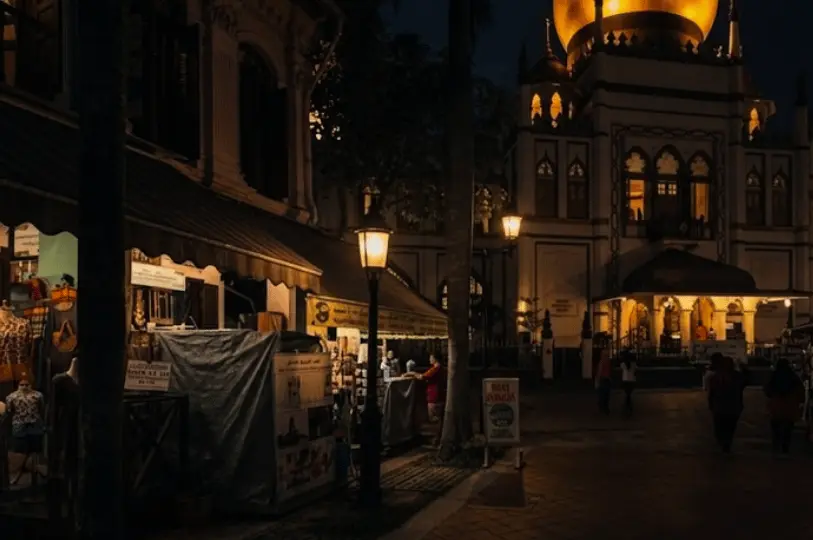
Photographing Geylang food at night is an adventure that combines technical skill with cultural storytelling. Whether you are a beginner or a seasoned shooter, these portable lighting tips and video resources can help you create stunning images that capture the vibrant spirit of Singapore’s Malay Quarter.
Don’t forget to subscribe to relevant channels of your favorite tutorials to keep improving. For more tips, check out our other midnight photographer episodes and tag us in your best late-night food captures.
Guys, this is your chance to dive into the world of food photography and make every night shoot count. Whether it was 1 year ago, 2 years ago, or even 5 years ago that you started exploring this scene, the adventure continues with every frame you capture. So, read the tips, copy link to your favorite tutorials, and follow where the locals lead you to master this craft. Show less precision and more raw frames from your trip. Enjoy your day and happy shooting!

The Tension of the Moment
Sarah Teh | July 16, 2026
There is a half second at a wok stall that I have learned to live for. The flame leaps, the hand tilts, and the whole dish hangs in the air before it falls back into the pan. Miss it, and you get a flat plate of noodles. Catch it, and you get the night itself,…
-
Tha Siam Thai Kitchen: A Thai Supper Glow Inside Orchard Plaza
Sarah Teh | July 15, 2026
Orchard Plaza after dark is a strange kind of quiet. The shiny malls down Orchard Road buzz with crowds, but up here the corridors hum under old fluorescent light, half the shutters down, the air still and slightly worn. I almost walked past Tha Siam Thai Kitchen. If not for the faint thread of Thai…
-
Nasi Lemak Picture Composition: How to Frame Rice, Sambal, and Fried Chicken
Sarah Teh | July 10, 2026
The first nasi lemak picture I ever loved was a failure. It was past midnight, under the harsh fluorescent stall light buzzing overhead, and I had shot the plate straight down the way everyone tells you to. When I looked at it later, everything had melted into one flat surface. The rice, the sambal, the…
-
A Bowl of Hokkaido After Dark
Sarah Teh | July 9, 2026
Photographing Japanese Soup Curry in the City It was past nine, and the rain had just stopped. I had been walking with a fogged lens and an empty stomach, looking for nothing in particular, when the warm light of a small soup curry counter pulled me in. I sat down before I even thought to…
-
Orchard Bak Chor Mee: Vinegar, Steam, and a Late-Night Queue
Sarah Teh | July 8, 2026
I’ll be honest, the first bowl that landed in front of me looked a bit sad. Pale noodles, not much going on, and I nearly worried I’d made a wrong call. Then I tossed it, and the whole thing transformed. That’s the trick with Orchard Bak Chor Mee. The sauce hides at the bottom, so…
-
Through Fogged Glass and Neon Lights
Sarah Teh | July 2, 2026
My lens fogged the moment I stepped out of the cab near Lau Pa Sat. The night air pressed in, thick and warm, and for a few seconds I could see nothing through the viewfinder but a soft white blur. I almost wiped it away in a hurry. Then I noticed how the neon from…
-
Mall Glare Tips: How to Shoot Food Under Harsh Lights at Cuppage Plaza
Sarah Teh | July 1, 2026
The first time I tried to photograph a bowl of ramen at Cuppage Plaza, I nearly gave up. My broth had a shiny white blob on it, the egg looked grey, and the whole shot felt like a hospital cafeteria food photo. I sat there frustrated, soup going cold, wondering why my food photography never…
-
A Lens on the Night
Sarah Teh | June 25, 2026
I remember the exact moment I stopped chasing the perfect plate. It was close to midnight along Geylang Road, and the air still held the day’s heat like a slow exhale. A woman ladled laksa at a corner stall, her face half-lit by a single bulb, and I realized the steam rising from her pot…
-
Three Late-Night Orchard Plaza Food Spots Open Past Midnight (and One Just Before)
Sarah Teh | June 24, 2026
I’ve spent many nights exploring Orchard Plaza’s vibrant late-night food scene, capturing the warm, honest atmosphere that emerges after most of the city sleeps. Over the years, I’ve sampled nearly every supper spot in this slightly worn but charming building. Some places came and went, but three have remained my go-to late-night haunts, plus one early-evening…
-
The Night’s Palette
Sarah Teh | June 18, 2026
The city at night has always drawn me in. The hum of neon signs, the glint of streetlights on slick pavements, and the comforting glow of hawker stalls create a canvas that feels alive with stories. As someone who has spent countless evenings wandering Singapore’s streets with a camera in hand, nighttime food photography has…