Opening: The Question, Reframed
The search for joo chiat road food usually arrives with expectation. A food guide, a list, something mapped on Google Maps. This is not that.
Joo Chiat Road runs 1.4 kilometres between Geylang Road and East Coast Road, a corridor of pre-war shophouses whose shutters lift and lower according to rhythms older than any review. The street is read through habit, through timing, through the repetition of gestures that precede language. Food here functions as evidence—of who has stayed, what has changed, what continues without announcement.
The approach is observational. Light conditions matter. So does the hour. What appears at noon dissolves by midnight; what emerges after dark retreats by morning. Joo Chiat food exists within these intervals, visible to those who notice timing rather than signage.
Food as Repeated Work
At Kway Guan Huat, popiah skins stretch across a hot griddle. The motion is inherited—father to son, hand to wrist, a flick that thins the dough to translucence. This is not performance. No one watches. The skins stack in paper, ready for filling: prawns, jicama, sweet sauce, a trace of pork belly.
Joo Chiat is a historic neighborhood in Singapore steeped in Peranakan culture and heritage, and recognized as a Peranakan enclave where heritage meets modern charm.
Peranakan culture survives through such repetition. At Guan Hoe Soon, the restaurant that opened in 1953 and remains at 200 Joo Chiat Road Singapore, rempah is ground each morning. The ayam buah keluak recipe predates the current owners’ memory. The paste is spooned from blackened shells by hands that learned the pressure decades ago. This old school eating house is a crowd favourite for those who appreciate authentic Peranakan dishes, served with care and rich flavours.
The streets of Joo Chiat are lined with colorful shophouses adorned with intricate Peranakan floral motifs and geometric tiles.
Kim Choo’s dumpling work follows the same logic. Nyonya chang—glutinous rice parcels rich with meat and mushroom—are wrapped in bamboo leaves using a fold unchanged across three generations. The shop doubles as a cultural centre now, selling peranakan tiles and porcelain alongside kuehs. But the wrapping continues. The recipe holds.
Nearby, older trades share the rhythm. Rattan shops, provisions stores, bakery counters with glass cases unchanged since the 1970s. Old school signboards list prices by hand. The work is maintenance: opening, serving, closing, repeating. Chin Mee Chin’s epok-epok emerge from the same kitchen that produced them before independence. The coffee is brewed in the same proportion. The kueh tutu tastes like continuity.
Joo Chiat’s diverse culinary scene is reflected in its many eateries, restaurants, cafes, and food spots, offering both traditional and modern flavors for every palate.
Nightfall: Loss of Explanation
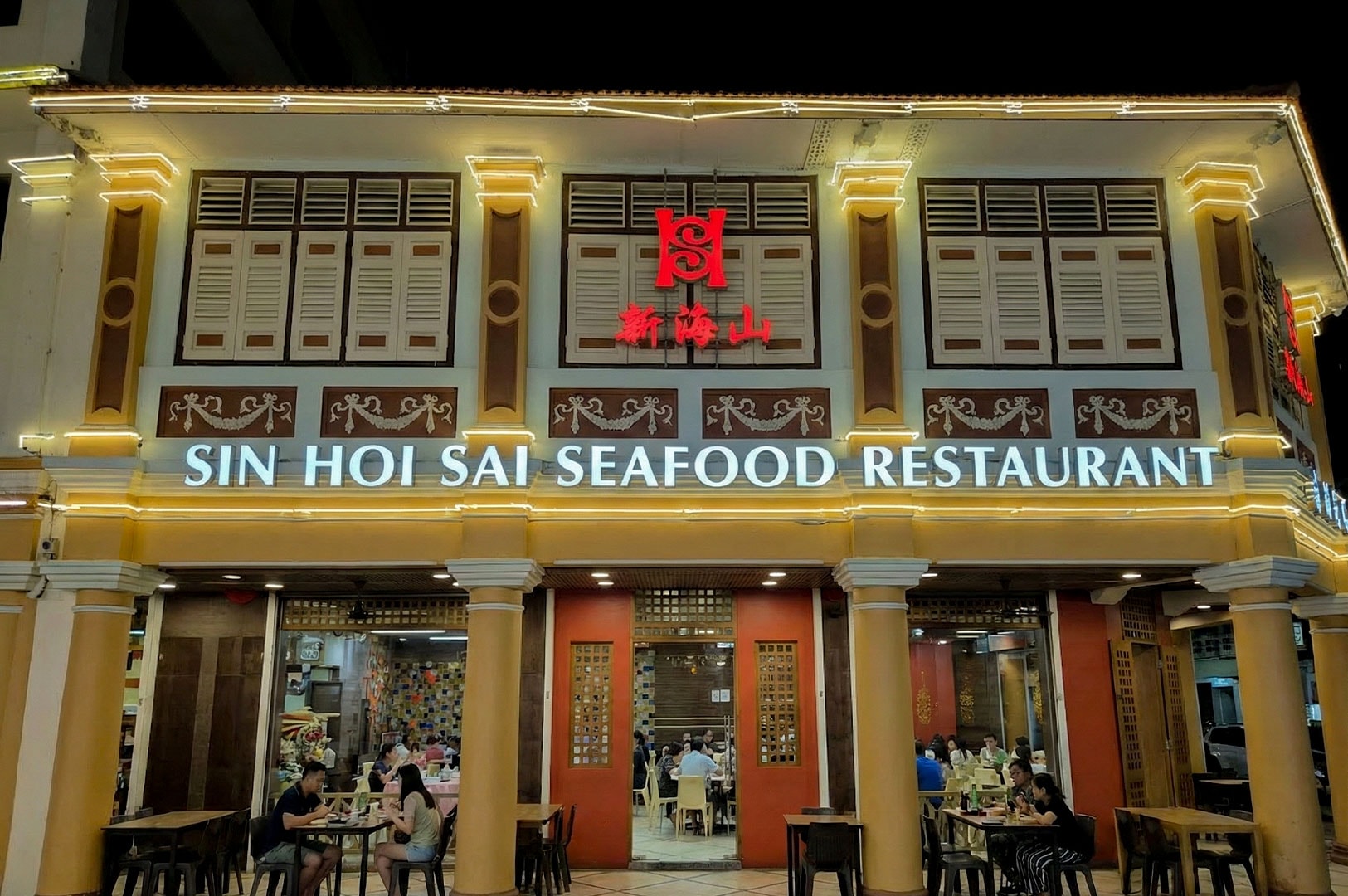
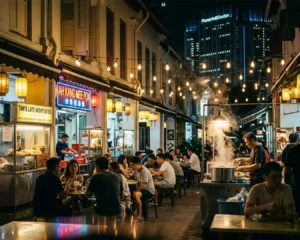
After sunset, joo chiat stops explaining itself. The neon at Sin Hoi Sai eating house cuts a rectangle into the dark. Fluorescent tubes at zi char stalls flatten faces into anonymity. The street fragments into rooms rather than a continuous strip. What connected by daylight now separates by light source.
Food places stay open not to impress but to remain usable—a lit room where time stretches. Conversation softens. Steam rises. The menu is already known; no one reads it. Even a first timer can find something to enjoy, as Joo Chiat is known for its diverse food scene, featuring a mix of traditional and modern eateries. A bowl of noodles arrives without ceremony. Sambal chilli sauce is spooned from a shared dish.
This is casual dining without the label. The table is plastic. The service is efficient, not styled. A cosy interior here means warmth, not design. The drinks list is short: kopi, teh, beer in green bottles. Dessert is optional—something sweet from the counter if it remains.
Faces blur. The crowd favourite stall from afternoon is quieter now, serving the same dishes to different people. Those eating at 10pm are not the same as those who ate at noon. The street knows this without stating it.
Supper and Staying Open
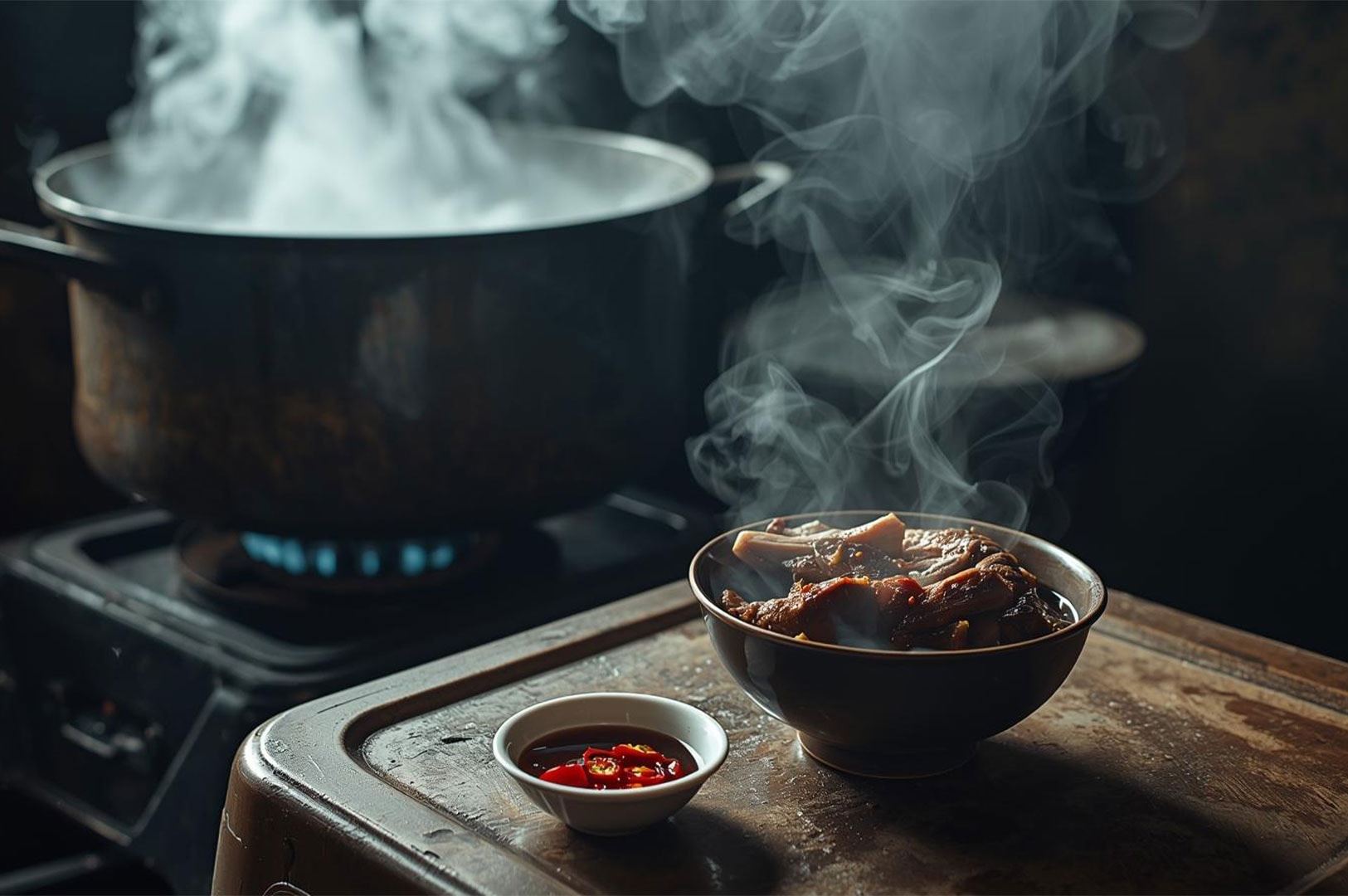
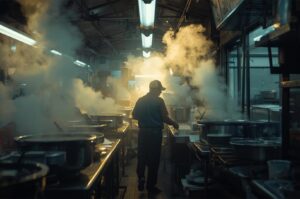
Past 11pm, the labour continues. Stock pots simmer. Woks clang in back kitchens. The floor gets mopped between customers.
Sin Hoi Sai holds until the early hours. Ponggol Nasi Lemak Centre closes near midnight, the coconut rice finished, the sambal scraped clean. Bak kut teh shops keep their broth on low heat for the late-shift workers: ride-hailing drivers between fares, bar staff finishing service elsewhere, cleaners heading home.
The people eating now are not at leisure. This is a meal before rest, not an occasion. The meat is functional—pork ribs pulled from bone, rice scooped fast, a bowl of soup to settle the night. Seafood shells pile on newspaper. Chilli crab is shared in silence.
A parallel timetable operates here. Those whose work ends when others’ entertainment ends. The delicious and the spicy matter less than the available and the open. This economy asks little of food except presence: a lit counter, a working stove, someone still willing to serve.
Visibility and Concealment
The front of house is bright. Glass walls reveal kitchens at the newer cafes—big short coffee, brewing ground, the wine bars along the upper stretch. Menu boards are backlit. Dishes are plated for cameras.
Behind, the corridor stays dim. Plastic sheets separate dining room from storage. Gas cylinders lean against walls. Staff in plain clothes carry crates through side doors. The creamy laksa broth is stirred in a room no customer enters.
This is the central tension. Joo chiat road food is advertised—heritage, artisanal, crowd favourite—but its making remains partially concealed. The recipe is grandmother’s, the menu claims. The pork is slow-braised, the description insists. The savoury notes are hand-balanced. These labels simplify dense histories into readable terms.
La Bottega and Province use global vocabulary. Ben Fatto names its pizza Newpolitan. Cicheti Group restaurants speak a language from elsewhere. The signboard landscape records shifting aspirations without argument. Old functional names—eating house, prawn noodle, kopi—sit beside abstract ones. Each frames the street for a slightly different audience.
Hidden Gems After Dark
After midnight, Joo Chiat Road exhales. Lights dim. Crowds disperse. What remains operates in shadow—not spectacle, but necessity. The comfort of routine. The surprise of discovery by chance. These places exist between shuttered storefronts and unmarked doors. Conversation murmurs low. Pork belly simmers in back kitchens.
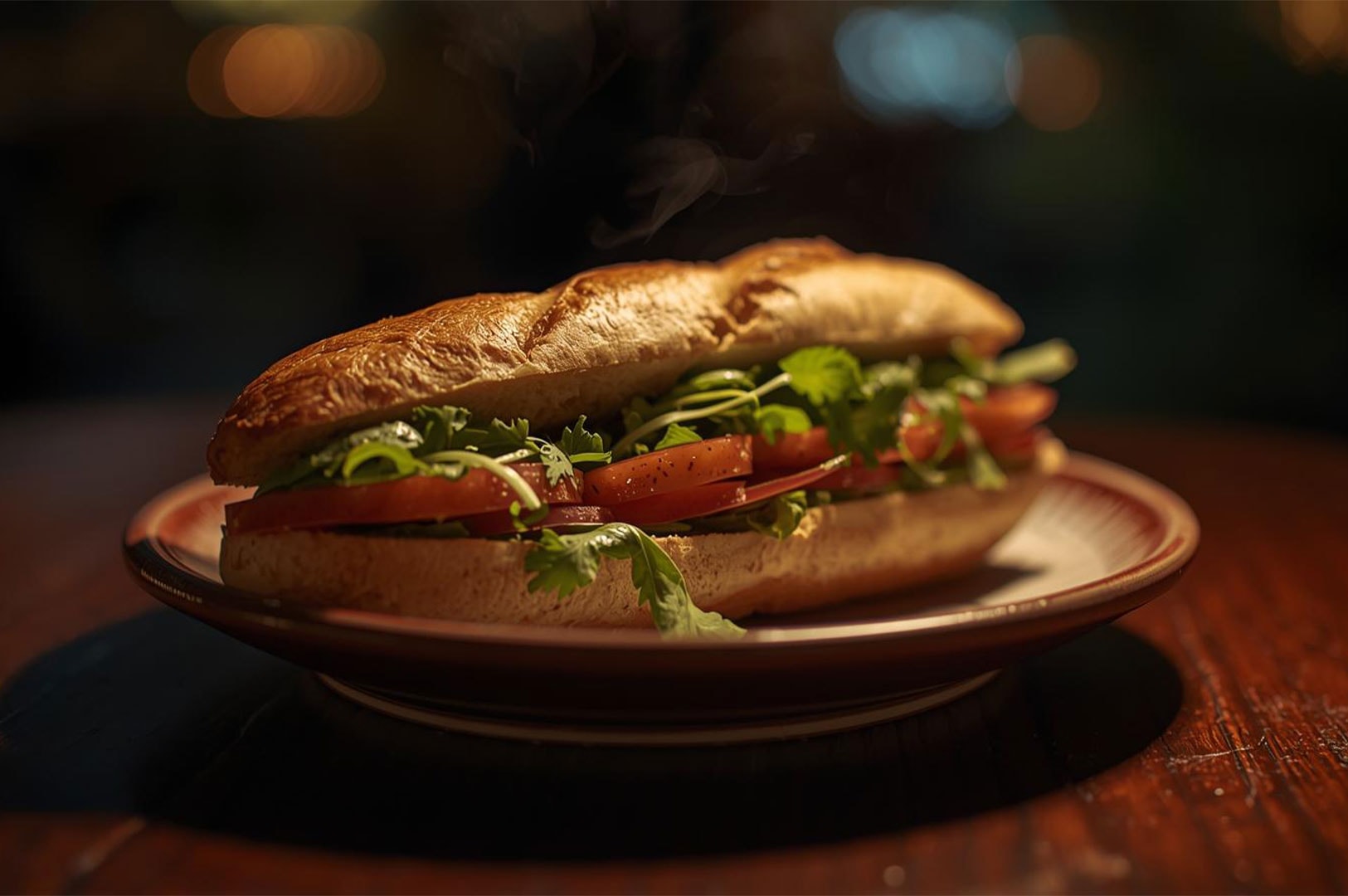
A Vietnamese woman slides bread from her oven. Crisp exterior yields to soft interior. She layers otah, pork, coriander. Her wrist turns. Chilli sauce streaks across filling. At the dessert stall, an old man ladles tau suan into plastic bowls. His menu, handwritten. His service, practiced. On Tembeling Road, hands stretch dough at Ben Fatto. Wine bottles line the counter. The list stays short.
Chocolate lovers will find specialty highlights here too. Awfully Chocolate Bakery & Cafe offers a popular weekend brunch buffet featuring a variety of dishes, while Embrace Chocolate, a woman-owned shop, serves gluten-free, vegan-friendly chocolate bars—making chocolate a unique draw for dessert enthusiasts along Joo Chiat Road.
Plastic tables. Harsh fluorescent light. Recipes passed through generations, not invented for Instagram. The food endures—laksa rich with coconut, ribs that surrender from bone, prawns that hiss in hot oil with garlic and chilli. Each meal marks an ending. A shift completed. Rest beginning.
In these hours, return becomes ritual. Staff recognize footsteps. Orders need no words. Rice steams in metal containers. The street’s daytime reputation dissolves. What persists: the quiet act of eating together. The understanding that some meals happen only in darkness. The knowledge that morning will come, but not yet.
Anonymous Diners

A lone figure eats claypot rice at 11:45pm. Plastic table, metal spoon, steam rising from the crust. The story is unknown.
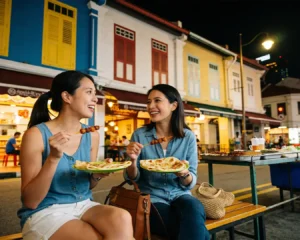
Two people share joo chiat banh mi on a low step, tearing bread in alternation. Their conversation is inaudible. The banh mi is from a Vietnamese shophouse tucked between a rattan store and a reflexology centre. The filling: otah, pork, coriander, something spicy.
At another table, a group divides plates without discussion. Meat here, rice there, prawns passed to the left. The meal is eclectic mix without the label—whatever arrived, shared equally.
The writer remains outside these stories. Only gestures are visible: chopsticks lifting noodles, fingers wiping chilli sauce, someone adding sambal to an already-full bowl. Food allows shared occupancy of space without explanation. The brunch crowd photographs; the supper crowd eats.
The Street as Backdrop
Koon Seng Road houses appear on screens worldwide. The pastel facades, the ornate tiles, the symmetry. Brunch plates are arranged for angles. Neon reflections from 808 eating house compose shareable frames.
Some spaces absorb the role of set. Others resist it through indifference. The zi char kitchen does not pause for cameras. The plastic tablecloth does not coordinate. The fluorescent light does not flatter.
Food bears representational weight unevenly. For visitors, it performs heritage. For regulars, it is dinner. The same restaurant serves both without distinguishing. The go to stall for a local is the destination for a traveller.
This is not critique. Both uses are real. The street accommodates without preference.
Dunman Food Centre: A Nighttime Crossroads
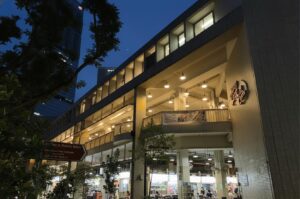
Evening settles. Dunman Food Centre becomes intersection. The lunch exodus complete, night draws its own assembly: taxi drivers pause between fares, families navigate plastic chairs, students bow toward bowls, retirees nurse coffee. Steam rises. Utensils strike melamine in steady percussion.
The stalls hold their ground. Wanton noodles—pork belly surfaces in thin ribbons, chilli pools bright against white ceramic. Hands ladle. Prawn noodles emerge, broth amber-dark, shells discarded in small mounds. Corner stall: bak kut teh. The cook’s movements practiced, economical. Pork ribs surrender to pepper-heavy broth. These dishes persist not through invention but through repetition.
Tables merge strangers. Service moves without ceremony. The kopi stall operates in ritual—beans roasted blocks away, coffee poured strong, cups bearing the small wounds of use. Dessert arrives unannounced: kueh sliced thick, chendol measured in bowls, sweetness to close the circle.
Dunman Food Centre after dark refuses performance. It anchors those who circle nearby—workers, residents, the temporarily displaced. What emerges here is necessity meeting hunger, prices that resist time’s pressure. Regulars recognize the rhythm. Newcomers witness what endures when cities shed their daylight masks. The food speaks its own language, bold without announcement, persistent as the fluorescent light that holds the darkness at bay.
Low-Light Geography
The walk ends. Doorways frame small territories—warm light from a Peranakan restaurant, harsh white from a hawker stall, dim amber from a wine bar closing for the night.
Thresholds matter. The step up into a shophouse. The narrow entrance at a prawn noodle shop. The half-open door where steam clouds the glass.
Sound distinguishes: metal chopsticks against bowls, clatter of plates in a zi char kitchen, the soft hiss of an espresso machine winding down. Big short coffee locks its door. The bakery has been dark for hours. Reflections on wet pavement stretch the neon into abstraction. The street resolves into rooms, corners, and exits rather than destinations, a scene that calls for mastering low light photography to truly capture its quiet essence.
Katong Laksa: A Bowl of Memory
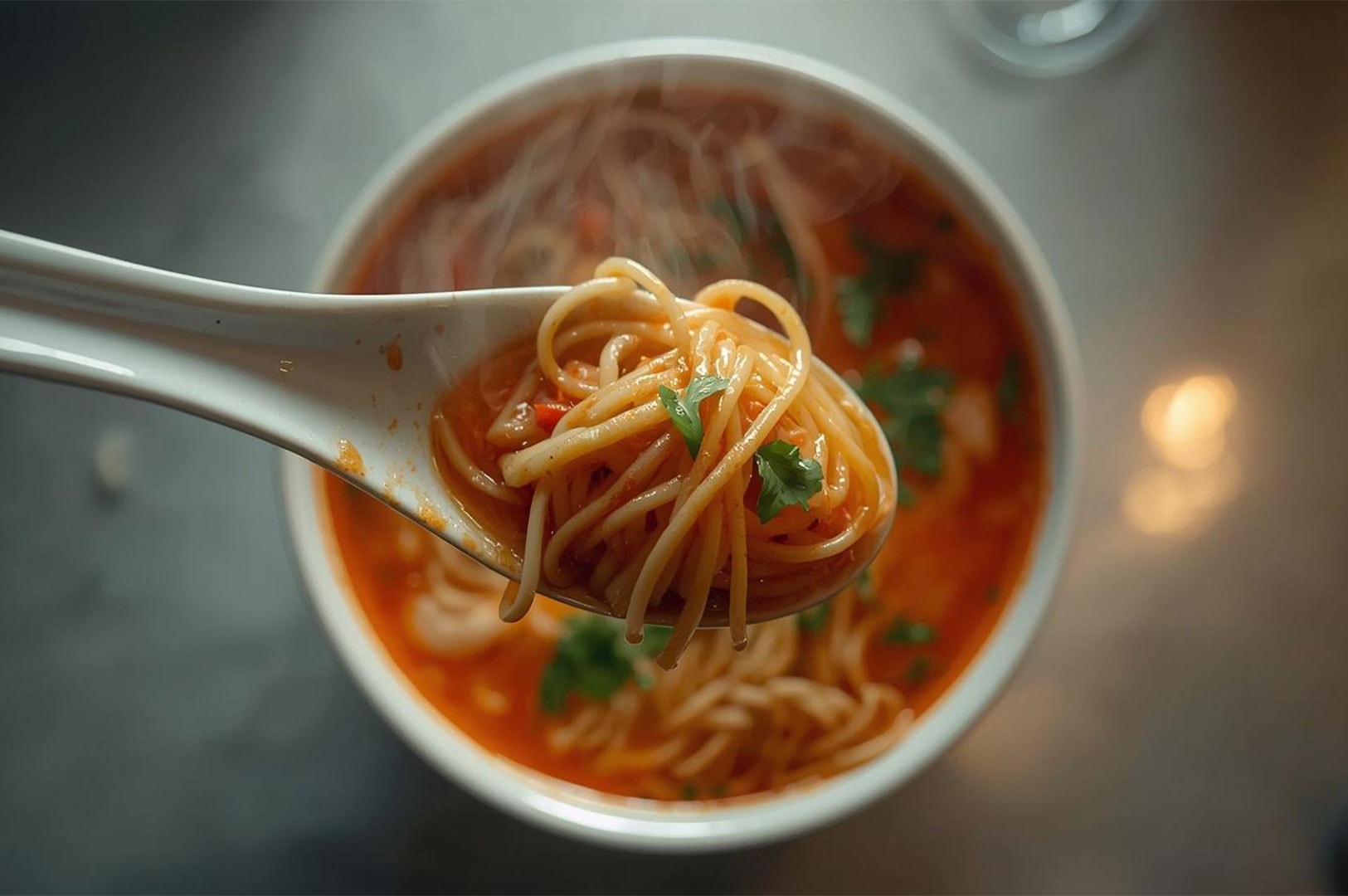
The bowl arrives. Steam rises. Inside, coconut broth holds noodles cut short for spoons, not chopsticks. A vendor’s practical choice that became tradition. Chilli sauce floats on the surface, waiting.
The woman at table three stirs clockwise. Always clockwise. Her spoon moves through layers—coconut sweetness, seafood brine, herbs sharp against the tongue. Each ingredient maps to a kitchen, a shophouse, a hand that ground spices before dawn. The recipes traveled here through marriages, migrations, small betrayals of original forms that became something new.
Tourists photograph their bowls. Locals eat without looking up. The difference shows in their movements: careful documentation versus automatic rhythm. One seeks experience. The other continues a routine that predates the guidebooks, the Instagram posts, the weekend long queues.
Evening settles over East Coast Road. The laksa stall stays lit while other shops close. Inside, hands still ladle soup, still sprinkle herbs. Customers sit alone at small tables, bending toward their bowls. Outside, the city changes around this small, persistent space. The soup remains. The gestures remain. The night holds them both. For those looking to explore the night further, the Tokyo Late Night Ramen Guide offers a fascinating parallel, inviting night owls to discover vibrant late-night dining scenes beyond Singapore’s borders.
Conclusion: Traces, Not Instructions
Joo Chiat road food is not something to follow. It is something to read. A nearly empty eating house near midnight. The last bowl of noodles being finished. The floor still wet from mopping. A single lamp by the register. Staff counting cash in quiet.
The street will repeat itself tomorrow. Almost the same. One shop will not reopen. Another will adjust its hours. A new cafe will fit out a vacant unit. The food culture of joo chiat road continues as a moving record—fragile, partial, unannounced—rather than a fixed attraction.
What remains is what repeats. What disappears leaves no notice. This ongoing narrative is beautifully captured by Midnight Photographer, whose lens reveals the subtle rhythms and hidden stories of Joo Chiat Road after dark.

Western Food In Singapore After Dark: A Midnight Photographer’s View
Sarah Teh | April 1, 2026
I often find myself photographing western food late at night, when the city softens and the dining table becomes quieter. Western food in Singapore does not always live inside polished restaurants. Sometimes it sits under fluorescent lights at a food center, sometimes at a hawker stall with a flat top grill that has seen decades…
-
The Art of Night Dining Photography: Tanjong Pagar Food
Sarah Teh | March 25, 2026
It’s close to midnight when the CBD quiets and Tanjong Pagar’s corridor lights ignite with warmth. The late MRT ride is the threshold to a world where tanjong pagar dining scenes unfold for my camera—tanjong pagar food under neon and rain-polished streets, kitchens humming long past regular opening hours. The tanjong pagar area stands out…
-
Chinatown Food in Singapore: A Photographer’s Guide to Street Food After Sunset
Sarah Teh | March 18, 2026
You step off the train, and the humidity hits you first, closely followed by the intoxicating aroma of sizzling garlic, roasting meats, and sweet soy sauce. The sun dips below the horizon, and neon signs flicker to life, casting a warm red glow over the bustling streets. Arriving hungry here is an absolute necessity to…
-
Tanjong Beach Club Singapore: Photographic Rhythm on Sand, Sea, and Night Service
Sarah Teh | March 11, 2026
The sun stretches along Tanjong Beach, casting shifting gold onto the sand and across plush daybeds that define this corner of Singapore’s beach culture. This is golden hour at Tanjong Beach Club, often regarded as one of Singapore’s best beach destinations, where the world outside the city softens, welcoming guests who discover their own spot…
-
What to Eat in Tanjong Pagar: Night Photography Across Best Restaurants, Food Centres, and Modern Eateries
Sarah Teh | March 4, 2026
I arrive inTanjong Pagar as blue hour overtakes the shophouse spine. The goal isn’t just dinner—it’s to answer what to eat in Tanjong Pagar from a night photographer’s field standpoint. Every dish and space signals an opportunity, from fried chicken to glossy rice bowls, all set in dynamic, real service. What matters is resonance under…
-
Food in Tanjong Pagar: A Midnight Photographer’s Field View to Food & Light After Dark
Sarah Teh | February 25, 2026
When Singapore’s CBD finally exhales, and the bustle of the day quiets around Tanjong Pagar MRT station, the lights come up on a different stage. Here, in the heart of Tanjong Pagar, hidden food centres, bustling hawker stalls, and stylish Korean and Japanese restaurants located in Tanjong Pagar keep the neighbourhood’s energy burning late. Whether…

Unveiling Hidden Treasures: An Enchanting Evening at Chijmes Restaurant
Sarah Teh | February 18, 2026
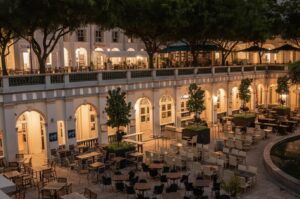
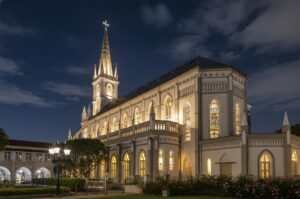
As night spills over the cloisters of CHIJMES, the bustle from Victoria Street fades to a hum and the architectural bones of the historic convent emerge, lit by warm lamps and candlelight. I arrive late, just as the last light fades, hunting for the perfect chijmes restaurant frame; one that balances cultural heritage conservation with…
-
CHIJMES Singapore: Photographing Heritage, Dining, and Architectural Icons
Sarah Teh | February 12, 2026
When I first visited CHIJMES Singapore, I was immediately captivated by how seamlessly history and modern life blend here. I practically had to restrain myself from pointing my lens at everything my eyes land on. Nestled at the bustling intersection of Victoria Street, North Bridge Road, and Bras Basah Road, this national monument and historic…
-
Before the Rush: Capturing the Hidden Rhythms of Amoy Food Centre Photography
Sarah Teh | February 4, 2026
Dawn at Amoy Street Food Centre is a collision of fluorescent lights and billows of steam. Against tiled grates, condensation slides down; hawkers prime their pepper bowl and swirl strands of sliced fish soup through scalding water. Within this storied food centre, every corridor concentrates urgency, flavor, and visual drama. Amoy food centre photography thrives…
-
Amoy Street Food Centre Singapore: A Living Archive of Vanishing Culinary Techniques
Sarah Teh | January 28, 2026
As the dinner rush subsides at Amoy Street Food Centre Singapore, the true choreography begins. Seasoned hawker stall owners move with precision honed over decades, their wok fire dancing in rhythms that predate Singapore’s modern skyline. Six Michelin Bib Gourmand stalls operate within this 1983-established food centre, transforming what began as a government cleanliness initiative…