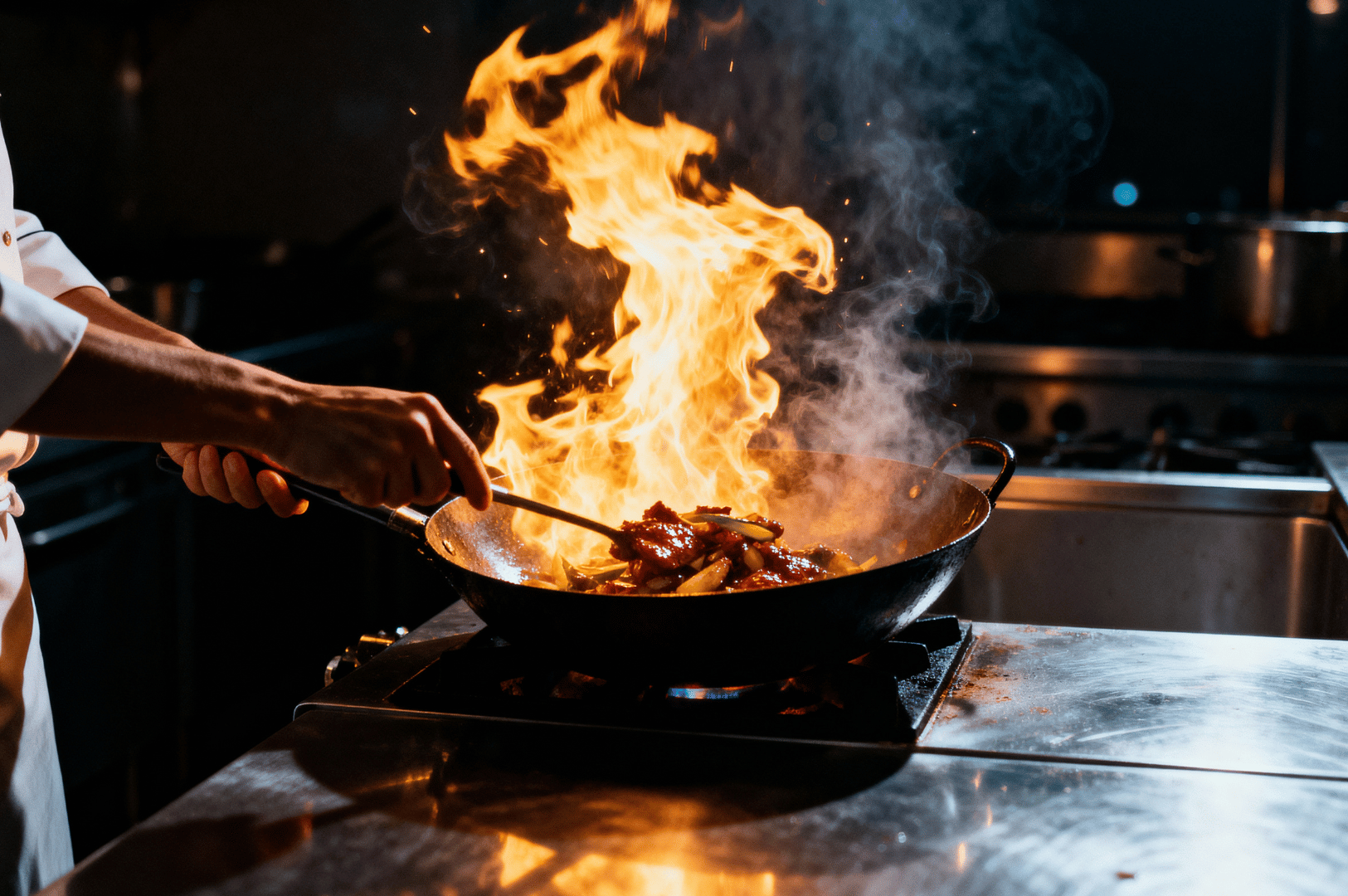
There is a raw, untamed energy in a kitchen at full tilt. For those of us who practice food photography, the most captivating element is often the most dangerous: fire. A burst of flame from a wok or the steady burn of candles on a dining table is more than just part of the cooking process; it's a transient, powerful light source. Using these flames to "paint" light onto a dish is a thrilling form of fire photography that transforms a simple meal into a dramatic spectacle. This guide offers simple tips for mastering flame photography techniques, turning chaotic fire into a controlled, artistic tool.
1. The Right Equipment for a Fire Photoshoot
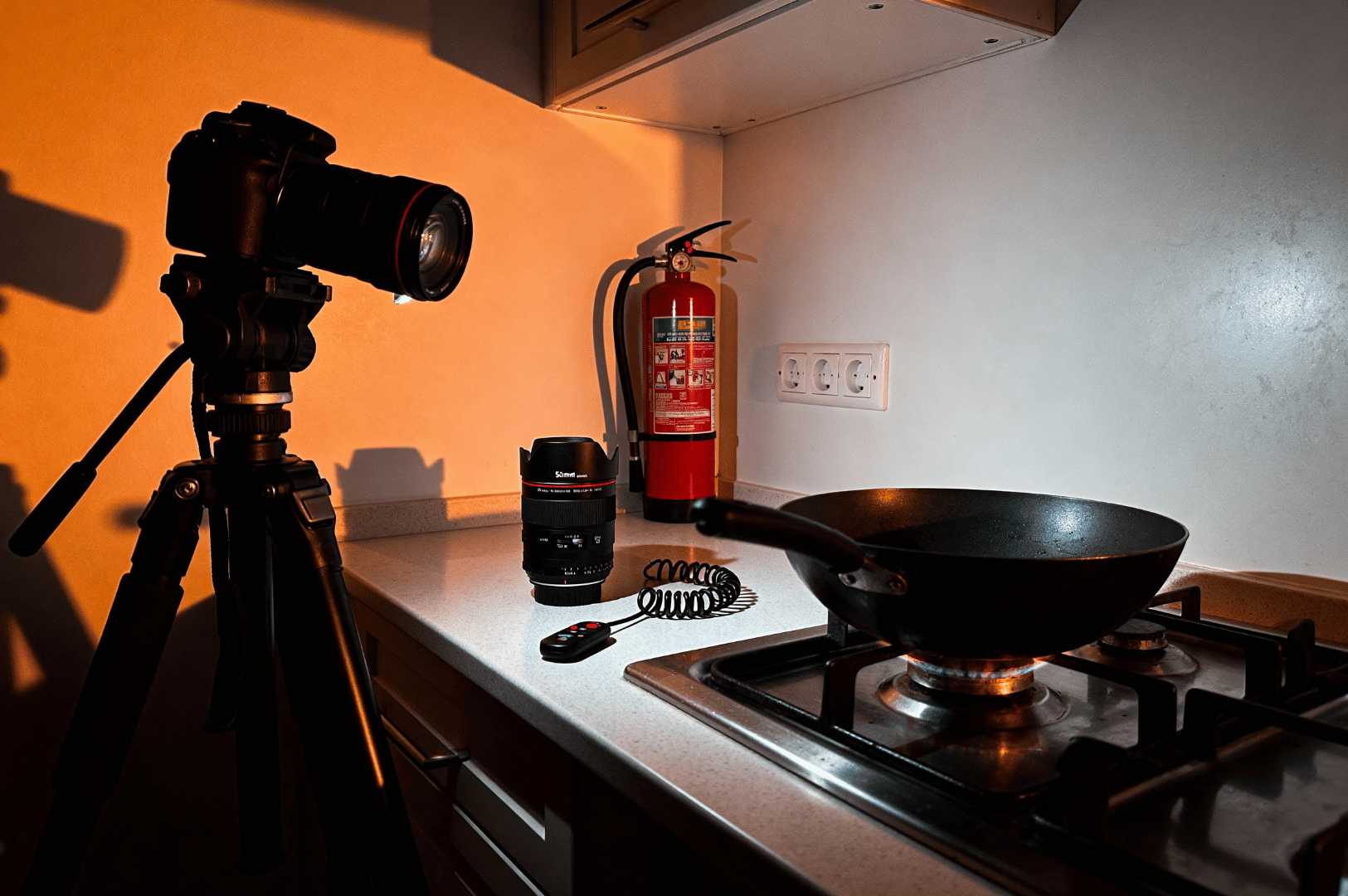
Your gear needs to handle low light and provide manual control. While natural light from the sun is predictable, flickering flames are not. Forget auto mode; you need the right equipment to take control.
- A camera with manual mode: You need full control over your camera settings.
- A fast lens: A lens with a wide aperture (like f/1.8) is crucial for gathering as much light as possible in a dark room. A wide-angle lens can capture the entire scene, but a 50mm lens is often perfect for focusing on the main subject.
- A sturdy tripod: Long exposure is key to this technique, making a tripod non-negotiable to prevent camera shake and blurry photos.
- A remote shutter release: This allows you to press the shutter button without touching the camera, further ensuring a sharp photo.
- A fire extinguisher: This is not optional. Safety must be your absolute priority. Have one within arm's reach at a safe distance.
2. Camera Settings for Photographing Fire
Getting your settings right is a balancing act between capturing the ambient light, freezing the food, and painting with the flame's motion. Start with these photography tips and adjust based on your specific lighting situation.
- Mode: Manual (M). This gives you control over all these things.
- ISO: Start with a lower ISO (100-400) to minimize noise. You can use a higher ISO if needed, but it may reduce image quality.
- Aperture: Begin around f/4 to f/8. A wide aperture creates a shallow depth of field, which can be a great shot, but a narrower one ensures more of your food is in focus.
- Shutter Speed: This is your primary creative tool. To capture the motion of bright flames, use a slow shutter speed—start with an exposure between 1 to 5 seconds. A fast shutter speed would freeze the fire, which isn't the goal for light painting.
- White Balance: Set this manually to complement the warm glow of the fire. Avoid Auto White Balance, as it will try to neutralize the beautiful warmth of the flames.
3. Lighting Techniques with Flames
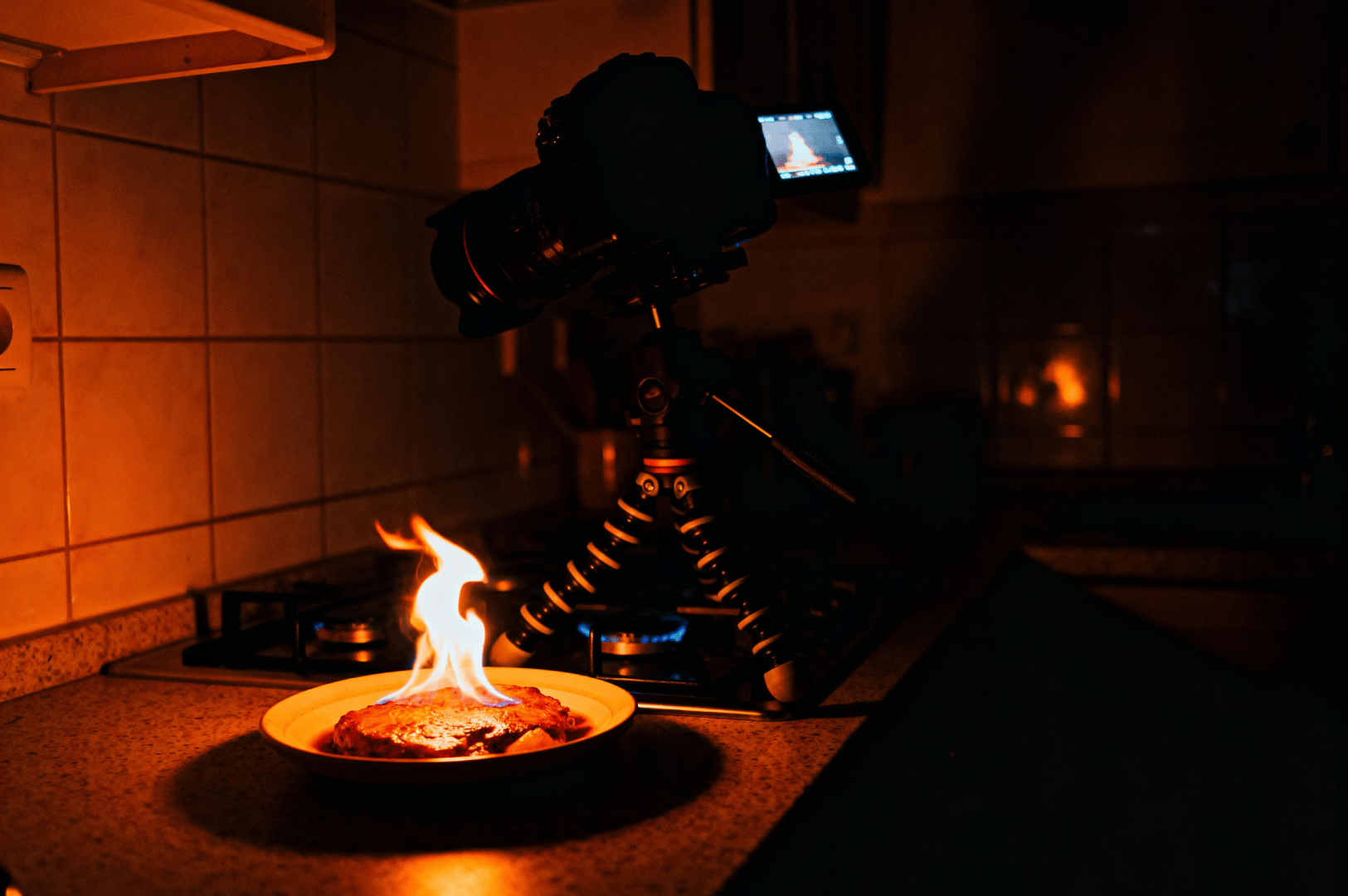
Using fire as your main light source is about embracing the contrast between bright flames and the surrounding darkness.
- Embrace the Shadows: Unlike shoots with soft light from a window or studio equipment, fire creates deep, dramatic shadows. Don't fight them. Use them to create a moody, eye-catching subject. Position your food so the flame acts as a side light, carving out texture.
- No Fill Light: For the most dramatic effect, avoid using any artificial light or fill light. The fire should be the only light source illuminating the food. The contrast between the flickering flames and the dark environment is what makes the image powerful.
- Timing is Everything: A great shot happens in a split second. Communicate with the chef or person handling the fire. Have your camera on the tripod and ready to shoot right before the flame erupts. A long exposure will capture the entire arc of the flame's movement.
4. Safety in a Controlled Environment
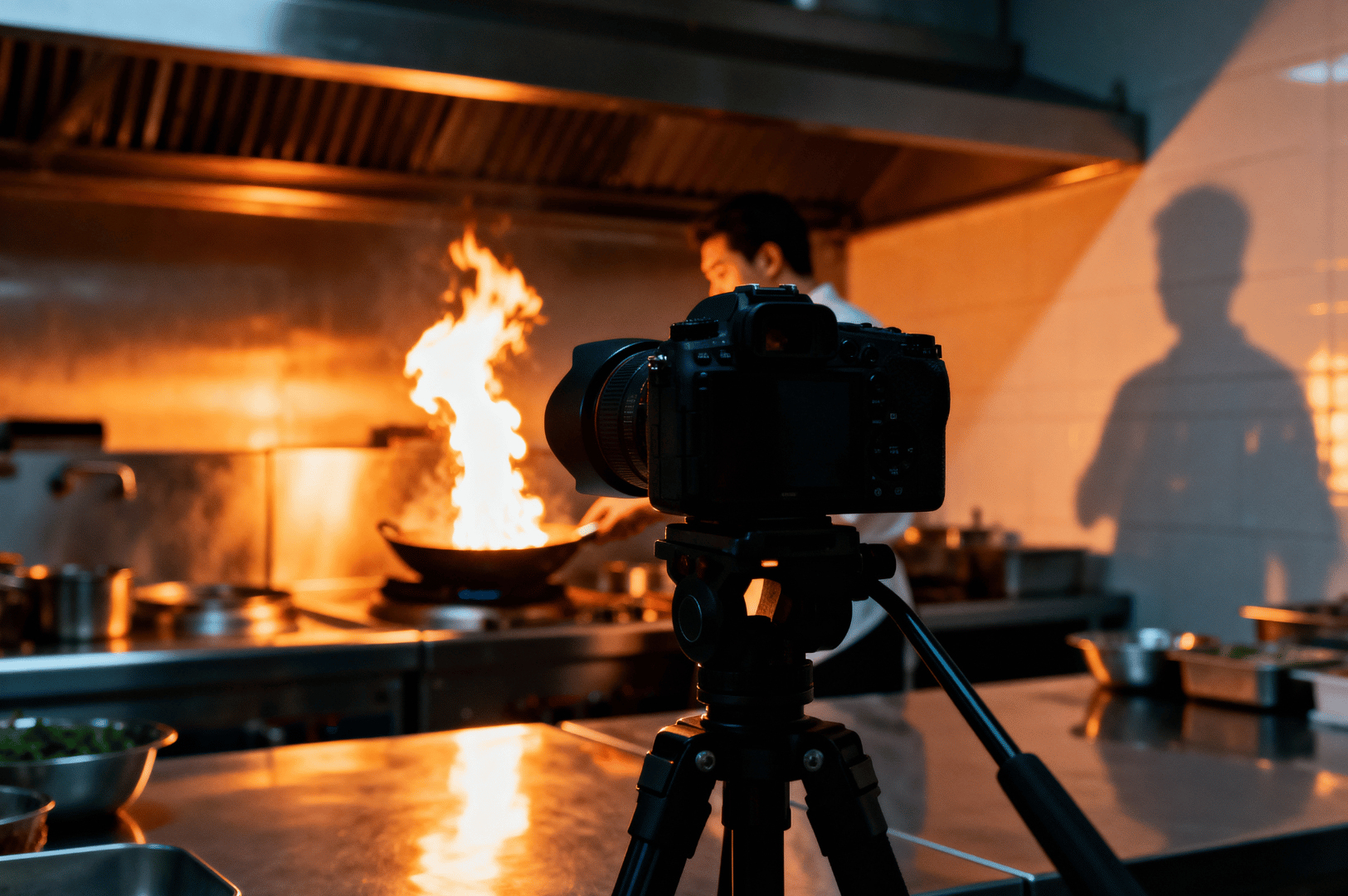
Kitchens can be hazardous. You are responsible for ensuring a safe fire photoshoot.
- Clear the Area: Ensure there are no flammable materials, such as paper towels or oil bottles, near the open fire. Create a neutral background free of clutter.
- Protect Your Gear: Keep camera straps and other equipment away from flames.
- Maintain a Safe Distance: Use your lens to get closer to the action, not your body.
- Work with Professionals: When you shoot food with fire, collaborate with chefs who understand the behavior of flames in their kitchen.
5. Post-Processing for a Dramatic Effect
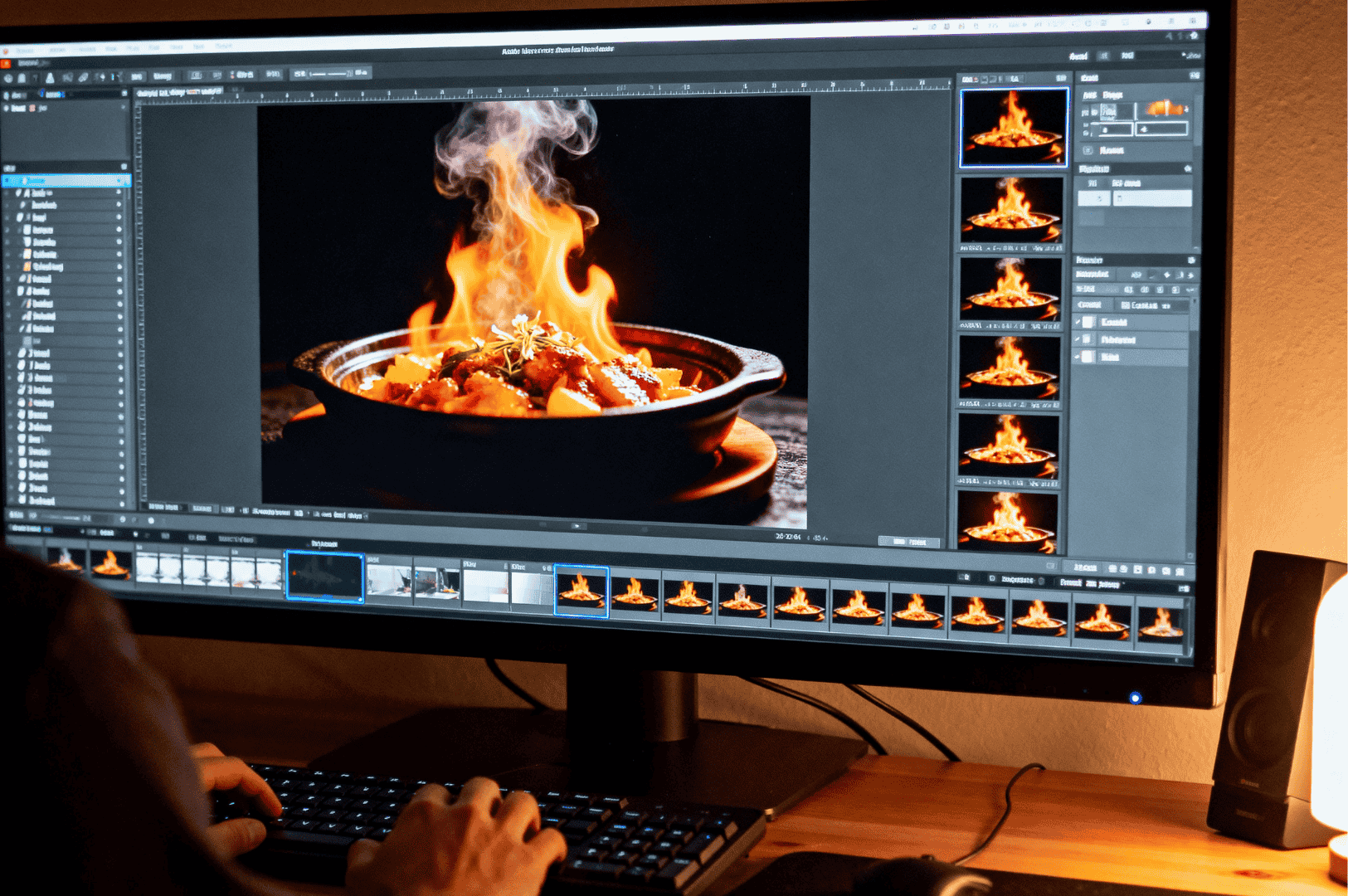
Your work isn't done after taking photos. Post-processing in a program like Adobe Photoshop is where you refine the drama and create the perfect shot.
- Adjust Exposure: Your initial image might be dark. Increase the overall exposure, but be careful not to blow out the highlights in the flame itself.
- Enhance Contrast: The beauty of these food photos lies in the contrast. Deepen the blacks to make the warm glow of the fire pop. This will make the main subject stand out.
- Refine Color: Enhance the warm tones from the flame by adjusting the color temperature or using color grading tools. This amplifies the soft glow and mood.
- Sharpen the Focal Point: Use sharpening tools sparingly on the food itself to make it the clear focal point of the image.
Capturing these moments is a thrilling challenge, but the reward is a truly dynamic and authentic photo. I hope these simple tips help you start shooting and create your own eye-catching images.
For more inspiration, follow my after-midnight MRT food photography adventures or explore artificial lighting techniques for natural-looking food photos to take your work to the next level.

Newton Food Centre After Dark: The Stalls Worth Visiting at Night
Sarah Teh | September 23, 2026
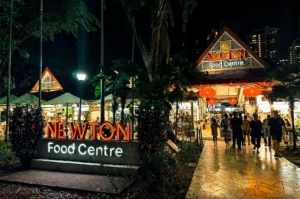
The day heat lifts slowly here. By the time I reach Newton Food Centre, the sun has gone and the light has changed hands. No longer the flat white of afternoon. Now it comes from the stalls themselves, bulb by bulb, a row of small fires holding back the dark along Clemenceau Avenue North. Newton…
-
The Red Glow of Chan BBQ: A Stingray Shoot After Supper Begins
Sarah Teh | September 17, 2026
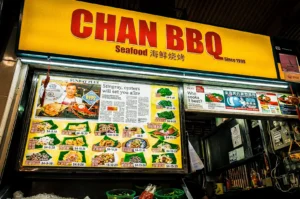
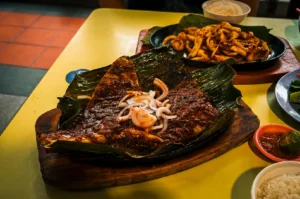
The grill was the brightest thing in the room, and that was the problem. It was past eleven at Fengshan Market & Food Centre, and I had been standing near Chan BBQ for a while, camera down, watching the uncle work the coals. He moved without hurry. A pair of tongs in one hand, a…
-
The Last Table at Keria Japanese Restaurant: A Late-Night Photoshoot in Cuppage Plaza
Sarah Teh | September 16, 2026
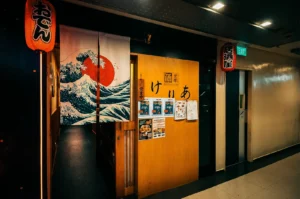
Orchard Road lets go of its crowds slowly. By the time I reached Cuppage Plaza B1 28, the shopping stretch behind me had thinned to a few late walkers and the low hum of traffic sliding past shuttered windows. The bright malls were already dimming. The night was settling in the way it does here,…
-
Sambal in the Shadows: Shooting Chomp Chomp BBQ at Bedok 85
Sarah Teh | September 10, 2026
The smoke found me before the food did. It was close to midnight at Bedok 85, and I had been standing at Chomp Chomp BBQ for a while, camera down, letting my eyes settle. The uncle worked the grill with his back half turned to the crowd, a pair of tongs in one hand, the…
-
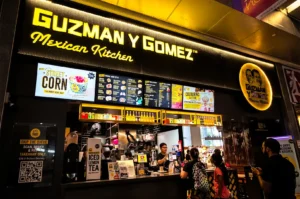
Guzman y Gomez Singapore: When The Lights Stay On at Orchard Gateway
Sarah Teh | September 9, 2026
Orchard Road empties from the top down. By a quarter to midnight, storefronts have started pulling their shutters, glass gone dark over displays that glowed all day. Escalators still run. A few people drift toward the Somerset MRT with shopping bags softened at the handles, while red tail lights smear across the wet glass outside….
-
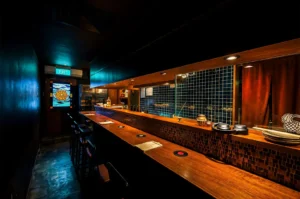
Apollon AM-Bar Review: Photographing an Intimate Izakaya in Orchard Plaza
Sarah Teh | September 4, 2026
Finding Apollon AM-Bar on the First Floor The first floor of Orchard Plaza’s dining oasis is quiet in that way old shopping centres go quiet at night. The bright shops of Orchard Road felt far away by the time I found unit #01-29. Inside, there isn’t much room. A counter, a handful of seats, staff…
-
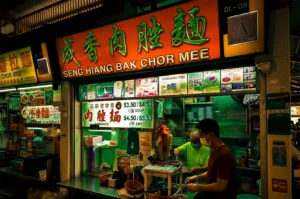
Waiting Beside the Soup Pot: Photographing Seng Hiang Bak Chor Mee at Midnight
Sarah Teh | September 3, 2026
The pot never stopped moving. It was near midnight at Bedok 85, and I had been standing at Seng Hiang for a while, doing more watching than shooting. The auntie worked the noodles in a wire basket, dipping them into the boiling water, lifting, shaking off the drops in three quick beats. She did not…
-
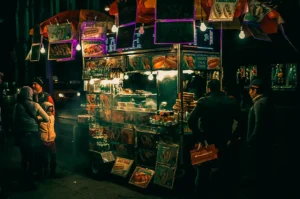
Night Market in Singapore Photography Guide: Capturing Street Food After Dark
Sarah Teh | September 2, 2026
It’s past eight, and the lingering heat warms the pavement. A grill flares beneath bare bulbs, smoke rising as a vendor fans the coals. Satay skewers sizzle, coins exchange hands, and the queue shifts, a fleeting moment in the vibrant night market in Singapore. Most visitors miss this dynamic scene. They arrive ready to photograph…
-
Steam Above the Orange Chopsticks: A Night at Xing Ji Rou Cuo Mian
Sarah Teh | August 27, 2026
The steam came up in one thin ribbon, and I almost missed it. It was near eleven at Bedok 85, and I had been standing at Xing Ji Rou Cuo Mian for a while, watching more than shooting. The uncle worked the noodles in a wire basket, dunking them into the boiling water, lifting, shaking…
-
Somerset Food by Night: Food Spots Open Until Midnight and Beyond
Sarah Teh | August 26, 2026
The malls close first. Restaurants dim their lights behind glass, chairs are stacked, and the daytime shopping crowds begin to leave Orchard Road. Somerset, which spends most of the day moving between lunch queues and retail floors, quietly becomes something else. I walk the streets around Somerset MRT Station with a camera after dark: down…