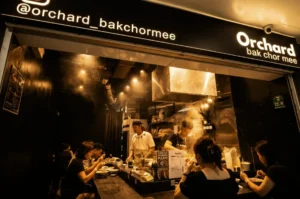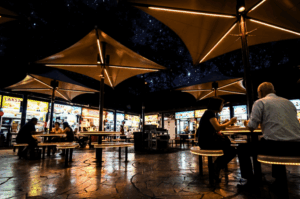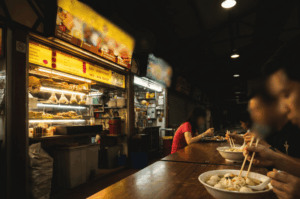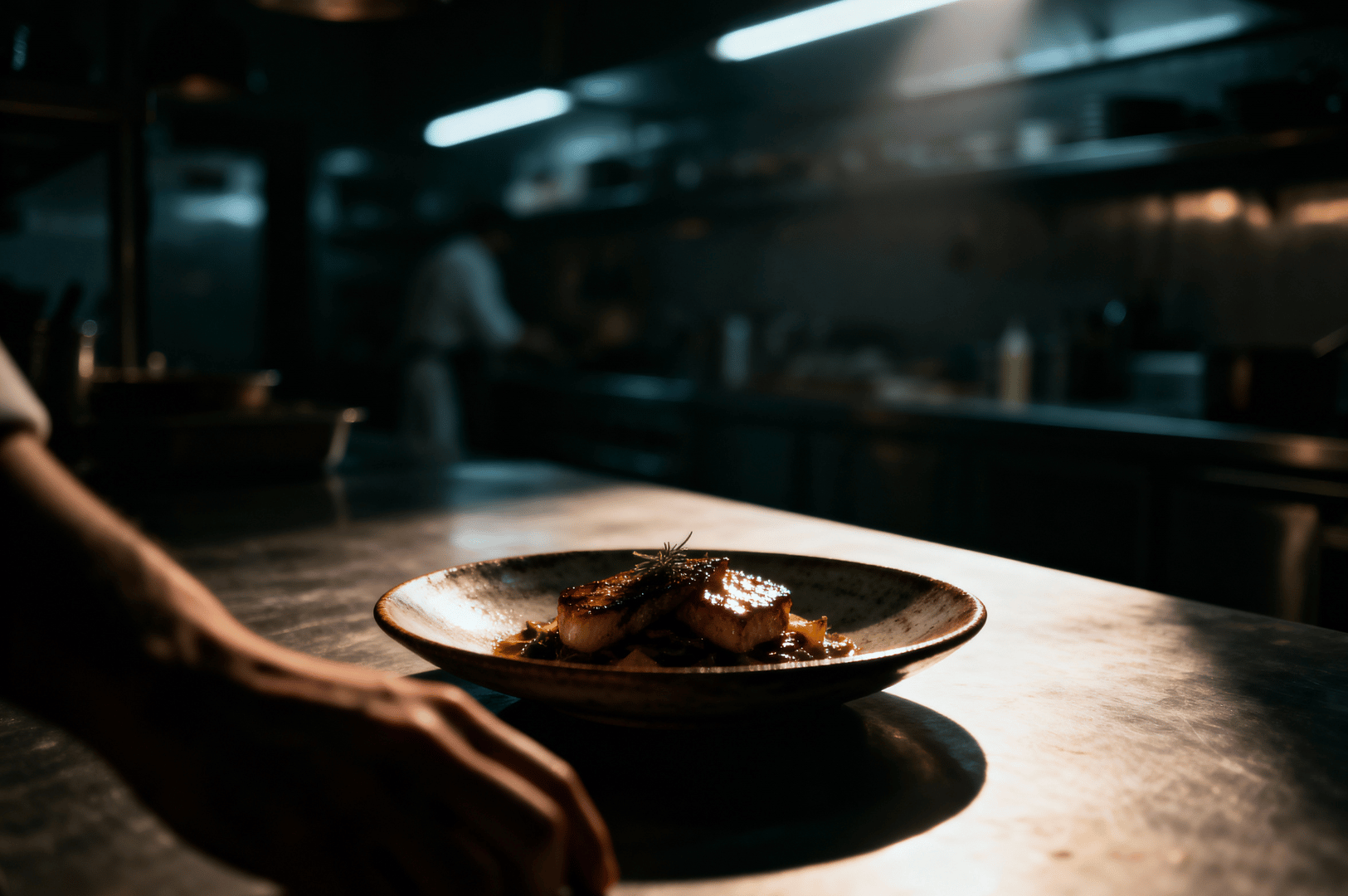
Most food photographers chase the light. They seek bright, airy scenes with soft, even illumination to make food look fresh and appealing. But after the sun goes down, or on a dark and moody day, a different kind of magic emerges. I've learned to stop chasing bright light and start embracing the darkness. The secret to truly dramatic food photography, especially in low light, isn't about creating brighter images—it's about controlling shadows. This is where moody food photography comes to life, and contrast becomes your most powerful tool.
Shadows create a moody atmosphere, depth, and mystery. They guide the viewer’s eye, highlight texture, and carve a subject out from its surroundings. In creating food images with a dark and moody look, a well-placed shadow tells as much of the story as a highlight. It transforms a simple meal into a compelling, dramatic scene.
This detailed post will walk you through the photography tips needed to master contrast and create beautiful images after dark.
The Power of a Single Light Source
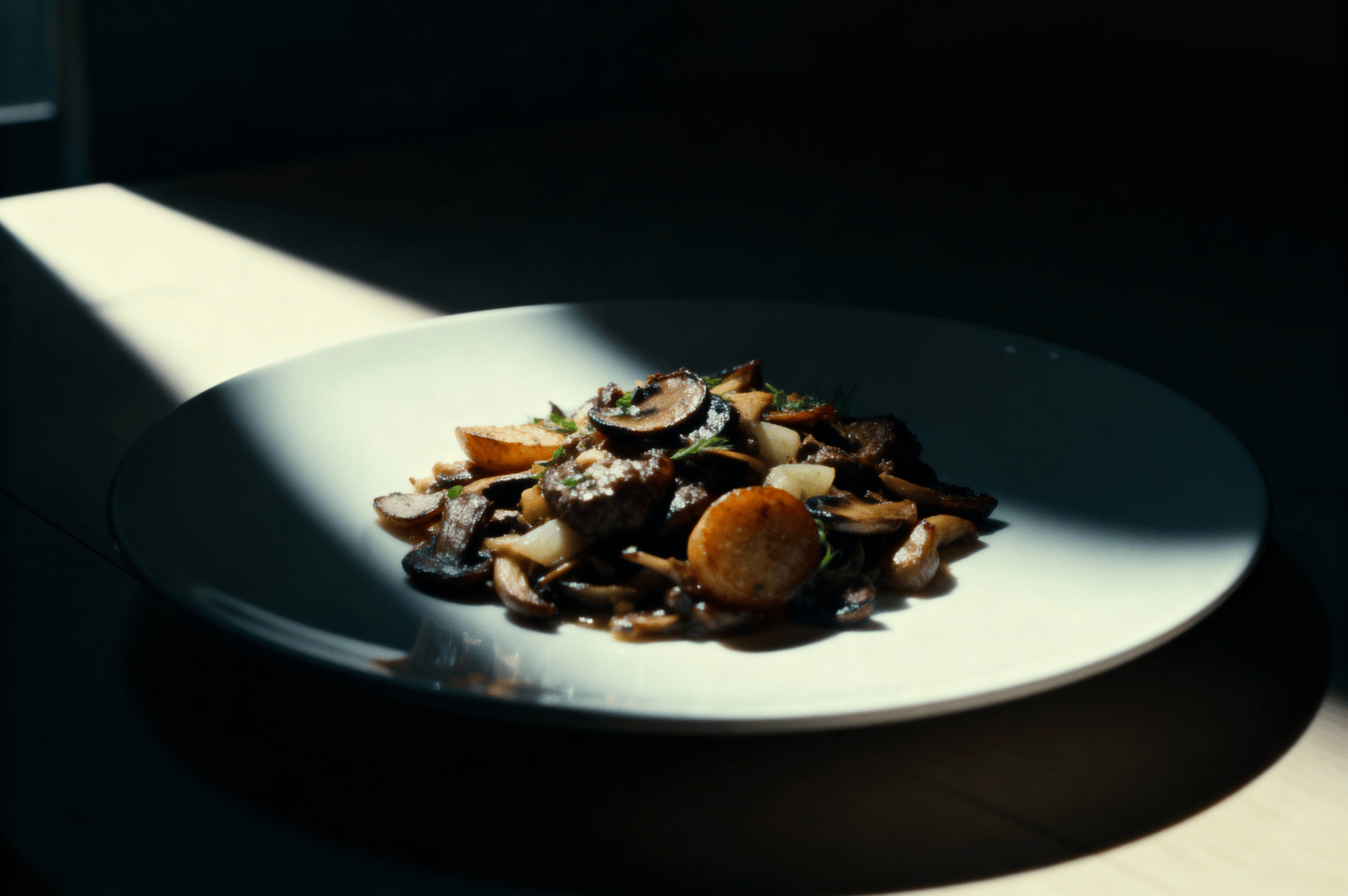
The key to creating intentional deep shadows is understanding directional lighting. For dramatic food photos, you often only need one strong light source. Think of your light as a paintbrush. The direction from which the light is coming determines the shape, length, and hardness of the shadows it creates on your subject.
Whether you're using natural light from a single window or a small artificial light source, the principle is the same. Side light is your best friend. By placing your light to the side of your dish, you create beautiful, cascading shadows that reveal every detail. This technique gives food a three-dimensional quality, making the texture look so real you could almost feel it. You have to learn to manipulate light, not just accept it as it is.
Embracing a Moody Atmosphere
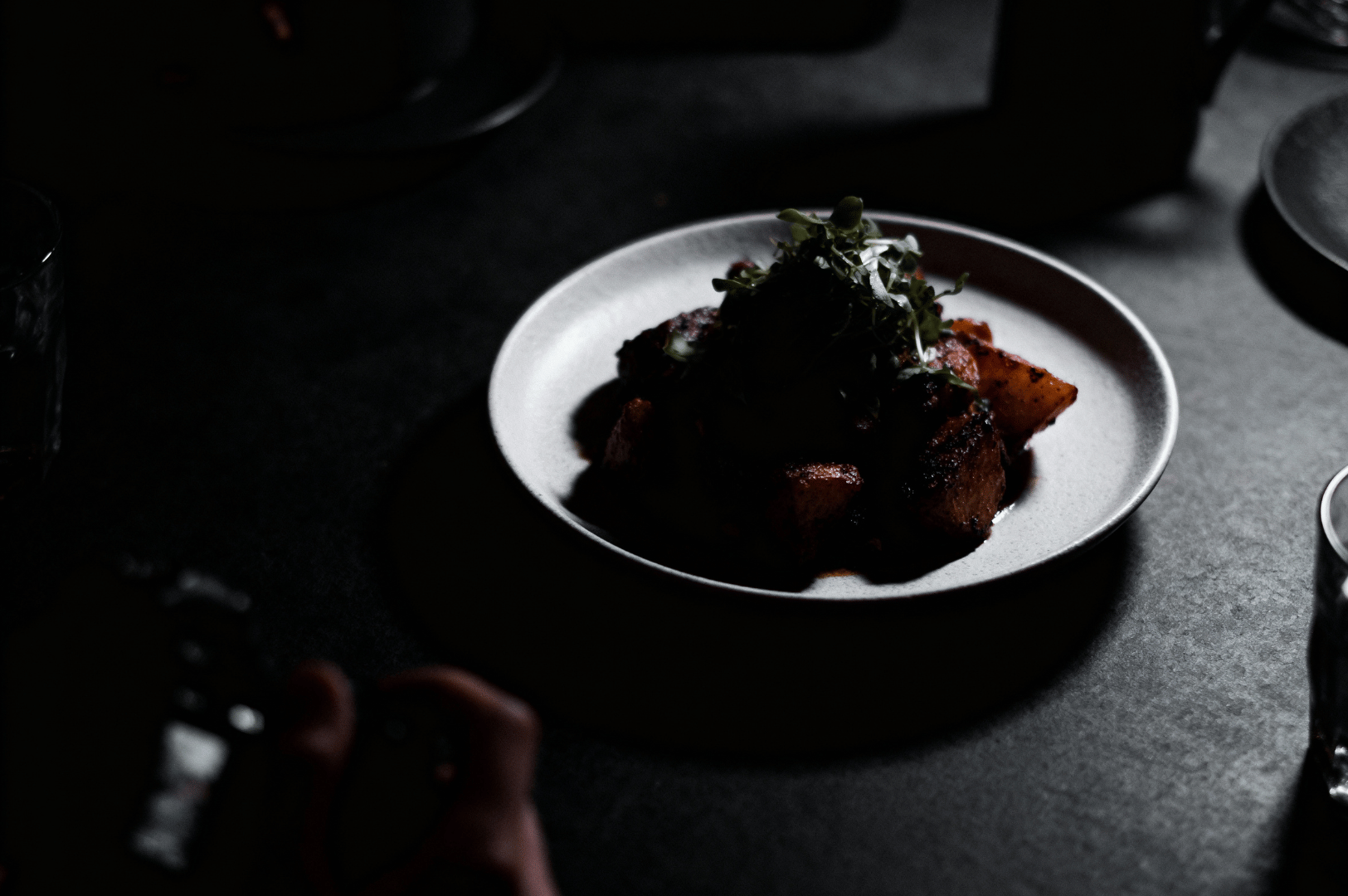
Shadows are more than just dark areas; they are an active element in your composition. In moody food photography, the darkness surrounding your dish is just as important as the dish itself. Instead of trying to fill the entire frame with light, allow the shadows to create pockets of negative space.
This technique simplifies the composition, removing distracting props and forcing the viewer's eye directly to the illuminated part of the food. It also builds atmosphere. Dark backgrounds can suggest an intimate late-night setting or a cozy corner, adding a narrative layer to your photo. Don't be afraid to let a significant portion of your frame fall into complete blackness. Let the shadows play their part in your story.
The Practical Setup for a Dark and Moody Look
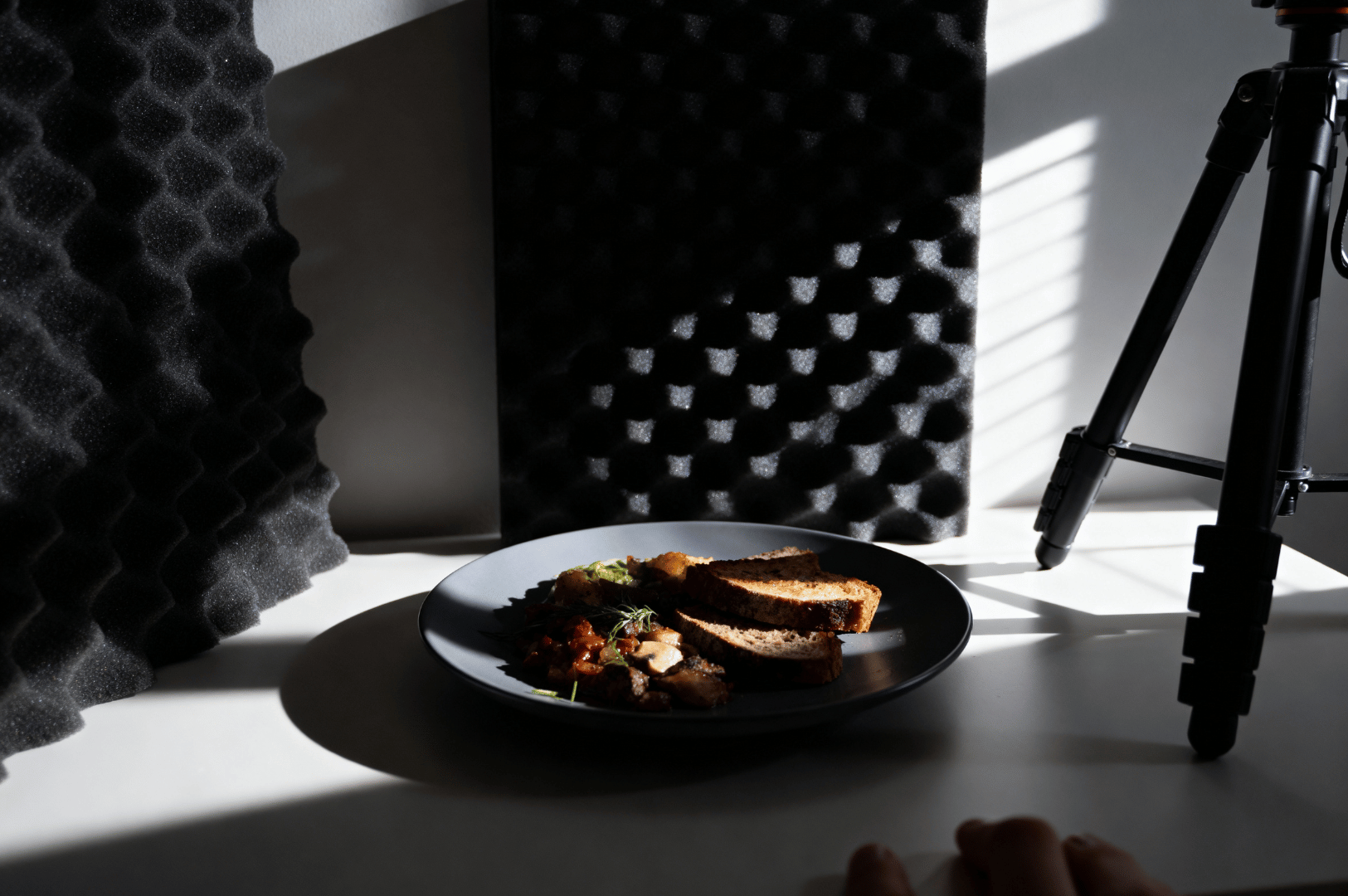
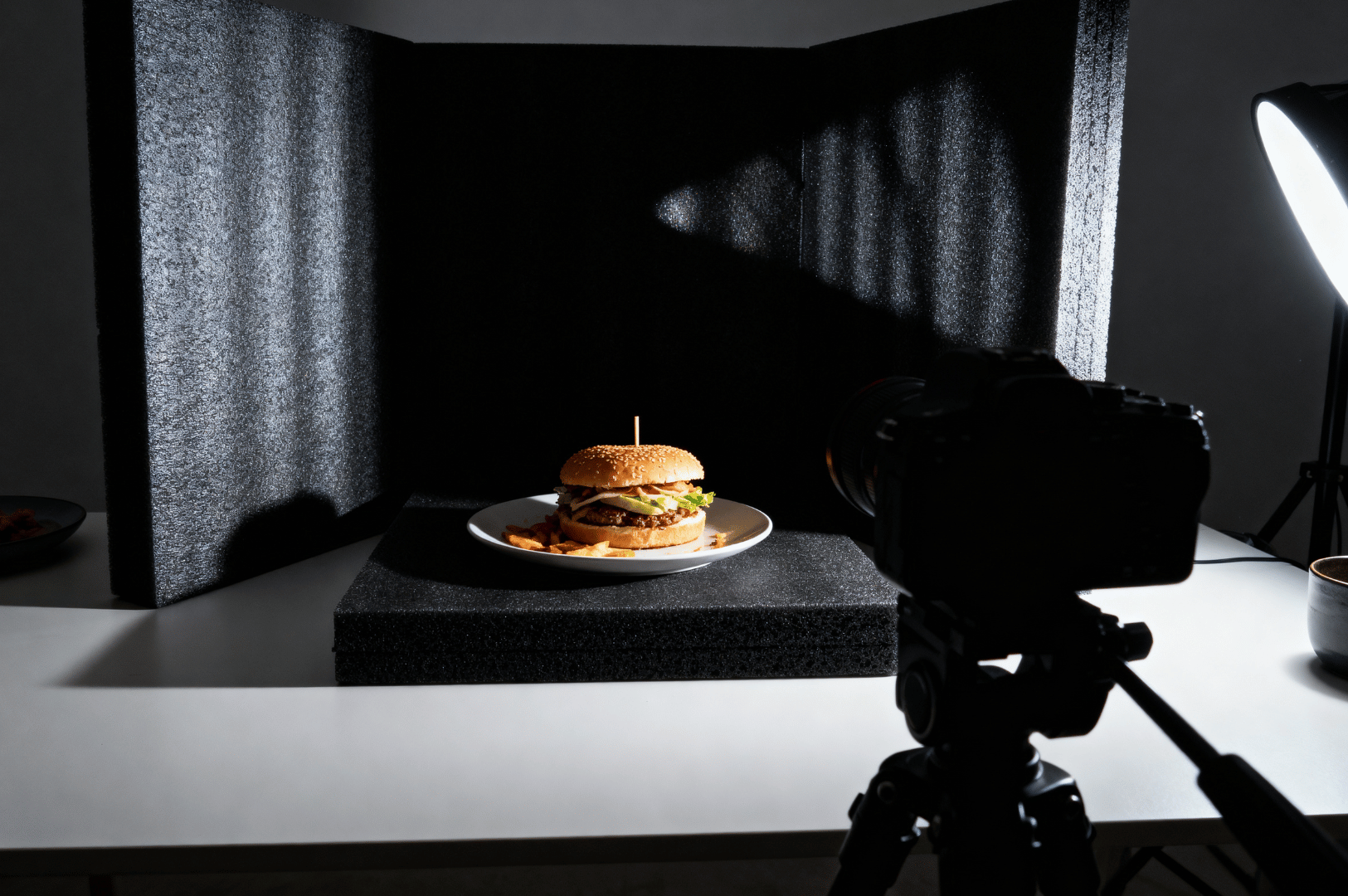
You don’t need a lot of complicated gear to shoot food in this style. My kit is designed to be simple and portable.
- One Light Source: This could be natural light from a window or a small, dimmable LED panel for artificial light. A constant light source is often better than a flash because you can see exactly how the shadows fall as you move it.
- A Tripod: Essential for low light photography. It keeps your camera steady, preventing camera shake and allowing you to use a slower shutter speed for a clean exposure without needing a higher ISO.
- A Black Card: A piece of black foam core is perfect. While a white card bounces light to soften shadows, a black card placed opposite your light source will absorb light and deepen the shadows, increasing contrast.
Setup Steps:
- Place your subject on a table, often with dark backgrounds or surfaces.
- If using artificial light, turn off all ambient light to gain complete control.
- Position your light source to the side. Watch how the shadows change as you move the light.
- Place the black foam core on the brighter side, opposite the light, to absorb any bounce and intensify the shadows. Adjust until you have a composition that feels balanced and moody.
Editing for Maximum Drama in Post-Production
Post-production is where you can refine and enhance the contrast you created in-camera.
- Increase Contrast: Start by gently increasing the global contrast slider in your editing software.
- Deepen the Blacks: Use the "Blacks" slider to make the darkest parts of your image even darker. This makes your highlights pop and reinforces the dark and moody atmosphere.
- Dodge and Burn: Manually paint light (dodge) and shadows (burn). Use a radial filter to create a subtle vignette, darkening the edges of the frame to draw focus to the meal. This is a great way to guide the eye.
- Control Your ISO: When you shoot, aim for the lowest ISO your camera can handle to reduce noise. Modern cameras can handle ISO well, but a lower number always produces a cleaner image.
Final Thoughts
Mastering shadows is a transformative skill in food photography. It allows you to move beyond simply documenting a meal and start creating art. The next time you shoot, don't just hope for good light. Learn to control it. Embrace the shadows, play with contrast, and experiment. You will be surprised by the power and drama you can create in your food photos. I hope these ideas help you capture your own beautiful images.
For more tips on shooting in low light and fine-tuning your settings, check out this guide on low-light food photography. Continue your creative journey with Midnight Food Photography: The Secret Life of Restaurant Kitchens After Closing

The Tension of the Moment
Sarah Teh | July 16, 2026
There is a half second at a wok stall that I have learned to live for. The flame leaps, the hand tilts, and the whole dish hangs in the air before it falls back into the pan. Miss it, and you get a flat plate of noodles. Catch it, and you get the night itself,…
-
Tha Siam Thai Kitchen: A Thai Supper Glow Inside Orchard Plaza
Sarah Teh | July 15, 2026
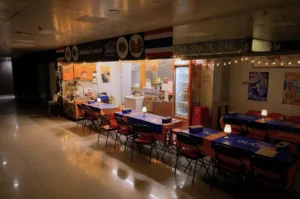
Orchard Plaza after dark is a strange kind of quiet. The shiny malls down Orchard Road buzz with crowds, but up here the corridors hum under old fluorescent light, half the shutters down, the air still and slightly worn. I almost walked past Tha Siam Thai Kitchen. If not for the faint thread of Thai…
-
Nasi Lemak Picture Composition: How to Frame Rice, Sambal, and Fried Chicken
Sarah Teh | July 10, 2026
The first nasi lemak picture I ever loved was a failure. It was past midnight, under the harsh fluorescent stall light buzzing overhead, and I had shot the plate straight down the way everyone tells you to. When I looked at it later, everything had melted into one flat surface. The rice, the sambal, the…
-
A Bowl of Hokkaido After Dark
Sarah Teh | July 9, 2026
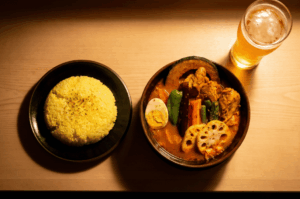
Photographing Japanese Soup Curry in the City It was past nine, and the rain had just stopped. I had been walking with a fogged lens and an empty stomach, looking for nothing in particular, when the warm light of a small soup curry counter pulled me in. I sat down before I even thought to…
-
Orchard Bak Chor Mee: Vinegar, Steam, and a Late-Night Queue
Sarah Teh | July 8, 2026
I’ll be honest, the first bowl that landed in front of me looked a bit sad. Pale noodles, not much going on, and I nearly worried I’d made a wrong call. Then I tossed it, and the whole thing transformed. That’s the trick with Orchard Bak Chor Mee. The sauce hides at the bottom, so…
-
Through Fogged Glass and Neon Lights
Sarah Teh | July 2, 2026
My lens fogged the moment I stepped out of the cab near Lau Pa Sat. The night air pressed in, thick and warm, and for a few seconds I could see nothing through the viewfinder but a soft white blur. I almost wiped it away in a hurry. Then I noticed how the neon from…
-
Mall Glare Tips: How to Shoot Food Under Harsh Lights at Cuppage Plaza
Sarah Teh | July 1, 2026
The first time I tried to photograph a bowl of ramen at Cuppage Plaza, I nearly gave up. My broth had a shiny white blob on it, the egg looked grey, and the whole shot felt like a hospital cafeteria food photo. I sat there frustrated, soup going cold, wondering why my food photography never…
-
A Lens on the Night
Sarah Teh | June 25, 2026
I remember the exact moment I stopped chasing the perfect plate. It was close to midnight along Geylang Road, and the air still held the day’s heat like a slow exhale. A woman ladled laksa at a corner stall, her face half-lit by a single bulb, and I realized the steam rising from her pot…
-
Three Late-Night Orchard Plaza Food Spots Open Past Midnight (and One Just Before)
Sarah Teh | June 24, 2026
I’ve spent many nights exploring Orchard Plaza’s vibrant late-night food scene, capturing the warm, honest atmosphere that emerges after most of the city sleeps. Over the years, I’ve sampled nearly every supper spot in this slightly worn but charming building. Some places came and went, but three have remained my go-to late-night haunts, plus one early-evening…
-
The Night’s Palette
Sarah Teh | June 18, 2026
The city at night has always drawn me in. The hum of neon signs, the glint of streetlights on slick pavements, and the comforting glow of hawker stalls create a canvas that feels alive with stories. As someone who has spent countless evenings wandering Singapore’s streets with a camera in hand, nighttime food photography has…