The smoke reached the light before I was able to capture the photo.
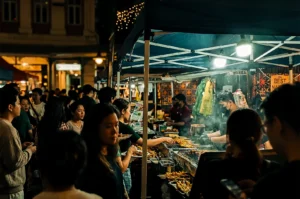
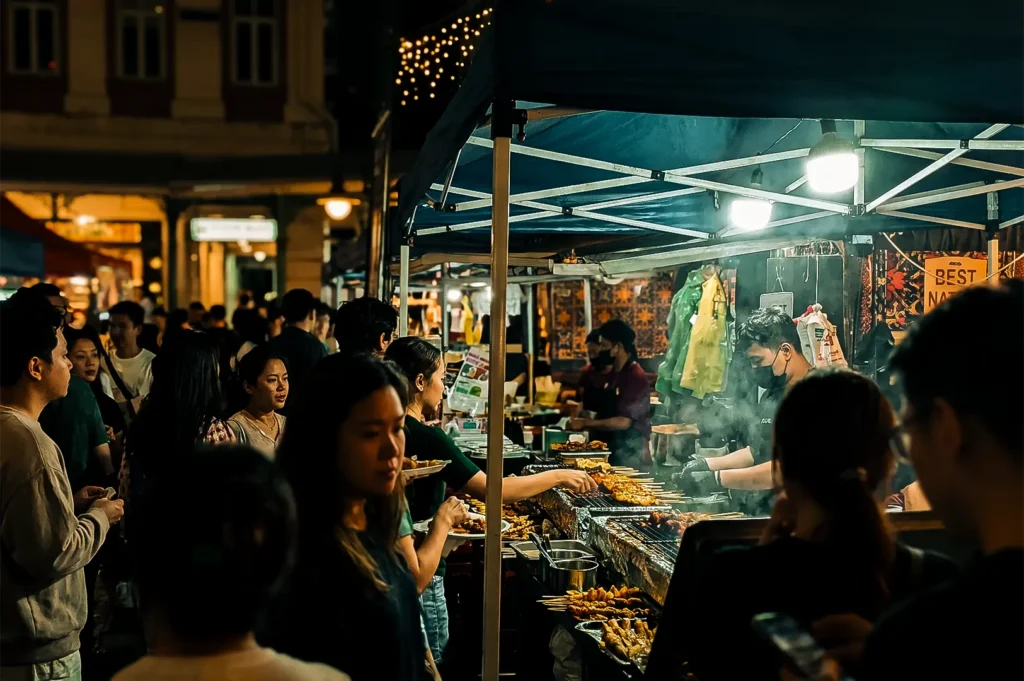
The smoke rolled off the grill in a low, heavy sheet and drifted across Boon Tat Street, catching the bare bulbs strung above Satay Stalls 7 and 8. For a moment the whole stall turned soft and grey. Then a hand swept a fan across the charcoal, and the smoke broke apart and moved on toward the tables.
I lifted the camera and waited for that moment to come back.
The street had only just closed to traffic. Beside Lau Pa Sat, where cars had been an hour earlier, folding tables now ran down the middle of the road in long rows. Office towers rose on both sides, most of their windows still lit. Below them, the satay stalls glowed orange and red.
At stalls 7 and 8, the routine was already moving. Skewers lay across the grill in tight lines, chicken and mutton side by side, a row of prawns at one end. One vendor turned them in batches, a whole row flipped with a single motion of the wrist. Another fanned the coals. A third counted sticks into bundles and slid them onto plates with cucumber, raw onion and a small bowl of peanut sauce.
Nobody hurried. Nobody stopped.
The problem showed itself in the first few frames.
Smoke is beautiful to stand in and difficult to photograph. It spreads light in every direction. The bulbs above the grill turned into wide, milky halos, and the skewers underneath lost their edges. The char marks I wanted, those dark lines across the meat, vanished into haze. Every picture looked like it had been taken through wet glass.
I stopped shooting and watched instead.
The smoke had a rhythm. It built while the skewers sat still, then thinned each time the fan moved and the meat was turned. Between those two moments there was a gap of a second, sometimes two, when the air cleared just above the grill.
I moved to the side of the stall, out of the path of the drift, and lowered myself until the grill sat near eye level. From there, the bulbs fell behind the smoke instead of inside it. Whatever haze remained became a backdrop, lit from behind, rather than a veil across the lens.
Then I waited for the fan.
The first clean frame came on the third turn. A row of chicken skewers, freshly flipped, the glaze still shining. The char showed in thin black stripes. Fat had beaded along the edges and caught the orange light. Behind them, the smoke rose in one thin column, bright against the dark street.
I kept the skewers on a slight diagonal so they would lead the eye toward the vendor’s hand, which stayed at the edge of the frame, holding the fan mid-sweep. I left his face out. His wrist and the worn bamboo handle were enough.
Around me, the tables kept filling. Office workers with lanyards tucked into shirt pockets. A family sharing a single plate. Tourists taking photos of the menu board. Plates arrived, and the peanut sauce passed from hand to hand. Sticks gathered in small piles on the tables.
I noticed that the smoke reached everyone. It drifted over the diners, settled into their clothes and moved on down the street. No one seemed to mind. It felt less like a nuisance and more like part of the meal, a way of knowing that the food had come from fire, only a few steps away.
Maybe that was what I had been fighting. I had wanted to clear the smoke out of the picture, when the smoke was the picture. The stall does not exist without it. Neither does the street, on these nights.
My last frame of the evening was not of the satay at all.
It was the grill after the rush, half empty, a few skewers resting at the edge. The fan lay still on the counter. A last thread of smoke rose into the bulbs and thinned out above the tables, where people were still sitting, still talking, in no hurry to leave.

Smoke Across Boon Tat Street: Photographing Satay Stalls 7 and 8 at Lau Pa Sat
Sarah Teh | October 29, 2026
The smoke reached the light before I was able to capture the photo. The smoke rolled off the grill in a low, heavy sheet and drifted across Boon Tat Street, catching the bare bulbs strung above Satay Stalls 7 and 8. For a moment the whole stall turned soft and grey. Then a hand swept…
-
Chong Pang Huat: Chasing Smoky BBQ Chicken Wings and Satay After Dark
Sarah Teh | October 28, 2026
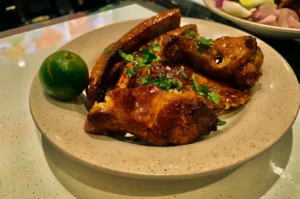
Smoke finds the light before anything else does. It lifts off the grill in loose grey threads, then it rises into the glow of the stall sign, and thins out somewhere above the tables. Below it, skewers are laid in rows and turned by hand. Chicken wings darken slowly at the edges. At a satay…
-
The Last Sweet Bowl: Photographing 75 Ah Balling Peanut Soup After Dinner
Sarah Teh | October 22, 2026
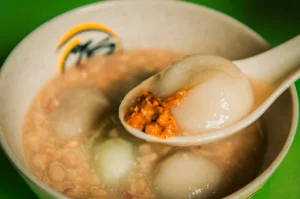
The steam went up before I was ready for it. I had my camera against my chest, waiting, and the vendor lifted the ladle without warning. Warm vapour curled off the surface of the peanut soup and caught the fluorescent tube overhead. I raised the lens and pressed the shutter, but the moment had already…
-
Best Chirashi Don Singapore: Fresh Sashimi Bowls from Daylight to City Lights
Sarah Teh | October 21, 2026
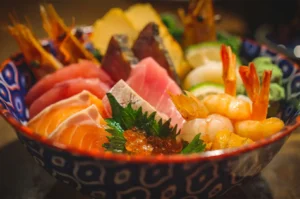
The city cools slowly after sunset. The neon signs warm up, and the crowds thin into something quieter. This is the hour when a bowl of fluffy Japanese rice topped with cold raw fish starts to make sense. Not the flash of a grill or the roar of a wok, but something still. Cubed sashimi…
-
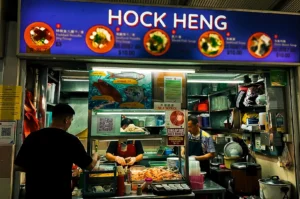
The 3AM Bowl: Why Hock Heng Fish Soup Feels Different Before Sunrise
Sarah Teh | October 21, 2026
The steam rose before the light did. I stood with my camera lowered, watching a hand lift a ladle over the pot, waiting for the moment the vapour would catch the fluorescent tube overhead. It came in a slow curl, thin and pale, drifting up past the vendor’s wrist. Then the fish slices went in….
-
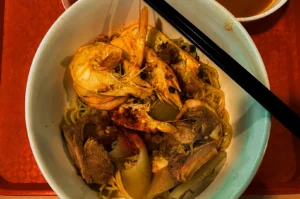
Prawns Beneath Fluorescent Light: A Late Shoot at ONE.85 Big Prawn Mee
Sarah Teh | October 15, 2026
The broth was the reddest thing in the stall, and the light was doing its best to kill it. It was past eleven at ONE.85 Big Prawn Mee, and I had been standing at the counter for a while, camera down, watching the uncle work the pot. He lowered a metal basket of noodles into…
-
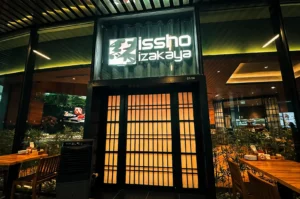
Discover the Flavors of Issho Izakaya: A Complete Review and Menu Guide
Sarah Teh | October 14, 2026
As the office towers empty, Issho Izakaya at Marina One fills with diners. Located at #01-14, 5 Straits View, West Tower, Singapore 018935, this contemporary Japanese izakaya offers a warm, inviting space at the heart of the CBD. Issho means “together“ reflecting its focus on shared plates, communal dining, and a cozy atmosphere with both…
-
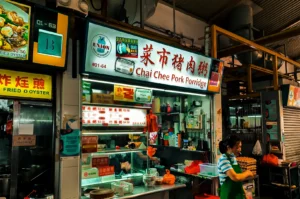
A Bowl That Only Makes Sense at Night: Chai Chee Pork Porridge at Bedok 85
Sarah Teh | October 8, 2026
The steam was the first thing I lost. It was well past midnight at Bedok 85, and I had been standing at Chai Chee Pork Porridge for a while, camera down, watching the auntie work the pot. She lifted the ladle, let the porridge fall back in a slow white ribbon, then lifted it again….
-
Gochi-So Shokudo: Discover This Japanese Comfort Food Spot For Your Night Food Crawl
Sarah Teh | October 7, 2026
Comfort food rarely announces itself. It waits in a mall corridor, somewhere between a shoe shop and an escalator, holding the smell of grilled pork and warm rice until you slow down enough to notice. That is where you find Gochi-So Shokudo ご, also known as ご ち 惣 食堂. Not a place chasing attention….
-
Oil, Oyster and Broken Light: Photographing Bedok North Fried Oyster at 1am
Sarah Teh | October 1, 2026
The first thing I noticed was the light. It was not the kind of light a photographer usually looks for. The fluorescent tubes above the stalls at 85 Fengshan Centre cast a pale, uneven glow across the tables, flattening some colours while exaggerating others. But at 1am, standing in front of the fried oyster stall…