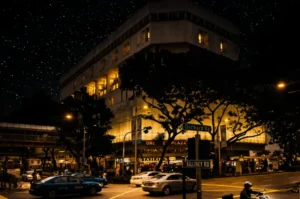
Finding Beauty in the Quiet Corners of Nightlife
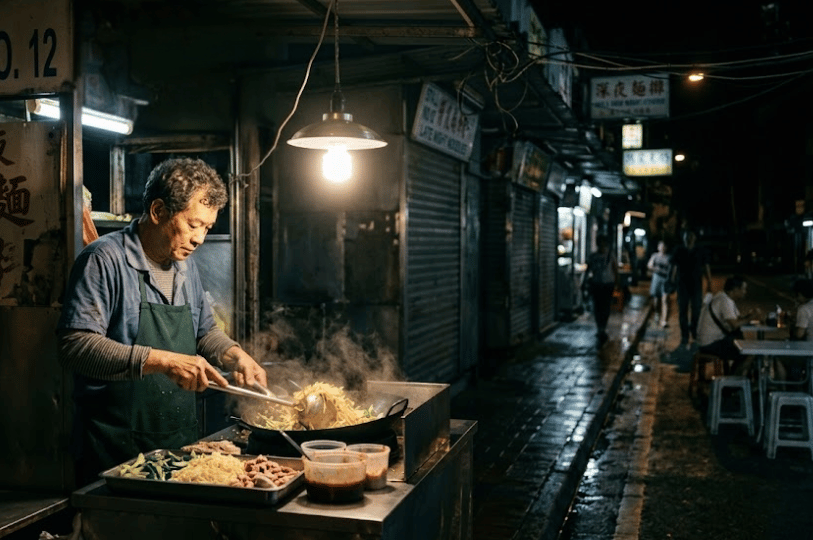
The city at night is a different world. It’s not the constant hum of the day; instead, it’s a slower rhythm, a quiet hum that somehow feels louder in the darkness. The neon signs flicker, casting an almost magical glow over the streets, while the food stalls sit beneath them like unsung heroes. I’ve always been drawn to these quieter corners of nightlife – the ones that most people overlook. The corners where the shadows dance, the food sizzles, and the stories unfold in hushed tones. It’s here, in these soft-lit spaces, that I find my focus as a photographer.
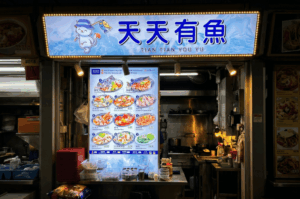
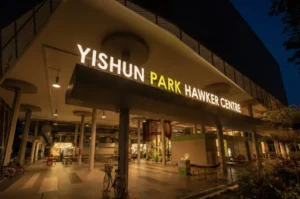
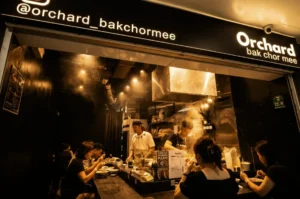
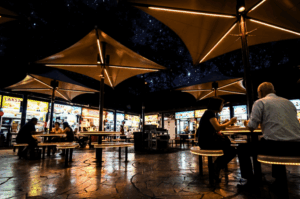
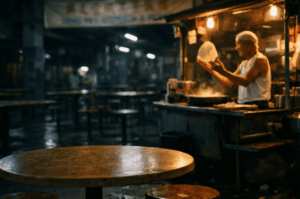
My favorite moments often come when the street is at its quietest, the light at its most imperfect. One night, while wandering through a hawker centre, I stumbled upon a small stall tucked away in a quiet corner. It wasn’t the brightest, the loudest, or the busiest stall, but something about the way the shadows fell across the cooking woks caught my attention. There was a calmness to it; a stillness in the chaos of the night. The vendor, a man no older than 50, was focused solely on his task, his hands moving with a familiarity that only comes with years of practice. He didn’t need to speak; his actions told the story of dedication, passion, and craft.
As I set up my camera, I began to notice how the shadows seemed to weave into his movements, wrapping around him like a cloak. The soft flicker of the lights overhead, the gentle steam rising from the wok, and the quiet sizzle of the food created a subtle, almost cinematic moment. In these fleeting seconds, I realized that photography is about capturing more than just what’s in front of the lens; it’s about telling the story of the space, of the people, of the emotions that food evokes in that moment.
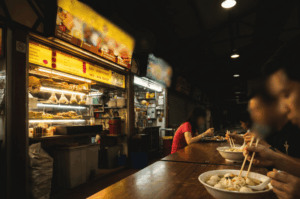
The textures in the food at night are different too. The soft glow from the stalls makes everything look more vivid – the shiny, dark sauce dripping from a plate of noodles, the glossy sheen on a skewer of satay, the tender crisp of fried chicken. These textures, these details, are more pronounced in the shadows, where light becomes a collaborator rather than a mere tool. I’ve learned to embrace the darkness, the quiet of the night, because it’s in these shadows that the true beauty of street food is revealed.
The magic of these quiet moments lies in the people. The vendors I’ve encountered on my nighttime food crawls have taught me so much about the human side of food culture. Food is never just about sustenance; it’s about connection, shared history, and the invisible threads that bind us all. As I photographed one stall where a husband and wife worked side by side, I watched as they communicated with simple gestures, a shared glance, a nod, a quick smile. They didn’t need words; the food they served spoke for them. It was the food of their lives, their memories, and their culture.
As I stood there in the shadows, watching them work in harmony, I realized that the night – while still and quiet – is also full of life. It’s full of stories that are waiting to be told, stories that are often hidden in the corners, behind the shadows. And it’s through my lens that I’ve come to understand that sometimes, the most profound moments are the ones we don’t immediately see. They’re the quiet moments that happen when the city slows down, when the lights dim, and when the world is still.
What I’ve come to learn from these nighttime food adventures is that there is beauty in the shadows. The light may capture the attention, but the shadows – those quiet, subtle spaces – hold the story. And in those moments, I find the soul of the city and the soul of the food.

The Tension of the Moment
Sarah Teh | July 16, 2026
There is a half second at a wok stall that I have learned to live for. The flame leaps, the hand tilts, and the whole dish hangs in the air before it falls back into the pan. Miss it, and you get a flat plate of noodles. Catch it, and you get the night itself,…
-
Tha Siam Thai Kitchen: A Thai Supper Glow Inside Orchard Plaza
Sarah Teh | July 15, 2026
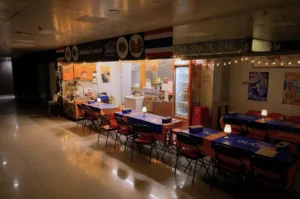
Orchard Plaza after dark is a strange kind of quiet. The shiny malls down Orchard Road buzz with crowds, but up here the corridors hum under old fluorescent light, half the shutters down, the air still and slightly worn. I almost walked past Tha Siam Thai Kitchen. If not for the faint thread of Thai…
-
Nasi Lemak Picture Composition: How to Frame Rice, Sambal, and Fried Chicken
Sarah Teh | July 10, 2026
The first nasi lemak picture I ever loved was a failure. It was past midnight, under the harsh fluorescent stall light buzzing overhead, and I had shot the plate straight down the way everyone tells you to. When I looked at it later, everything had melted into one flat surface. The rice, the sambal, the…
-
A Bowl of Hokkaido After Dark
Sarah Teh | July 9, 2026
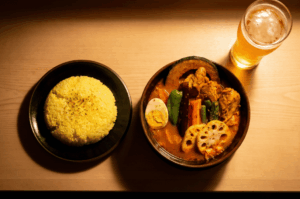
Photographing Japanese Soup Curry in the City It was past nine, and the rain had just stopped. I had been walking with a fogged lens and an empty stomach, looking for nothing in particular, when the warm light of a small soup curry counter pulled me in. I sat down before I even thought to…
-
Orchard Bak Chor Mee: Vinegar, Steam, and a Late-Night Queue
Sarah Teh | July 8, 2026
I’ll be honest, the first bowl that landed in front of me looked a bit sad. Pale noodles, not much going on, and I nearly worried I’d made a wrong call. Then I tossed it, and the whole thing transformed. That’s the trick with Orchard Bak Chor Mee. The sauce hides at the bottom, so…
-
Through Fogged Glass and Neon Lights
Sarah Teh | July 2, 2026
My lens fogged the moment I stepped out of the cab near Lau Pa Sat. The night air pressed in, thick and warm, and for a few seconds I could see nothing through the viewfinder but a soft white blur. I almost wiped it away in a hurry. Then I noticed how the neon from…
-
Mall Glare Tips: How to Shoot Food Under Harsh Lights at Cuppage Plaza
Sarah Teh | July 1, 2026
The first time I tried to photograph a bowl of ramen at Cuppage Plaza, I nearly gave up. My broth had a shiny white blob on it, the egg looked grey, and the whole shot felt like a hospital cafeteria food photo. I sat there frustrated, soup going cold, wondering why my food photography never…
-
A Lens on the Night
Sarah Teh | June 25, 2026
I remember the exact moment I stopped chasing the perfect plate. It was close to midnight along Geylang Road, and the air still held the day’s heat like a slow exhale. A woman ladled laksa at a corner stall, her face half-lit by a single bulb, and I realized the steam rising from her pot…
-
Three Late-Night Orchard Plaza Food Spots Open Past Midnight (and One Just Before)
Sarah Teh | June 24, 2026
I’ve spent many nights exploring Orchard Plaza’s vibrant late-night food scene, capturing the warm, honest atmosphere that emerges after most of the city sleeps. Over the years, I’ve sampled nearly every supper spot in this slightly worn but charming building. Some places came and went, but three have remained my go-to late-night haunts, plus one early-evening…
-
The Night’s Palette
Sarah Teh | June 18, 2026
The city at night has always drawn me in. The hum of neon signs, the glint of streetlights on slick pavements, and the comforting glow of hawker stalls create a canvas that feels alive with stories. As someone who has spent countless evenings wandering Singapore’s streets with a camera in hand, nighttime food photography has…