How Low Light Changes the Way We See Food
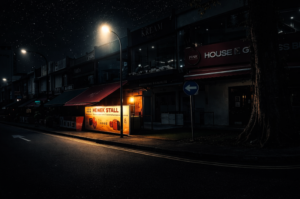
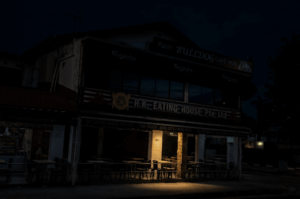
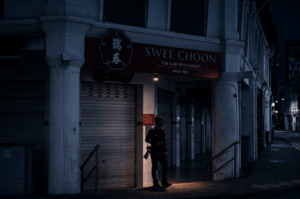
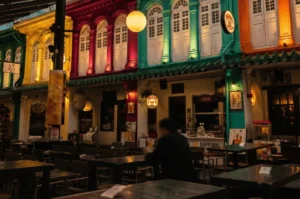
The streetlamps along Jalan Besar hum with a faint, electric buzz at two in the morning. At this hour, the city strips away its gloss. The flat, forgiving daylight is gone. What remains are isolated pools of amber and the stark white glow of fluorescent tubes. Standing across from a corner kopitiam, I watch how the shadows stretch across the empty stainless steel tables.
When you photograph food at night, you stop looking for bright, even perfection. You start looking for texture. This shift in perspective is learning to let the darkness shape the frame rather than fighting it with a heavy flash and it has completely changed how I document late-night eating rituals in Singapore.
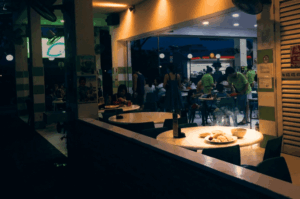
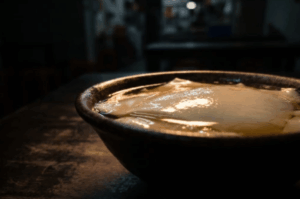
During a recent food crawl in Selegie, I stopped at Rochor Original Beancurd. The plastic tables sat just inches from the empty asphalt. I ordered a bowl of warm tau huay and a freshly fried youtiao. Under the harsh glare of a single overhead bulb, the dish transformed. The low, directional light caught the glossy, trembling surface of the beancurd, emphasizing its delicate structure. The deep ridges of the dough fritter cast heavy shadows, making it look rugged and architectural. In the dark, the food stopped being merely a late-night snack. It became a tactile landscape.
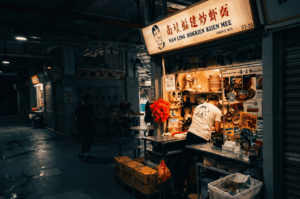
The darkness also changes the people who prepare and consume the food. The human aspect of the night food scene relies on a quiet, shared endurance. Behind the counter, the vendors move with a practiced, rhythmic economy. They do not shout orders over a daytime crowd. They operate in a language of brief nods and the deliberate clatter of metal spoons against ceramic bowls.
At an adjacent table, a taxi driver ends his twelve-hour shift in silence, slowly dipping his youtiao into the sweet syrup. We do not speak, but there is a mutual understanding; a shared sanctuary found under a canvas awning in the middle of the night. Food, in these hours, connects people not through loud conversation, but through proximity and quiet routine.
Photographing these moments requires you to embrace the shadows. The low light obscures the messy, distracting background of the street and directs the eye entirely to the essential details: the weathered hands of a vendor, the steam rising off a bowl of hot broth, the gleam of oil on a plate of noodles. The darkness simplifies the story.
The next time you find yourself sitting at a roadside stall long after midnight, look at how the nearest light source hits your plate. Notice what the shadows hide and what the highlights reveal. The lack of light does not diminish the experience; it frames it, leaving you to wonder what other quiet details the city is waiting to show you.

Shunjuu Izakaya: Smoke, Sake, and the River at Night in Singapore
Sarah Teh | June 17, 2026
I almost didn’t see the entrance the first time. Tucked along Robertson Quay at 30 Robertson Quay, #01-15 Riverside View, Shunjuu Izakaya is a Japanese restaurant in Singapore serving an exciting menu of Japanese cuisine. It hides behind a curtain of charcoal smoke and warm lantern light. Then I caught the smell of grilling pork…
-
Beyond The Plate
Sarah Teh | June 11, 2026
Capturing the People Who Bring Midnight Eats to Life The metallic snip of heavy scissors echoes down Jalan Besar long after the rest of the city has gone to sleep. Standing on the pavement at two in the morning, I adjust my camera settings to capture the harsh, fluorescent glow spilling out from Beach Road…
-
Wandering Through Hidden Corners of the World
Sarah Teh | June 11, 2026
Travel teaches you to notice what others overlook. The markets, the alleys, the quiet squares; these are the spaces where the rhythm of a place is unguarded, intimate, and fleeting. Walking along winding streets in a small European town, or tracing narrow lanes in an Asian city just as the sun dips below the rooftops,…
-
Singapore Izakaya Chefs: The Masters Keeping Our Late-Night Kitchens Alive
Sarah Teh | June 10, 2026
If you want to understand Singapore izakaya chefs, or photograph them honestly, you have to stop seeing these places as only casual drinking spots. This guide walks through how to observe, respect, and capture the people who keep Singapore’s izakaya scene alive long after the office towers go dark. Discover the smoky rhythm and masterful…
-
Capturing Singapore’s Nocturnal Soul
Sarah Teh | June 5, 2026
The heavy, damp air of Geylang Road clings to your skin at three in the morning. Long after the daily rush of commuters has faded, a different pulse awakens. Walking the neon-lit pavements with my camera, I look for the quiet pockets of life that only emerge in the dark. The city strips away its…
-
In the Footsteps of the Midnight Photographer
Sarah Teh | June 4, 2026
The city breathes differently after midnight. The relentless hum of daytime traffic fades, leaving behind a thick, humid silence punctured only by the hiss of hot oil and the clatter of ceramic bowls. Walking through the quiet alleys of Jalan Besar, I carry my camera not to document daylight perfection, but to capture the weight…
-
The Public Izakaya: Behind the Lens at a Singapore Izakaya Experience
Sarah Teh | June 3, 2026
I walked into The Public Izakaya 2.5 Nitengo on a Friday around 10:15 PM, right as the after-work drinks crowd in Tanjong Pagar was hitting its peak. Walking into a packed room with a proper camera always gives me a wave of anxiety. I worry about looking intrusive or annoying the diners trying to settle…
-
The Calm Before The Crowd
Sarah Teh | May 29, 2026
The light shifts abruptly in Singapore around six in the evening. The harsh afternoon sun softens into a bruised purple, and the ambient noise of the city begins to change. Standing at the edge of Old Airport Road Food Centre, I watch the heavy metal shutters roll up one by one. This is my favorite…
-
Izakayas Singapore: How to Capture Izakaya Food Under Warm, Low Light
Sarah Teh | May 27, 2026
I was sitting at a cramped counter in Cuppage Plaza, surrounded by the incredible smell of binchotan charcoal and roasting chicken fat. The mood was perfect. The dim tungsten lamps cast a beautiful, moody glow over the dark wooden planks of the counter, setting the quintessential izakaya in Singapore ambiance. But when I looked at…
-
Flavors in the Dark
Sarah Teh | May 22, 2026
How Low Light Changes the Way We See Food The streetlamps along Jalan Besar hum with a faint, electric buzz at two in the morning. At this hour, the city strips away its gloss. The flat, forgiving daylight is gone. What remains are isolated pools of amber and the stark white glow of fluorescent tubes….