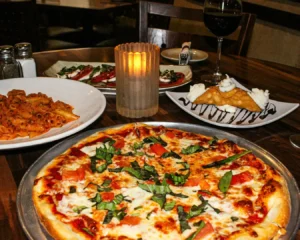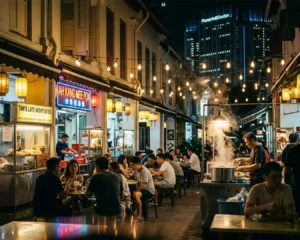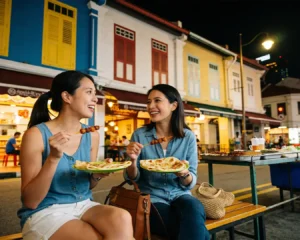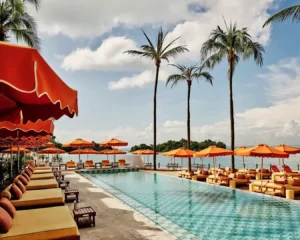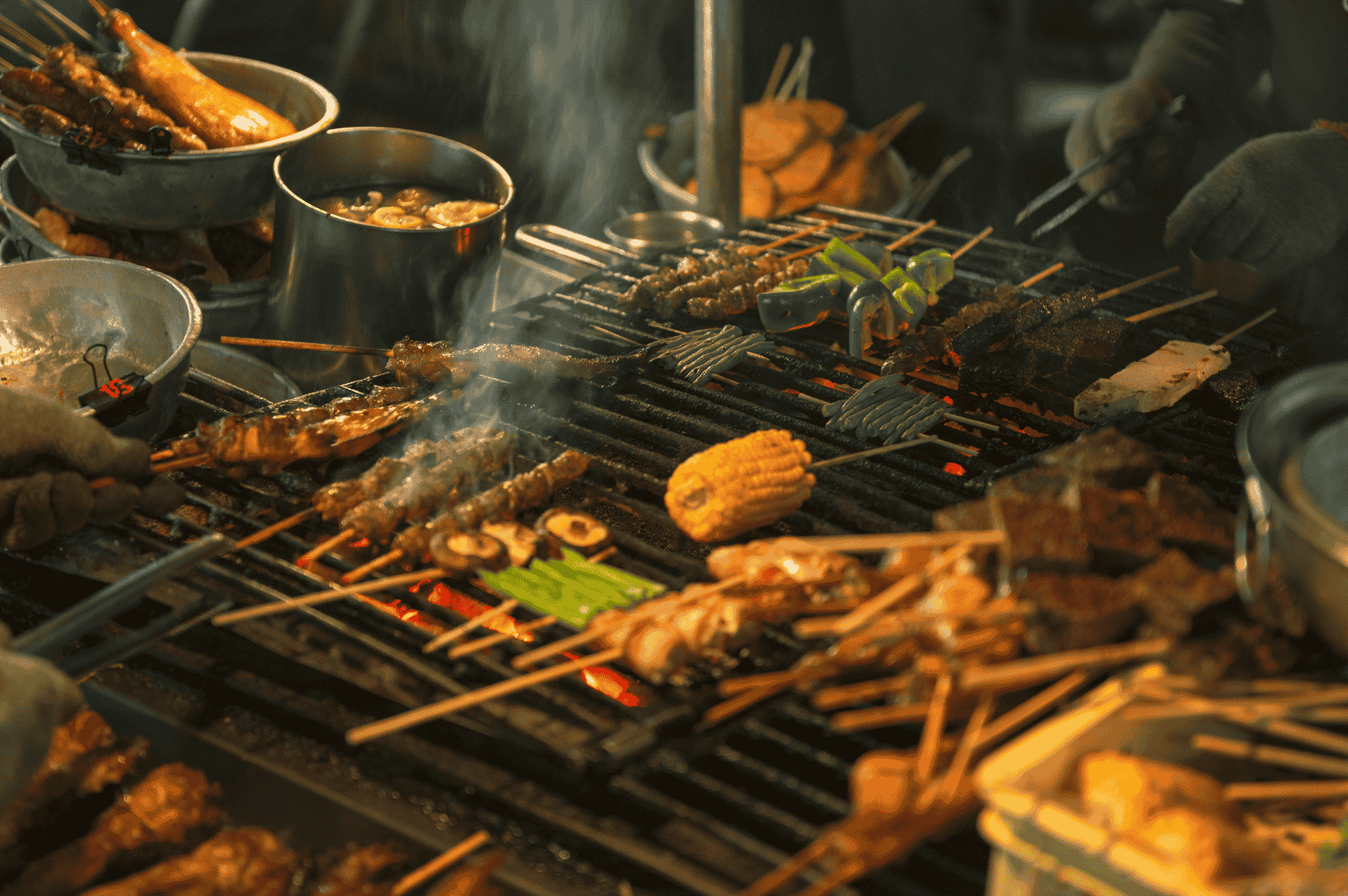
There's a special kind of magic that I love to capture when photographing food after dark. The moody shadows, the soft glow from a single candle—it’s a world away from bright, airy daylight shots. But capturing that magic? That’s where the challenge of low light food photography comes in. I remember fighting my camera, wrestling with blurry shots and grainy images. It can be frustrating.
I've been there. The good news is that mastering night photography with food is something I learned to do, and you can too. It's about understanding how to work with the dark, not against it. In this guide, I’ll share my personal approach to the essential camera settings and gear you need to turn those midnight food photo shoots into stunning, evocative images.
The Exposure Triangle: My Low-Light Lifeline and Best Camera Settings
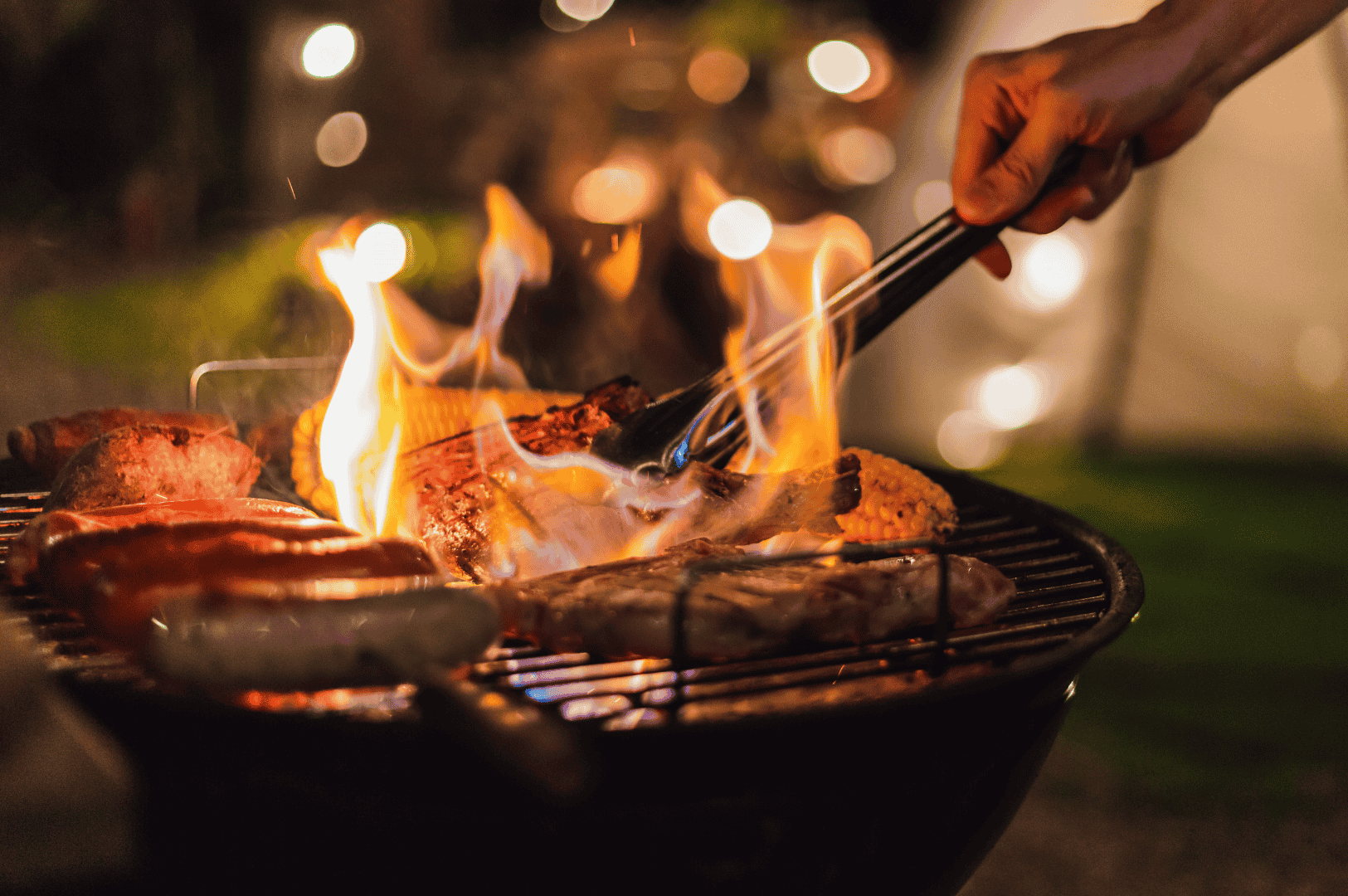
My success in low light photography hinges on my mastery of the exposure triangle: aperture, shutter speed, and ISO. Getting these three settings to work together is how I let enough light hit my sensor without sacrificing image quality.
Aperture: Let the Natural Light In
The aperture is the opening in my lens that lets light coming through. For any tough lighting situation, I want this opening as wide as possible. This is represented by a small f stop number, like f/1.8 or f/2.8. A wide aperture allows more light to enter the camera, which is exactly what I need when light is scarce.
- My Tip: I always start by setting my aperture to the widest setting my lens allows. Using a wide aperture like f/1.8 creates a shallow depth of field, which beautifully blurs the background and makes my subject pop. It gives me more depth and focus on the food.
Shutter Speed: The Balancing Act
Shutter speed determines how long my camera's sensor is exposed to light. In low light, I need a slow shutter speed to give the sensor more time to collect that precious ambient light. However, this comes with a risk: camera shake. Any movement from my hands during a long exposure will result in blur motion.
- My Tip: A tripod is my non-negotiable tool for low-light food photography. With my camera secured, I can use a very slow shutter speed without worrying about motion blur. I might start around 1/60s and adjust from there. With a tripod, I can go much slower, capturing every bit of the scene. A fast shutter speed is for when I need to freeze motion, which isn't usually the goal here.
ISO: The Necessary Boost
ISO measures my camera sensor's sensitivity to light. When I increase ISO, the sensor becomes more sensitive, allowing me to shoot in darker conditions. The trade-off is digital noise, which can make my photos look grainy. Modern cameras are much better at how they handle ISO, but it's still a setting I use with care.
- My Tip: I try to keep my low ISO settings. After setting my wide aperture and my desired shutter speed, I only increase my ISO as much as I need to get a proper exposure. With my camera, I can often get clean images up to ISO 1600. It's a good idea to take a few test shots to see where you feel the more noise becomes unacceptable. My goal is always less noise.
Beyond the Triangle: Other Key Camera Settings I Use
While the exposure settings are central, a few other settings give me more control over the final image.
White Balance: Setting the Mood
Artificial lighting at night can cast strange colors. To get the mood right, I need to get my white balance correct.
- My Tip: Shooting in RAW is my safety net, as it allows me to easily adjust white balance during post processing. When I’m on a shoot, I often set a custom white balance using a grey card for the most accurate colors right out of the camera.
Focusing in the Dark: Night Photography Settings
Auto focus systems can struggle when there is less light. I’ve watched my lens hunt back and forth, failing to lock onto the subject.
- My Tip: I almost always switch to manual focus in these situations. Using my camera's live view mode, I can zoom in on the part of the dish I want in sharp focus and adjust the focus ring until it's perfect. This gives me complete control.
My Final Thoughts
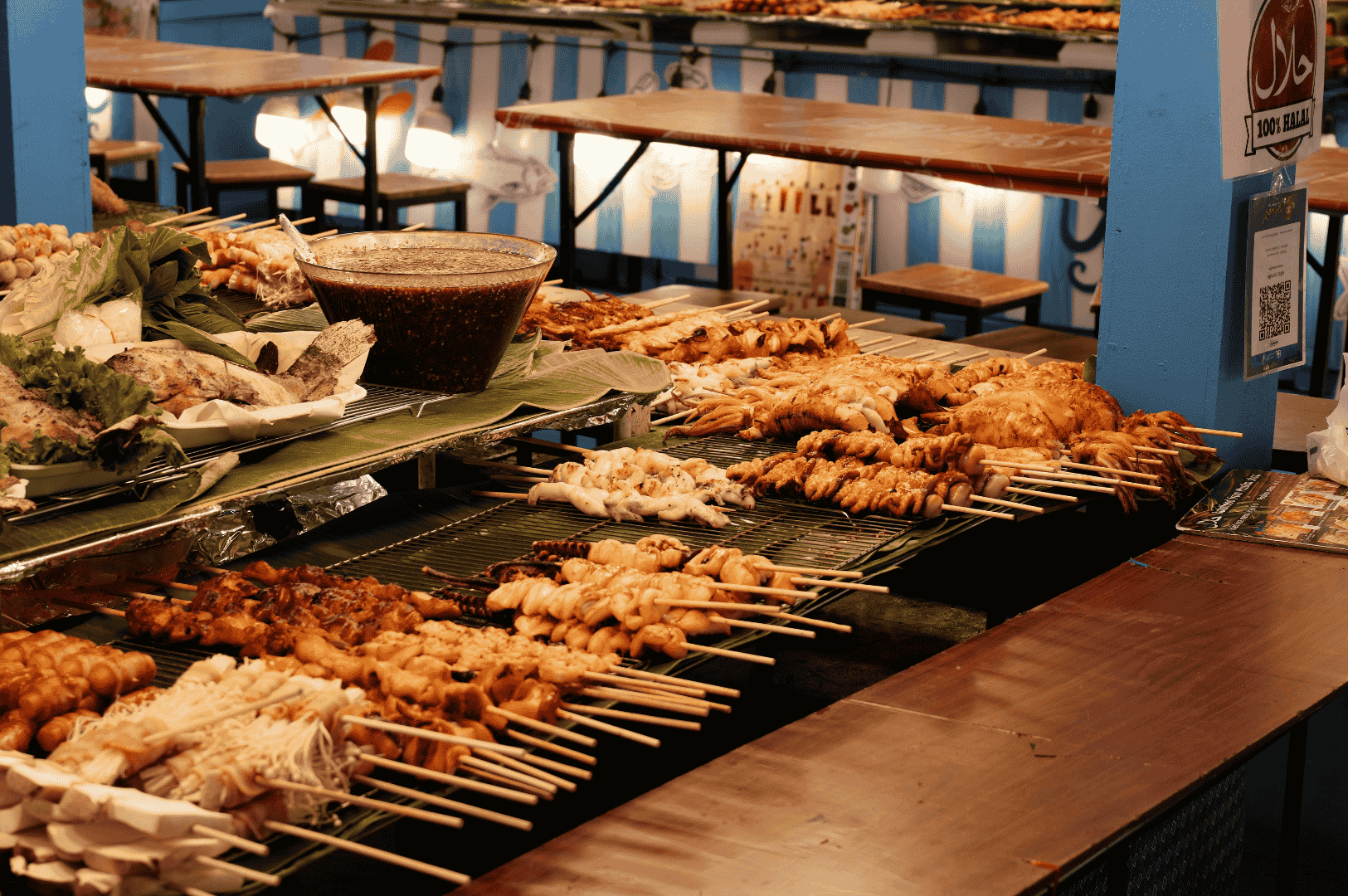
The theory is important, but the real learning happens when you start shooting. Don't be afraid to experiment. I learned by setting up a simple scene at my kitchen table after dark. I'd use a single lamp as my light source and play with all of my camera settings.
See how a slow shutter speed captures the gentle flicker of a flame. Notice how different aperture values change the mood. Push your ISO to see what your camera can do. The more you practice, the more intuitive all these things will become. Low-light food photography isn't about having the most expensive gear; it’s about knowing how to use the tools you have to create something beautiful.
For more inspiration and guides, visit Midnight Photographer, or learn about our mission and journey on the About Us page.

Western Food In Singapore After Dark: A Midnight Photographer’s View
Sarah Teh | April 1, 2026
I often find myself photographing western food late at night, when the city softens and the dining table becomes quieter. Western food in Singapore does not always live inside polished restaurants. Sometimes it sits under fluorescent lights at a food center, sometimes at a hawker stall with a flat top grill that has seen decades…
-
The Art of Night Dining Photography: Tanjong Pagar Food
Sarah Teh | March 25, 2026
It’s close to midnight when the CBD quiets and Tanjong Pagar’s corridor lights ignite with warmth. The late MRT ride is the threshold to a world where tanjong pagar dining scenes unfold for my camera—tanjong pagar food under neon and rain-polished streets, kitchens humming long past regular opening hours. The tanjong pagar area stands out…
-
Chinatown Food in Singapore: A Photographer’s Guide to Street Food After Sunset
Sarah Teh | March 18, 2026
You step off the train, and the humidity hits you first, closely followed by the intoxicating aroma of sizzling garlic, roasting meats, and sweet soy sauce. The sun dips below the horizon, and neon signs flicker to life, casting a warm red glow over the bustling streets. Arriving hungry here is an absolute necessity to…
-
Tanjong Beach Club Singapore: Photographic Rhythm on Sand, Sea, and Night Service
Sarah Teh | March 11, 2026
The sun stretches along Tanjong Beach, casting shifting gold onto the sand and across plush daybeds that define this corner of Singapore’s beach culture. This is golden hour at Tanjong Beach Club, often regarded as one of Singapore’s best beach destinations, where the world outside the city softens, welcoming guests who discover their own spot…
-
What to Eat in Tanjong Pagar: Night Photography Across Best Restaurants, Food Centres, and Modern Eateries
Sarah Teh | March 4, 2026
I arrive inTanjong Pagar as blue hour overtakes the shophouse spine. The goal isn’t just dinner—it’s to answer what to eat in Tanjong Pagar from a night photographer’s field standpoint. Every dish and space signals an opportunity, from fried chicken to glossy rice bowls, all set in dynamic, real service. What matters is resonance under…
-
Food in Tanjong Pagar: A Midnight Photographer’s Field View to Food & Light After Dark
Sarah Teh | February 25, 2026
When Singapore’s CBD finally exhales, and the bustle of the day quiets around Tanjong Pagar MRT station, the lights come up on a different stage. Here, in the heart of Tanjong Pagar, hidden food centres, bustling hawker stalls, and stylish Korean and Japanese restaurants located in Tanjong Pagar keep the neighbourhood’s energy burning late. Whether…

Unveiling Hidden Treasures: An Enchanting Evening at Chijmes Restaurant
Sarah Teh | February 18, 2026
As night spills over the cloisters of CHIJMES, the bustle from Victoria Street fades to a hum and the architectural bones of the historic convent emerge, lit by warm lamps and candlelight. I arrive late, just as the last light fades, hunting for the perfect chijmes restaurant frame; one that balances cultural heritage conservation with…
-
CHIJMES Singapore: Photographing Heritage, Dining, and Architectural Icons
Sarah Teh | February 12, 2026
When I first visited CHIJMES Singapore, I was immediately captivated by how seamlessly history and modern life blend here. I practically had to restrain myself from pointing my lens at everything my eyes land on. Nestled at the bustling intersection of Victoria Street, North Bridge Road, and Bras Basah Road, this national monument and historic…
-
Before the Rush: Capturing the Hidden Rhythms of Amoy Food Centre Photography
Sarah Teh | February 4, 2026
Dawn at Amoy Street Food Centre is a collision of fluorescent lights and billows of steam. Against tiled grates, condensation slides down; hawkers prime their pepper bowl and swirl strands of sliced fish soup through scalding water. Within this storied food centre, every corridor concentrates urgency, flavor, and visual drama. Amoy food centre photography thrives…
-
Amoy Street Food Centre Singapore: A Living Archive of Vanishing Culinary Techniques
Sarah Teh | January 28, 2026
As the dinner rush subsides at Amoy Street Food Centre Singapore, the true choreography begins. Seasoned hawker stall owners move with precision honed over decades, their wok fire dancing in rhythms that predate Singapore’s modern skyline. Six Michelin Bib Gourmand stalls operate within this 1983-established food centre, transforming what began as a government cleanliness initiative…